Tag: norfolk

  • Lincoln’s Steep Hill is aptly named, Southwell is proud of its apples and Boston is a bit rough – my July 2024 holiday (part 2!)

    Lincoln’s Steep Hill is aptly named, Southwell is proud of its apples and Boston is a bit rough – my July 2024 holiday (part 2!)

    The last time I wrote to you, I was about to leave Nottingham for the next stop on my road trip holiday.

    Before going away, I had read about Nottinghamshire in a book I had called I Never Knew That About England. The section on Southwell I found particularly interesting, with it being described as one of England’s least known cathedral towns. It turned out to be a perfectly easy stop on the way between Nottingham and Lincoln, so mum and I decided to go and explore.
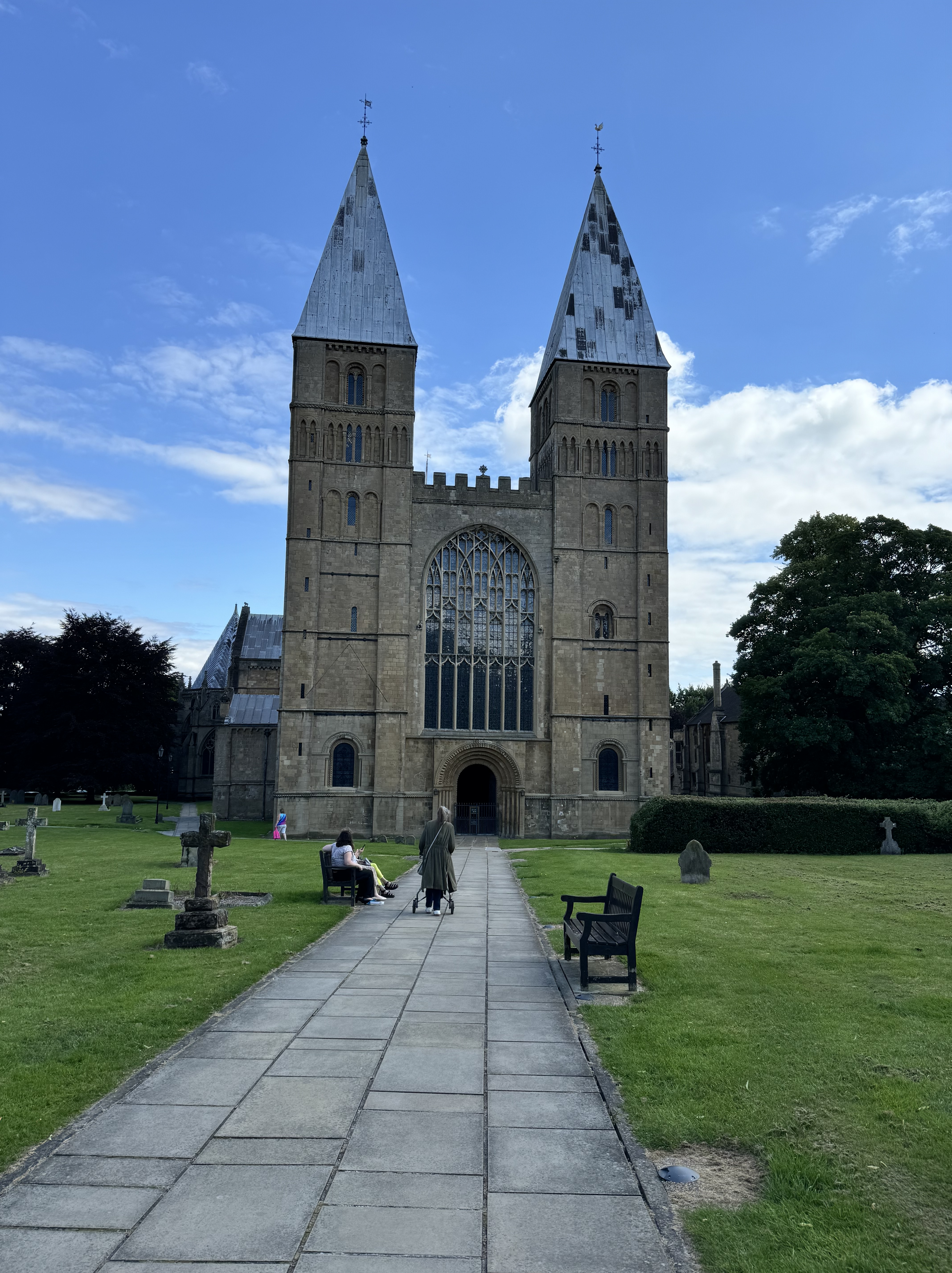
    The quite remarkable Southwell Minster. I didn’t have the patience to wait for the old lady with the walking frame to get out of the way.

    Southwell is a small, pretty, well-looked-after town that is completely dominated by its magnificnet minster. Built in Roman times, it really needs to be seen to be believed.

    The town is also famous for (and very proud of) being the birthplace of the Bramley apple. Mary Ann Brailsford, aged 9, planted some apple pips in her garden on the outskirts of Southwell in 1809. The resulting tree produced so much fruit that in 1856 the later owner of the house, Matthew Bramley, was asked if he would consider selling the apples. By 2007, 95% of total culinary apple orchards in England and Wales were Bramley apples. Mary Ann Brailsford probably never knew that the tree she planted had become so famous – when you think about it, we should really be making our apple pies with Brailsfords.

    From Southwell, we drove on to Lincoln. This was my first time in Lincoln, but unlikely to be my last. With its castle and cathedral, I felt an immediate affinity with my beloved home city of Norwich. It doesn’t happen often, but Lincoln might actually beat Norwich for history – it still has a Roman archway that traffic passes through.

    We had been warned about Steep Hill in Lincoln, possibly the most aptly named road in Britain. My dear mum, who is asthmatic, has a hernia and has just turned 60, surprised the both of us by managing to walk up this monster of a hill. Here she is at the top.
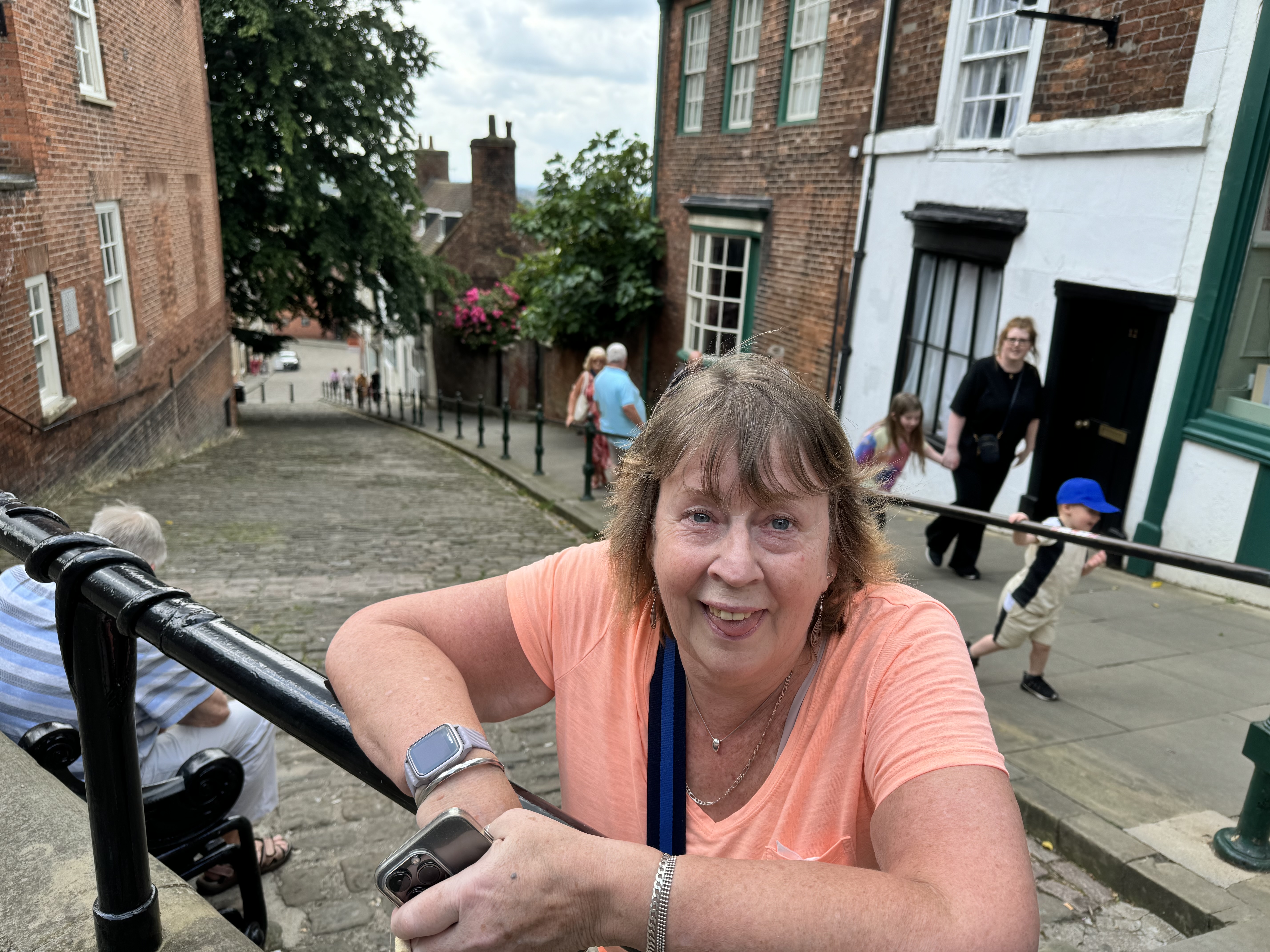
    Mum at the top of Lincoln’s frankly ludicrous Steep Hill

    Steep Hill was well worth the climb though, as the Cathedral Quarter at the top is beautiful. We went into the grounds of the castle and paid to do the castle wall walk. You get to walk all the way along the top of the castle walls, a full circle, and it was well worth the £10 fee to do so. The views are simply spectacular, both of the cathedral opposite and the surrounding countryside.
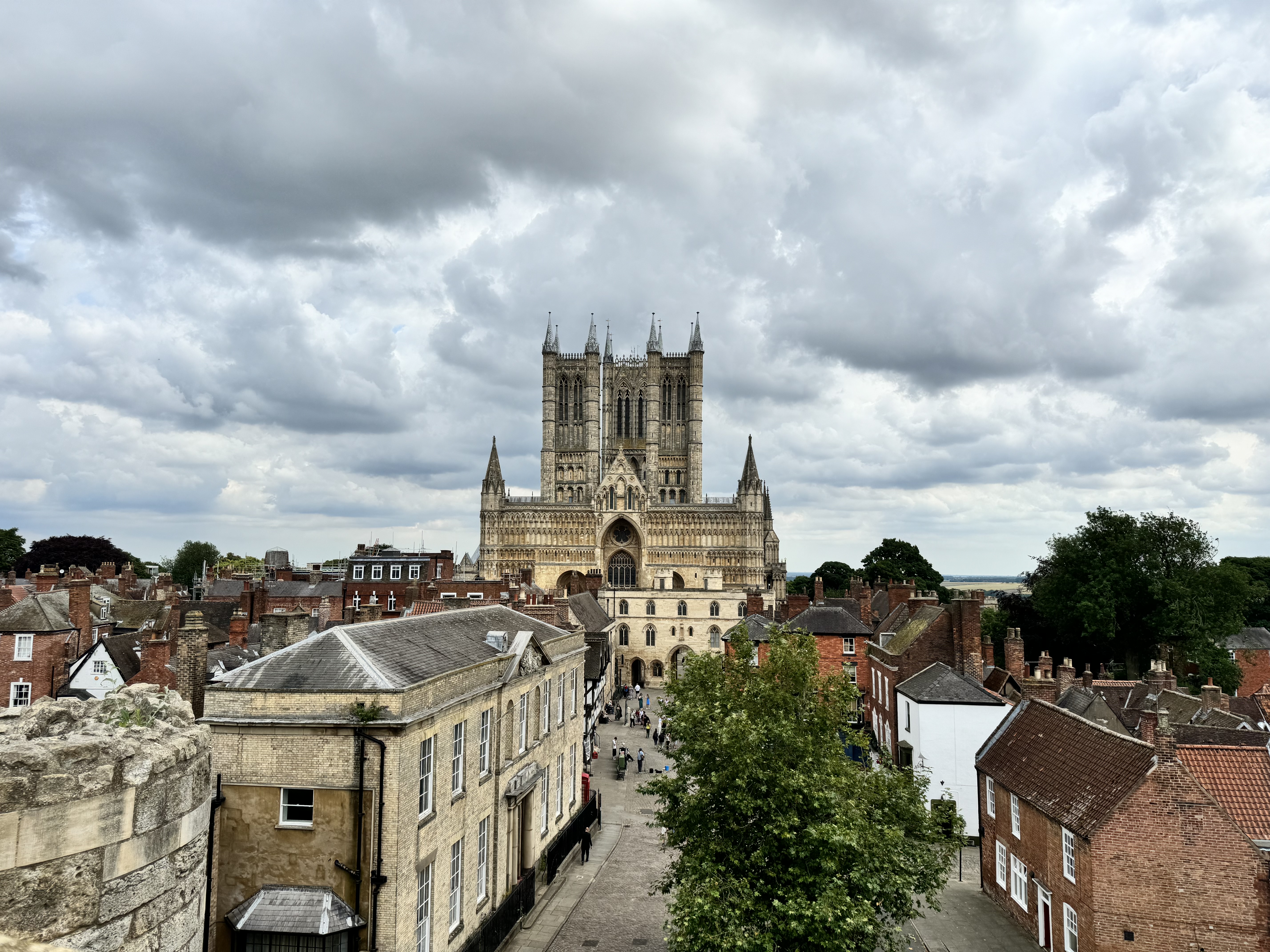
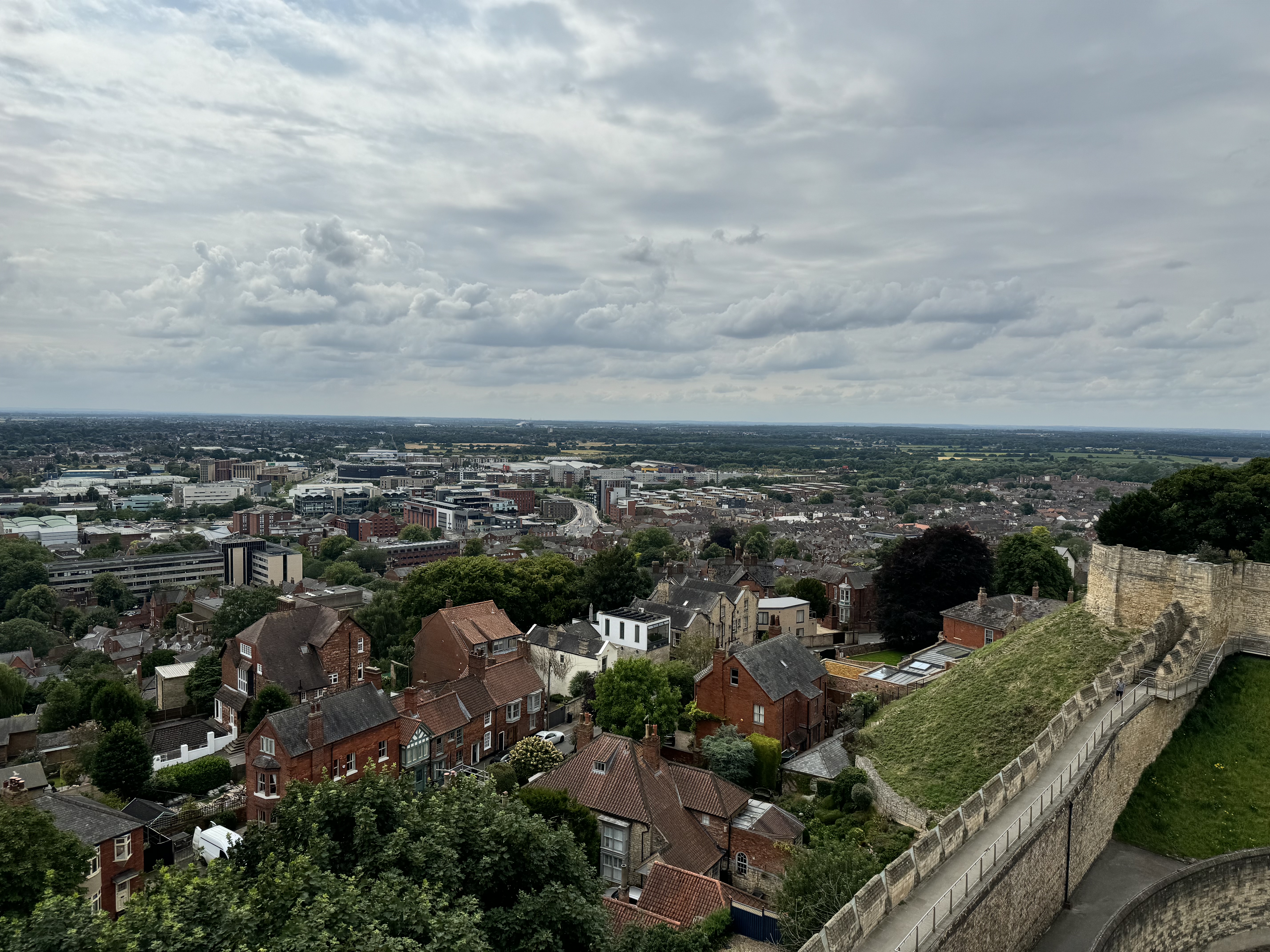
    The cathedral as seen from the castle walls.
    Overlooking Lincoln from the castle walls

    We decided to come back on Thursday to do the cathedral. The only other thing we did in Lincoln on Wednesday was have the best waffle I’ve ever tasted at Madame Waffle. Seriously, if you are ever in Lincoln, go and have a waffle at Madame Waffle. I had one covered in Nutella and topped with fresh strawberries and I am wondering if I will ever taste anything like it again.

    The nave of Lincoln Cathedral was off limits to the public on the day we visited because it was being used for the local university’s graduation ceremonies, but it meant we got in for a reduced rate and got to experiene the atmosphere of a cathedral filled with the sound of organ music. There was still plenty of the magnificent building worth seeing, including the Chapter House.
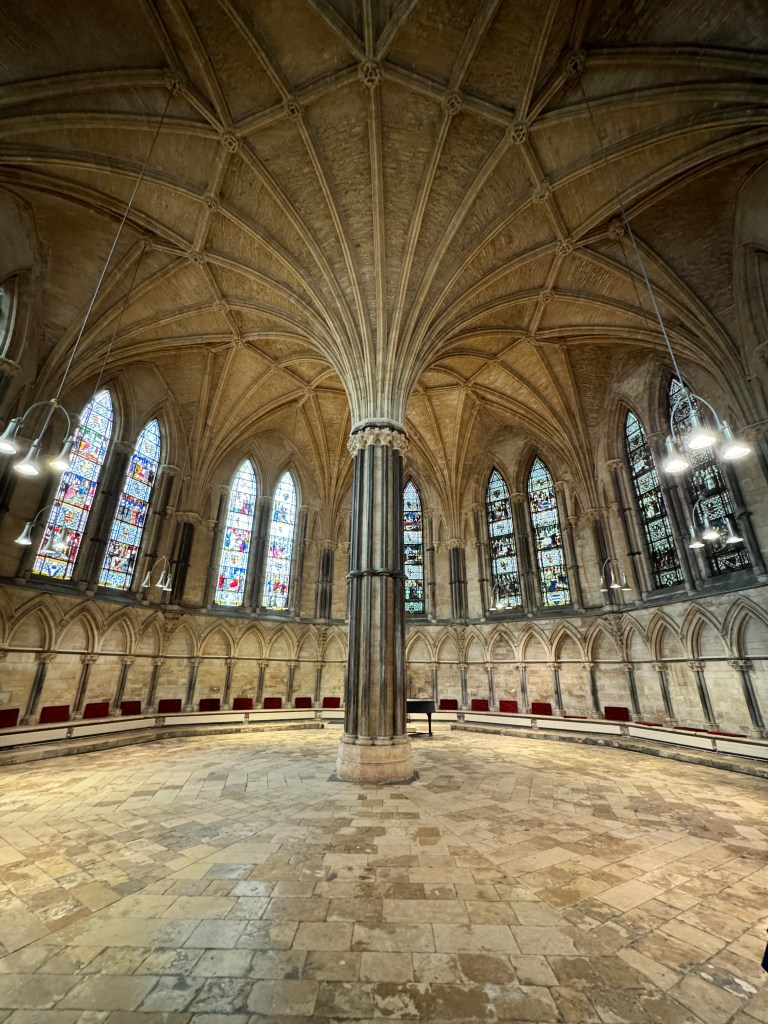
    The Chapter House inside Lincoln Cathedral

    I had also read about a slightly more recent bit of quirky history to do with Lincoln cathedral. The story goes that a boy, Gilbert Bell, was playing with a tennis ball in the shadow of the cathedral, all the way back in 1914, when it unfortunately became stuck in the mouldings of the building. It was too high to even entertain the thought of climbing up to retrieve it. And there Gilbert’s tennis ball has remained! 110 years on, the tennis ball is still lodged in place – and I managed to find it!
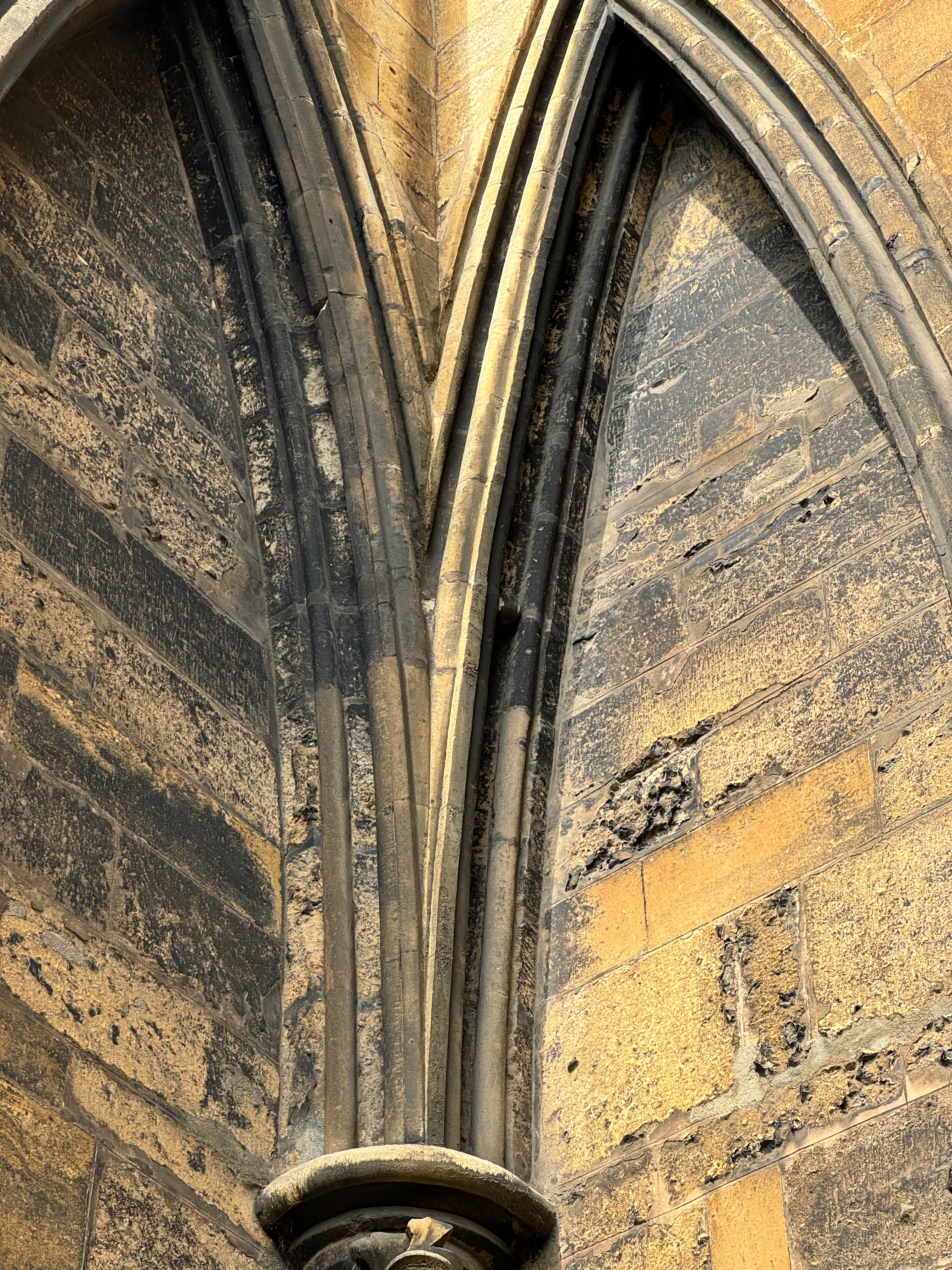
    Gilbert Bell’s tennis ball, lodged in the mouldings of Lincoln Cathedral since 1914

    The final stop on the road trip was to Boston. Boston is famous for being the place a lot of the first pilgrims that travelled to the USA came from – and that is very much what the town shouts about. References to the pilgrims are everywhere – in statues, in street names, in pubs. I don’t want to be too negative about the place, but I can understand why the pilgrims were so keen to leave! Of course, the Boston in Massachusetts, USA takes its name from this Lincolnshire port.

    Yes, Boston is a little on the rough side these days. A lot of it needs regenerating, I was wary of the locals and I made sure I wasn’t still out after dark. But our accomodation, the Quayside Hotel, was a gem. Its owners were actually once winners on the Channel 4 show Four in a Bed. The rooms were small but had everything I could wish for.
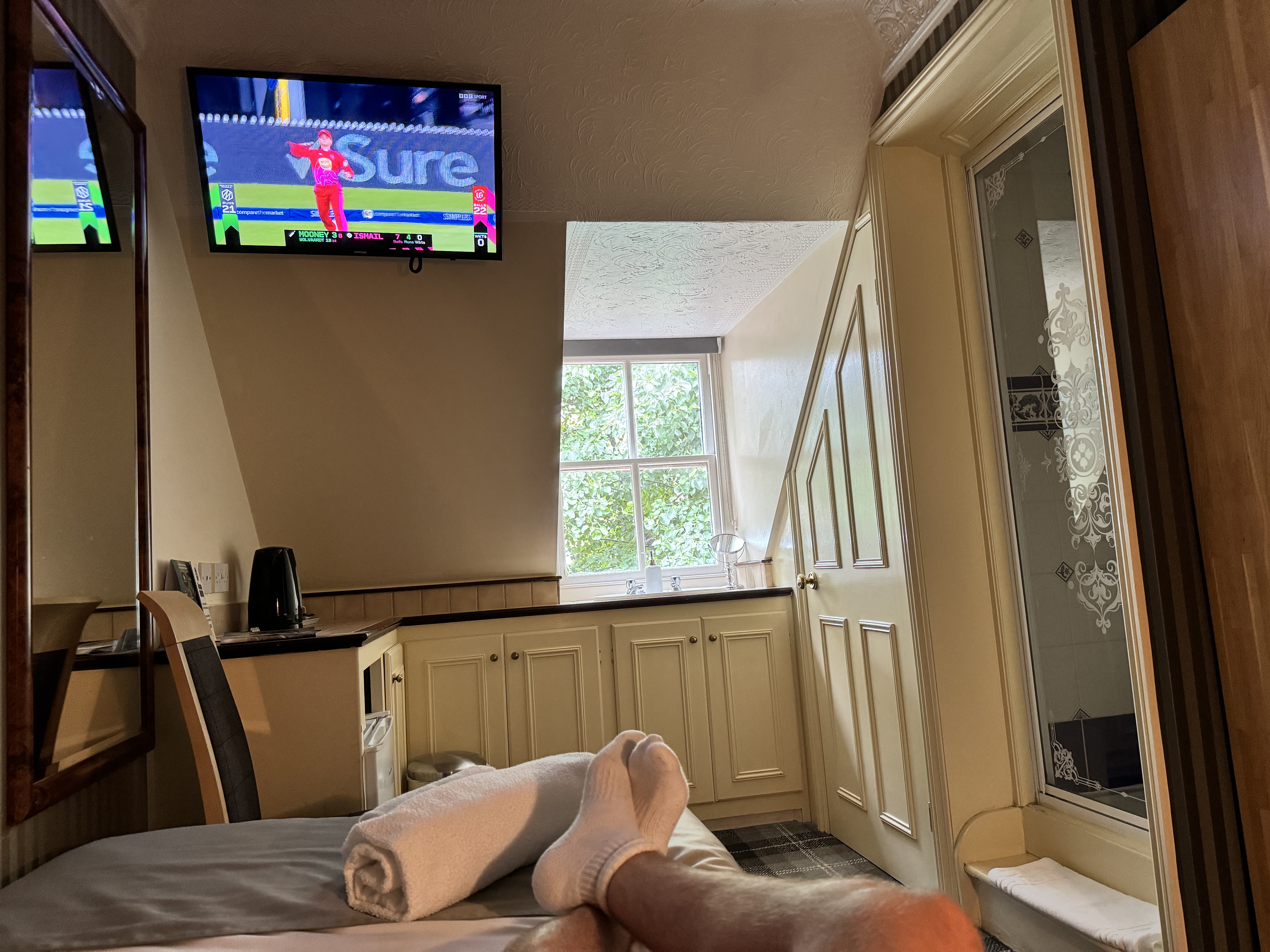
    Relaxing on my bed in the Quayside Hotel, Boston

    Undoubtedly the jewel in Boston’s weathered crown is St Botolph’s Church, known locally as the Stump. The sheer size of what is simply a parish church would put many cathedrals to shame. We had a great time wandering around, taking in all the details, and watching resident ‘morale assistant’ dog Morse running around with a tennis ball.
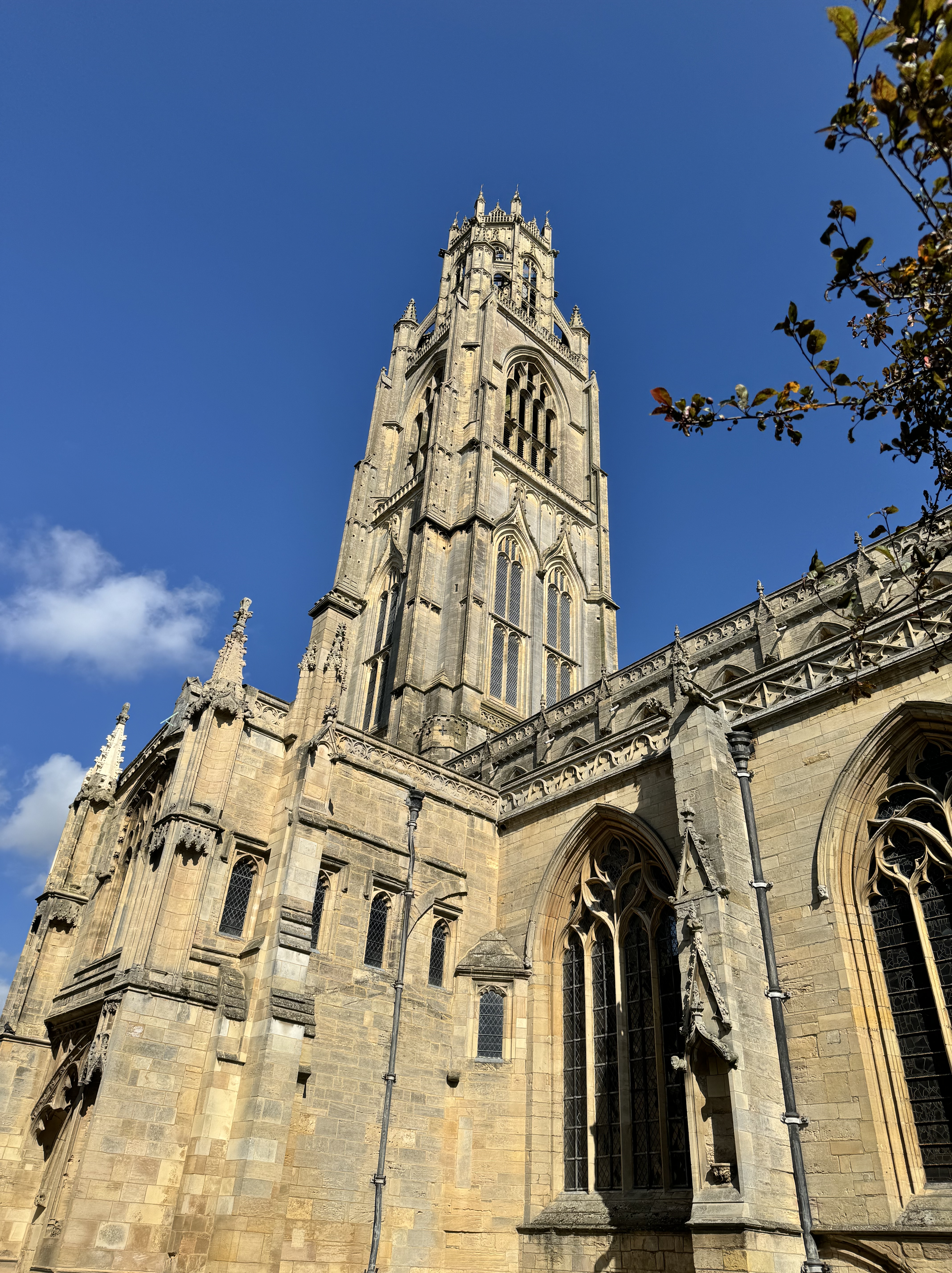
    St Botolph’s Church, Boston, knows as ‘the Stump’

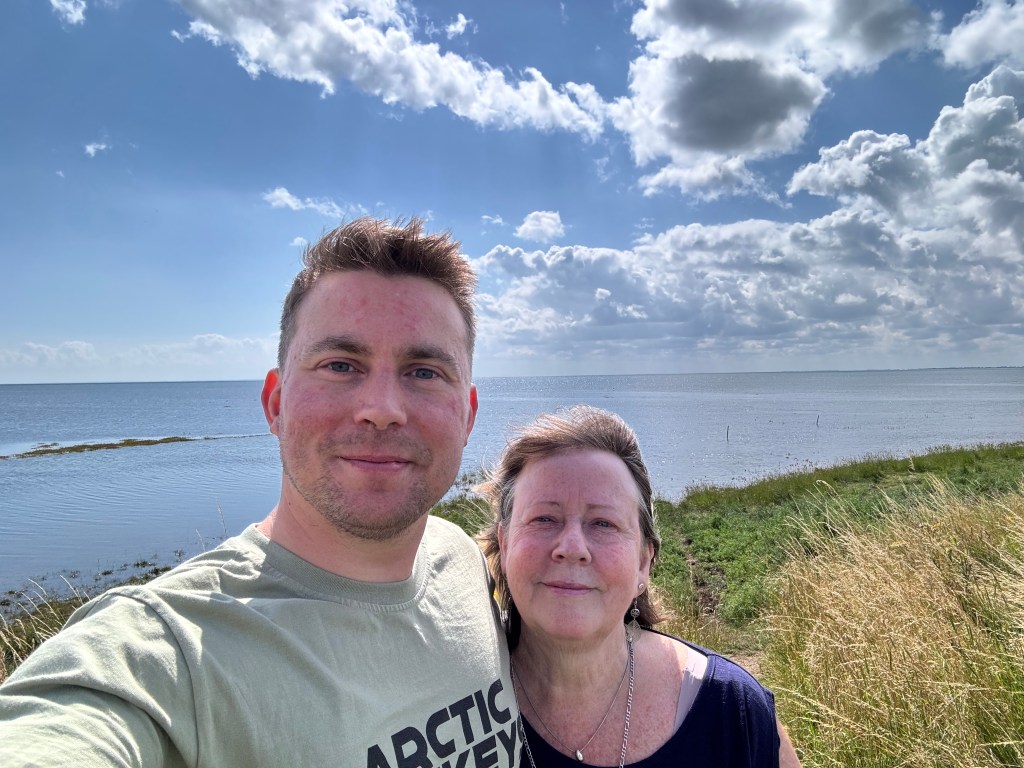
    And so to Friday morning. Mum wanted to go to the coast, look back over the Wash to the shoreline of Norfolk, and take in the view that she had so often seen from the other side. We achieved this at a salt marsh about twenty minutes from Boston.
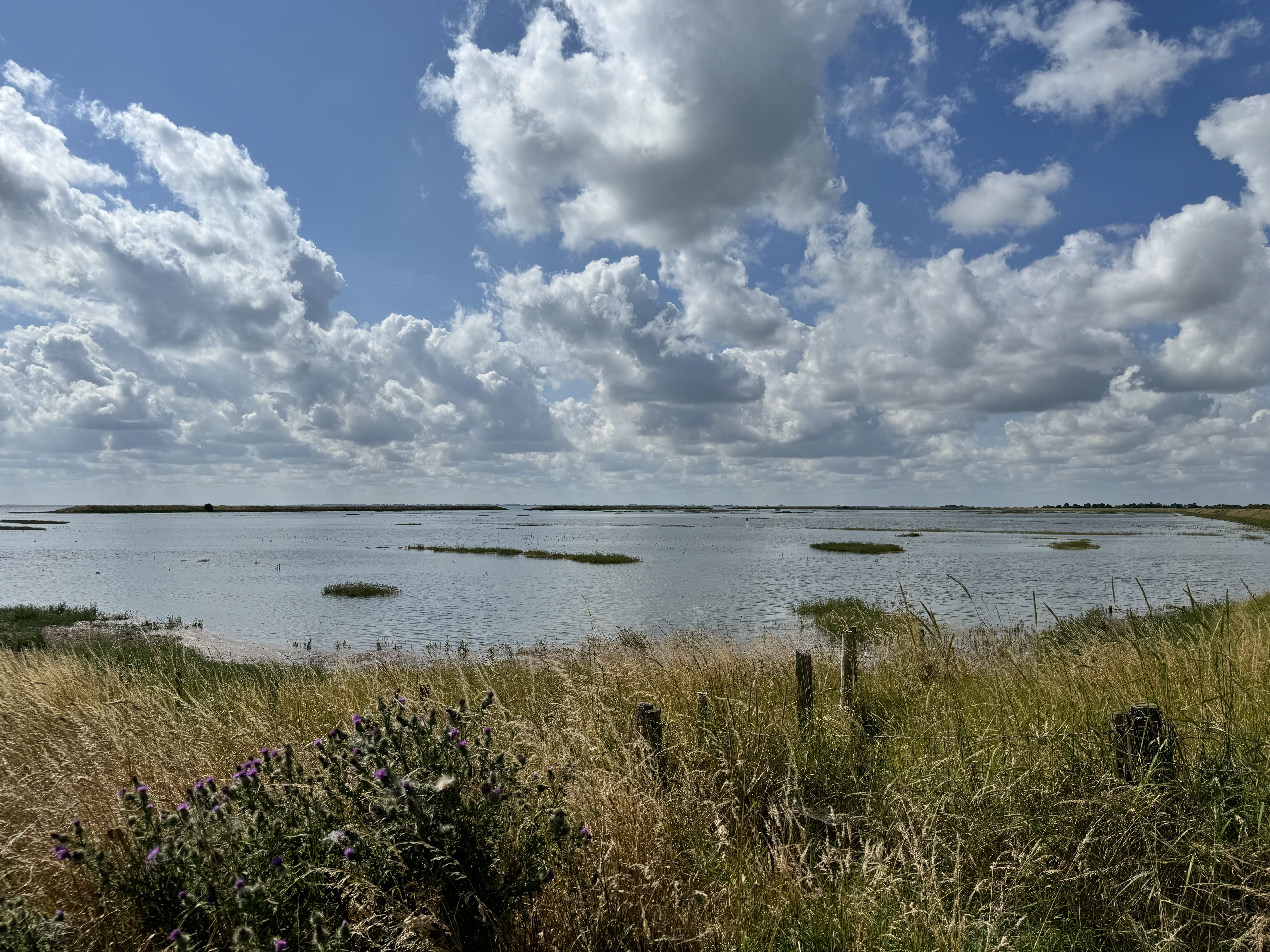
    Salt marsh near Boston. In the distance you can just about make out the Norfolk coastline (the Hunstanton/Heacham area)

    Then it was time to head home. Another lovely holiday is over, and on Sunday it’s back to the Misery Dome (i.e. work) for me. But I have really enjoyed myself. It’s been lovely to get away, to recharge, to see some new sights. I’ve even walked in the footsteps of royalty. I saw a great day of cricket and discovered Lincoln. I come home happy.

    When’s the next one?

    Thanks very much for reading.

  • I Write Wednesday #4 – Project Happy starts now!

    I Write Wednesday #4 – Project Happy starts now!

    There have been twelve Wednesdays since I last wrote one of these, but there’s been a lot going on.

    An update

    While anxiety still constantly lurks behind me and attacks at random moments, I am dealing with it better than I could before all of this happened. I’ve learned to acknowledge the beginnings of a panic attack but not let it take over. It hasn’t got any more pleasant, but it is a step forward.

    I am now in my second week back at work, still doing shorter hours for the time being, and while I have got back into the swing of things quite well and been blown away by the warm welcome from my colleagues, there is a growing feeling that I won’t be truly able to move on from this episode unless I make a fresh start elsewhere.

    Gressenhall

    I got a museum pass for Christmas, allowing me unlimited entry to ten of Norfolk’s museums for a whole year. I love museums, so this was a great gift for me, but with the first quarter of my year being taken up by The Darkness (the illness, not the Lowestoft rock band from the 2000s) I hadn’t had the chance to use it until last Wednesday.

    I went to Gressenhall Farm and Workhouse, only three miles or so from home, for a wander around. The building itself, which looms over you as you drive between Dereham and North Elmham, has always given me the creeps. Knowing the hardship that the people in a workhouse went through – separated from their families, worked to the bone and given hardly enough food to live on – makes me feel uneasy. But it was interesting to learn about how the place operated and its joint purpose as a museum of rural life means it has a few buildings laid out as shops from decades past, as well as a room made up like it was the 1950s.

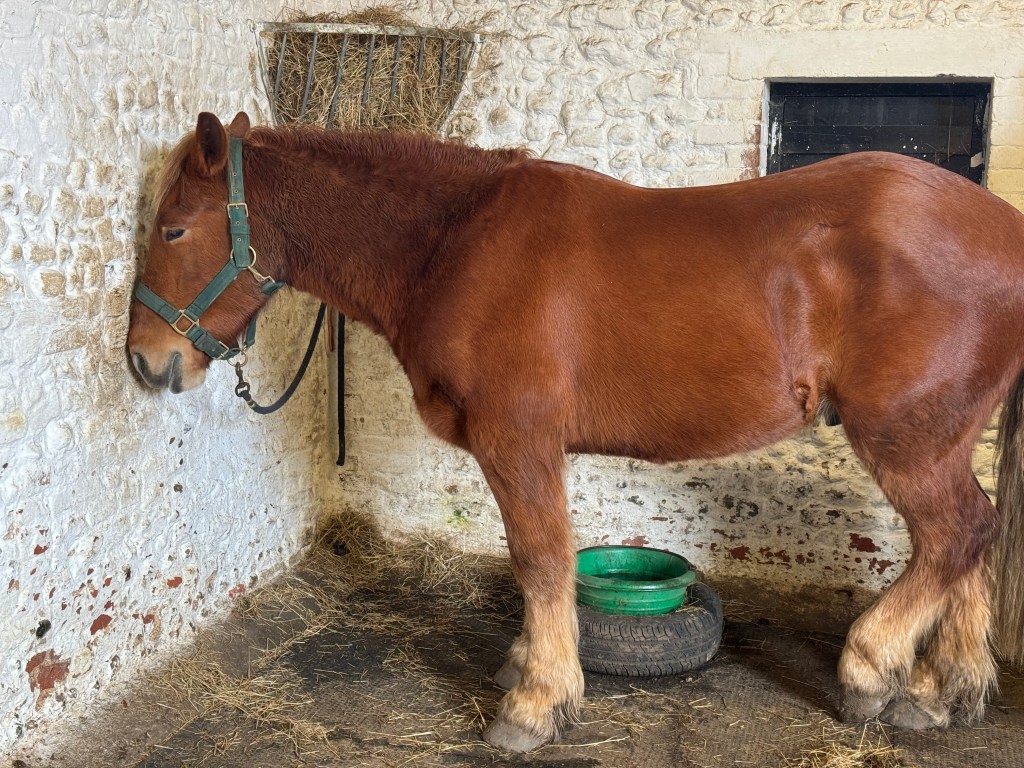
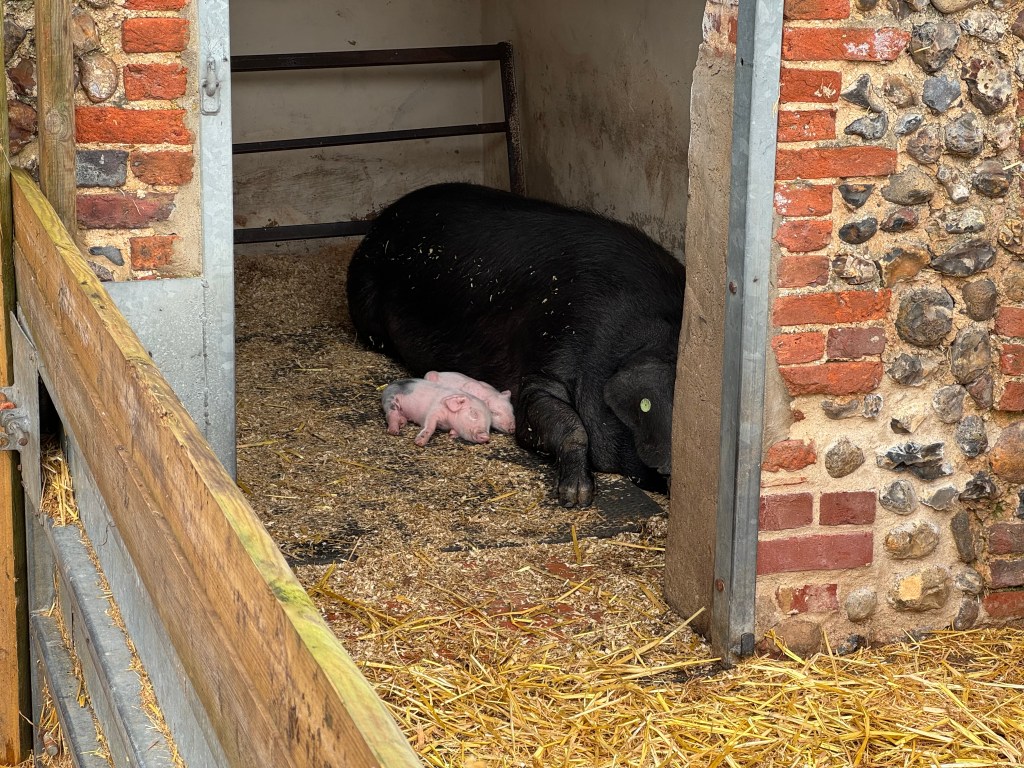
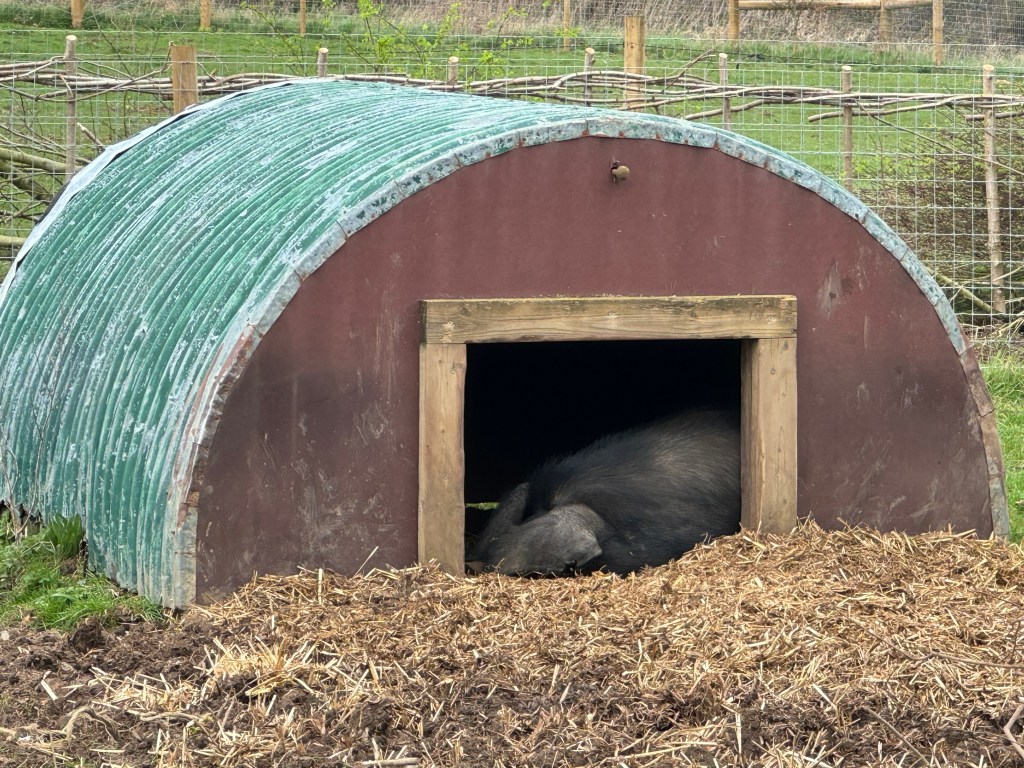
    Across the road there is the farm with horses, cows, sheep and pigs. Being spring, there were a couple of lambs and some recently born piglets to see. When I sent my mum the photo of the piglets, she replied ‘aww, little bacon rolls’. Mother! Here is a gallery of some photos I took on the day.

    If you fancy a day out, whether you’re alone like lonely old me, or want somewhere to go with the family, I heartily recommend Gressenhall. A museum pass is only £42.30 a year for an adult if you pay by direct debit, which is great value when you consider one visit to Gressenhall would cost you £16.10.

    Half Man Half Biscuit

    I’ve been listening to Half Man Half Biscuit a lot lately. They are a Merseyside rock band who have been together for 40 years this year and are known for their great riffs and brilliantly funny lyrics. Right up my street. What about this for a line?

    There’s a man with a mullet going mad with a mallet in Millets

    National Shite Day by Half Man Half Biscuit

    Pure poetry. Why not give them a try?


    I think that will do for today. It’s good to be back! Thanks for reading if you made it this far.

  • You don’t have to go far from home to find yourself – my night in Cromer

    “I am not enjoying myself very much.”

    Those were the words of a 13-year-old Winston Churchill on a visit to Cromer back in 1888. Well, I’m pleased to report that I enjoyed my overnight stay in North Norfolk earlier this week a lot more than arguably the country’s most famous Prime Minister did.

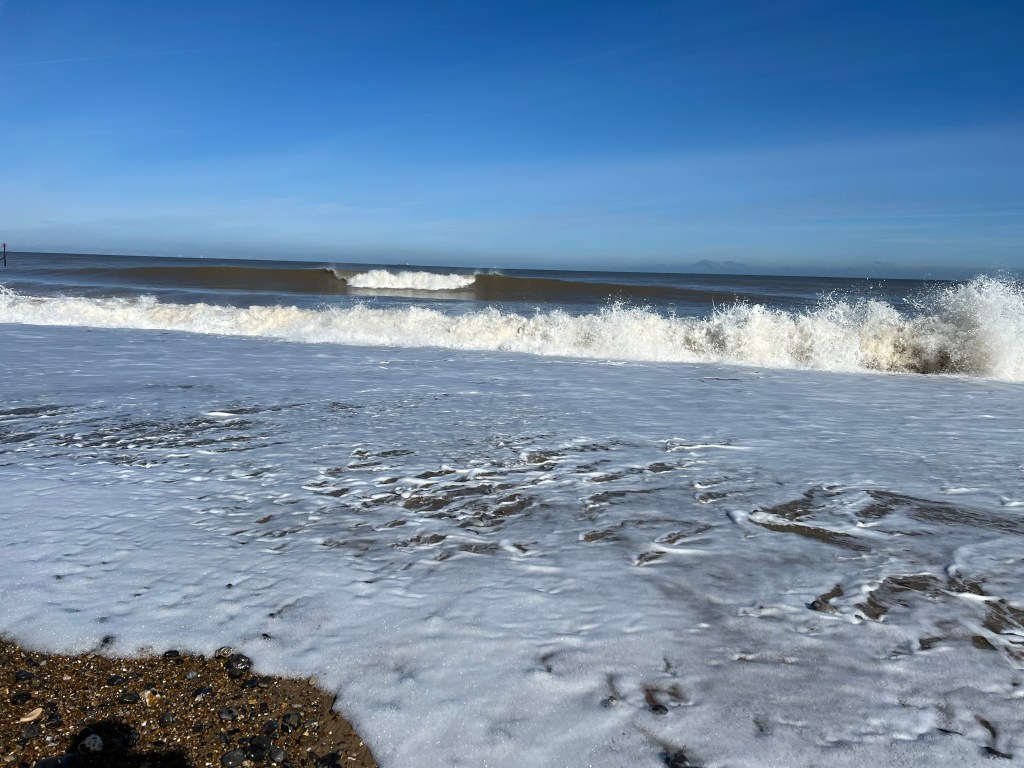
    Cromer is less than an hour from home but that was fine by me. I had decided to book a hotel there because, during my holiday from work, I was keen to make the most of it. To get away, to have a change of scenery and get my head together. Sea air has long been recommended as beneficial to the mind and the body.

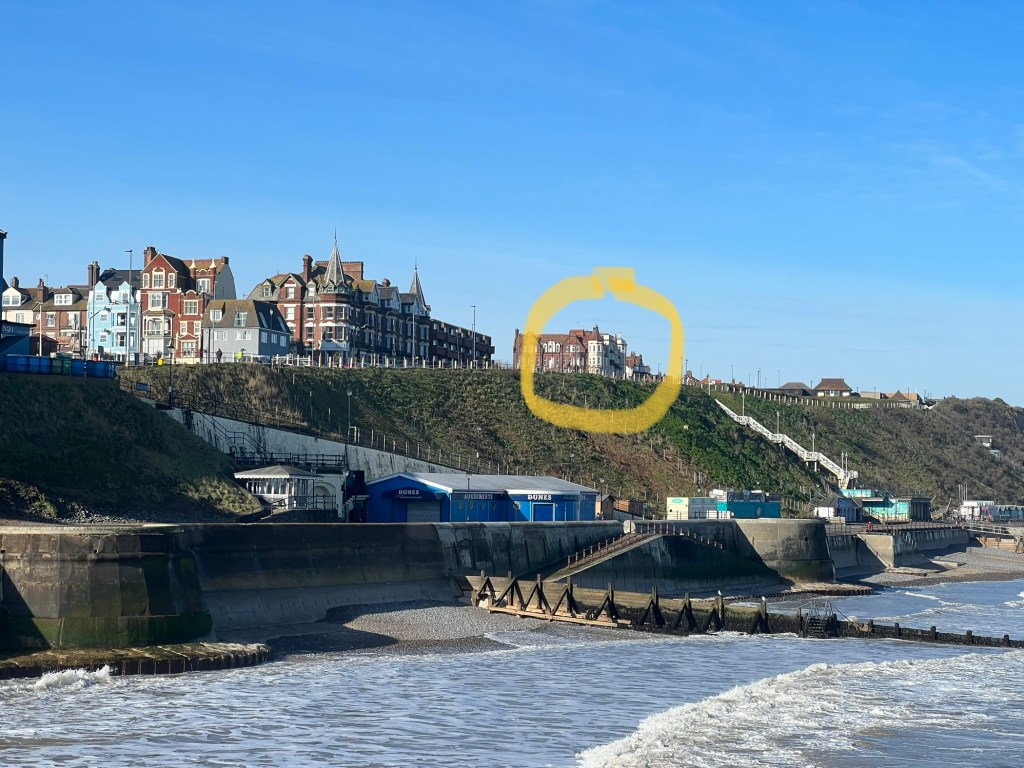
    I had long been intrigued by the Cliftonville Hotel in the town, too. It stands rather imposingly, just up the road from the centre, overlooking the sea. I’m fascinated by old buildings and the Edwardian hotel looked impressive from the outside. So I booked a night at the Cliftonville. Like I said, I enjoyed myself. It had the desired effect. And I learned.

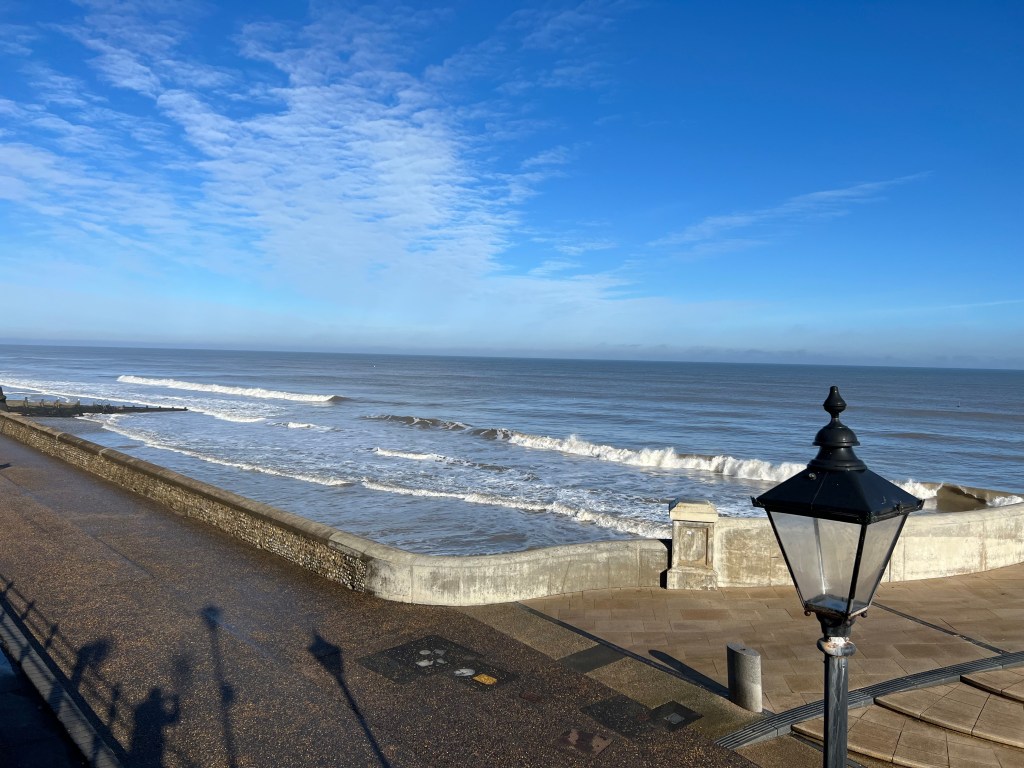
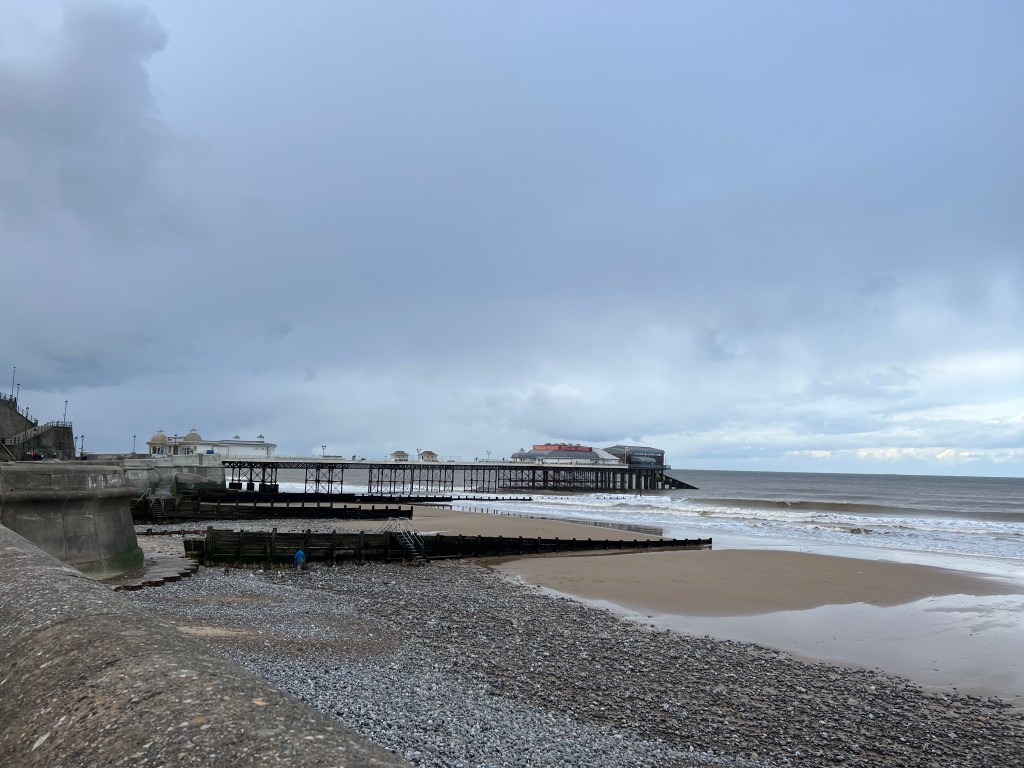
    To be fair to the young Winston Churchill, the Cromer he visited in 1888 would have looked very different to the one I was in this week. He wouldn’t even have had the pier to marvel at – Cromer Pier as we know it today wasn’t built for another 12 years. But it says a lot about the sense of humour we have in dear old Norfolk that his less than glowing opinion of the town is set into the promonade, right in front of the pier.

    If you’ve not looked into the history of Cromer before, it’s a fascinating story. The name does not appear until 1262, which given how old a lot of places in Norfolk are is basically last week. There was a village called Shipden near here, about a quarter of a mile from where the end of Cromer Pier is now, that was claimed by the sea hundreds of years ago. With the recent goings on in Hemsby, it just goes to show that some things never change. In 1888, coincidentally the same year as Churchill’s visit, a pleasure steamer crashed into the Shipden church tower which by then was just about reaching sea level. The passengers on the steamer were all rescued and no lives were lost, but when attempts to move the ship failed the decision was taken simply to blow it up, along with the church tower to ensure an incident like this wouldn’t happen again. About a hundred years later, a team of divers were able to find the wreck of the pleasure steamer as well as follow the streets of the old village along the seabed.

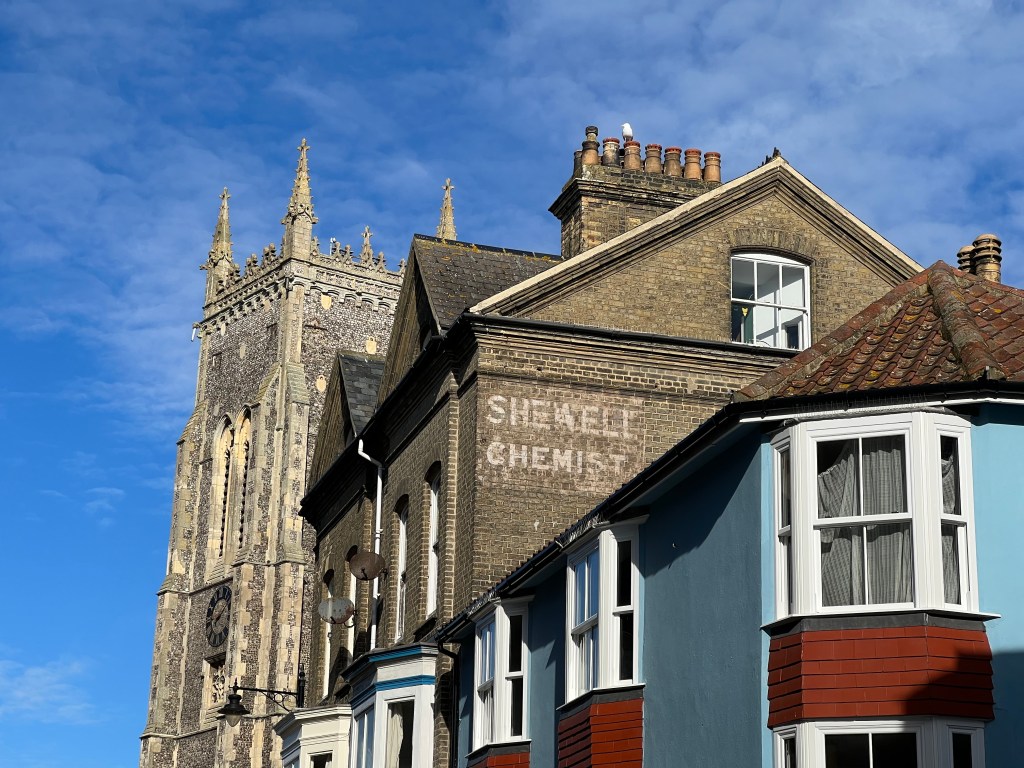
    What we now call Cromer would once have been known as Shipden-juxta-Felbrigg, with the name Cromer in use by 1400. Right in the middle of the town is the substantial church of Saints Peter and Paul. There is evidence that at one point Cromer was a small place with a large but run-down church in the middle. Just as had happened in Mundesley – which I wrote about last week – the arrival of the railway to Cromer in the Victorian age helped it become a seaside resort. On my walks around the town while I was there, Cromer has a huge number of buildings that would have been built around this time. Take a look at this page from the Town Council for more on Cromer’s history.

    As for my own trip, I arrived at the Cliftonville on Tuesday afternoon and was impressed from the moment I walked through the doors. It looked smart, it felt classy, and any fears I had that I was in for another London experience began to ease.

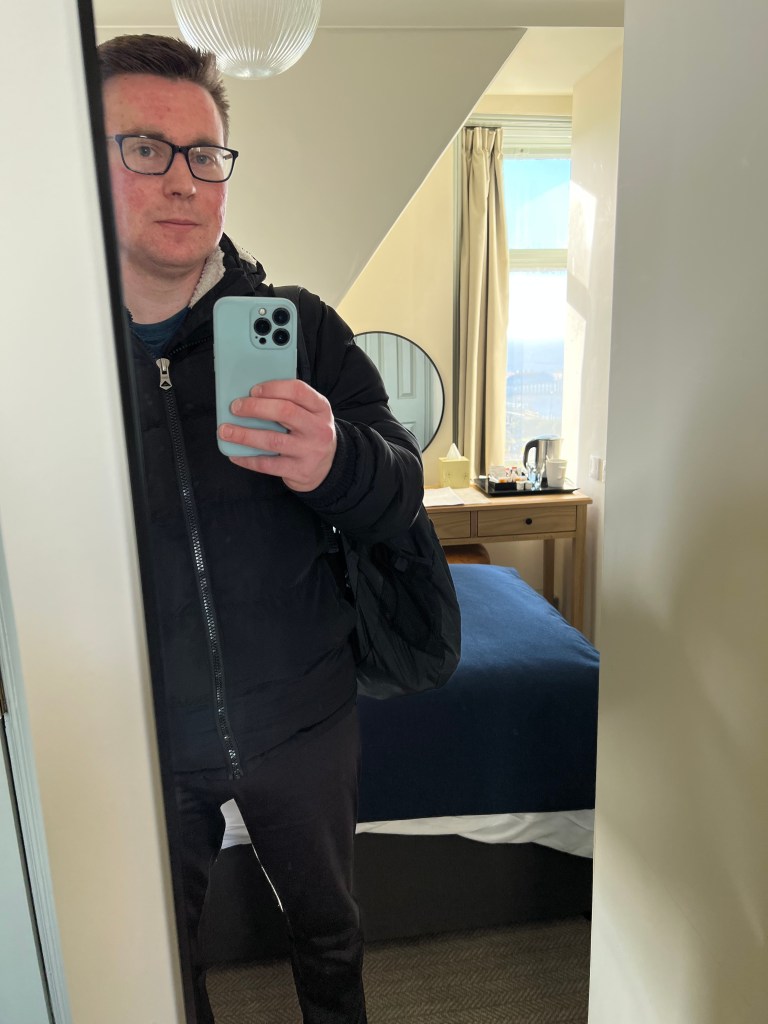
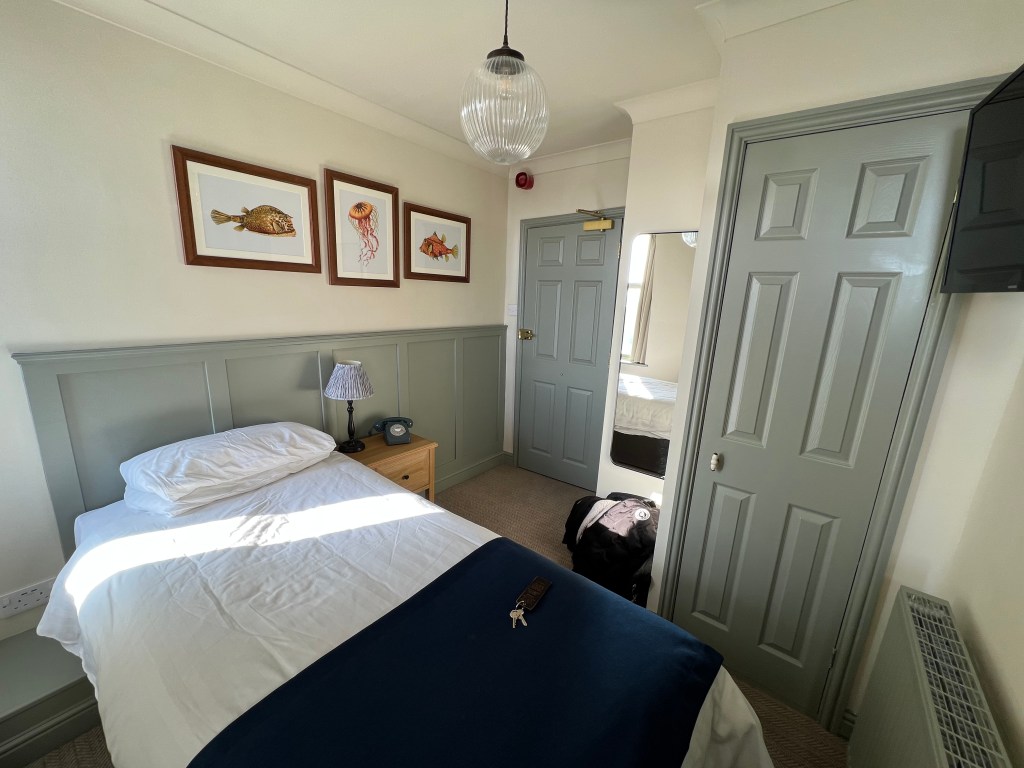
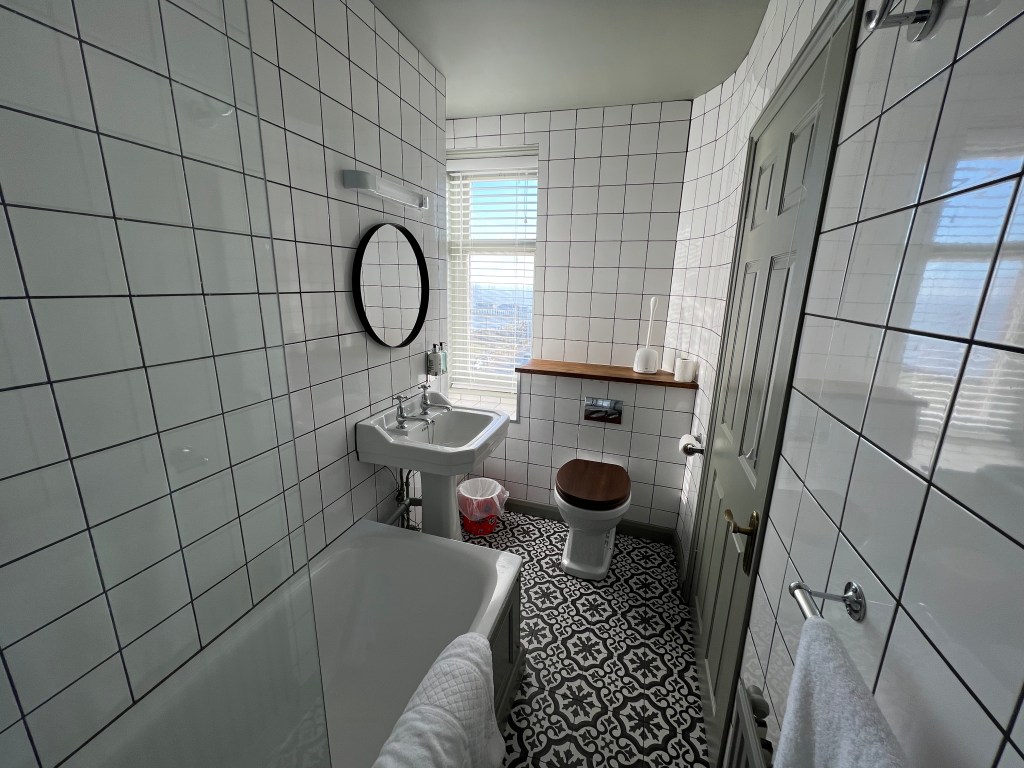
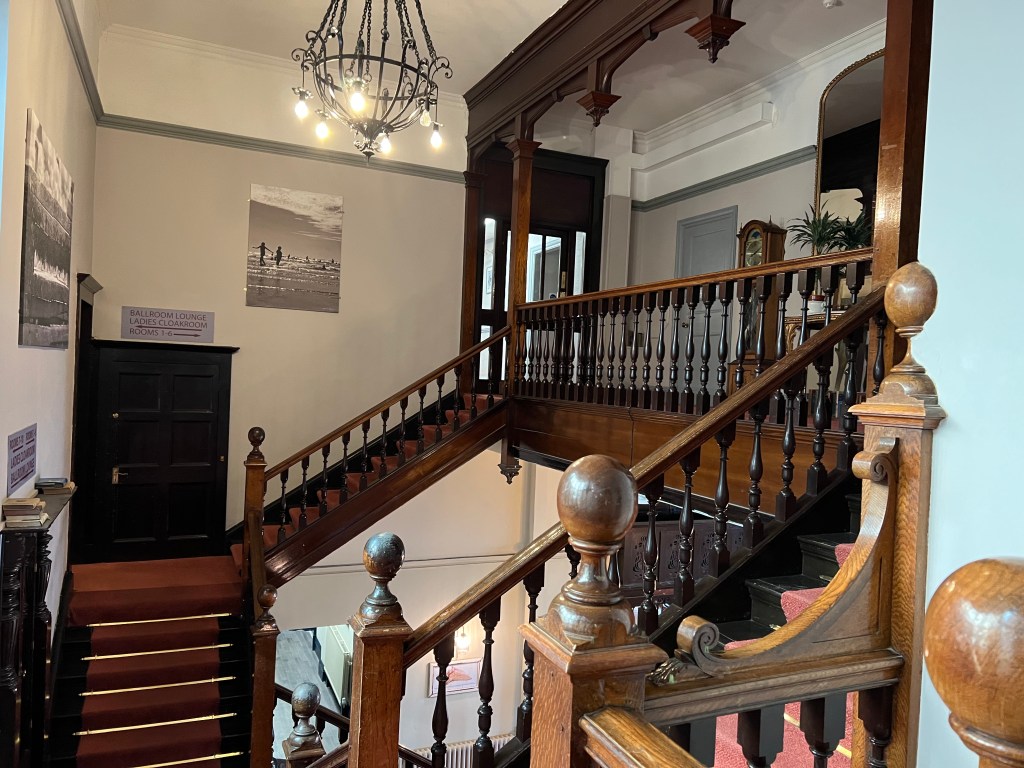
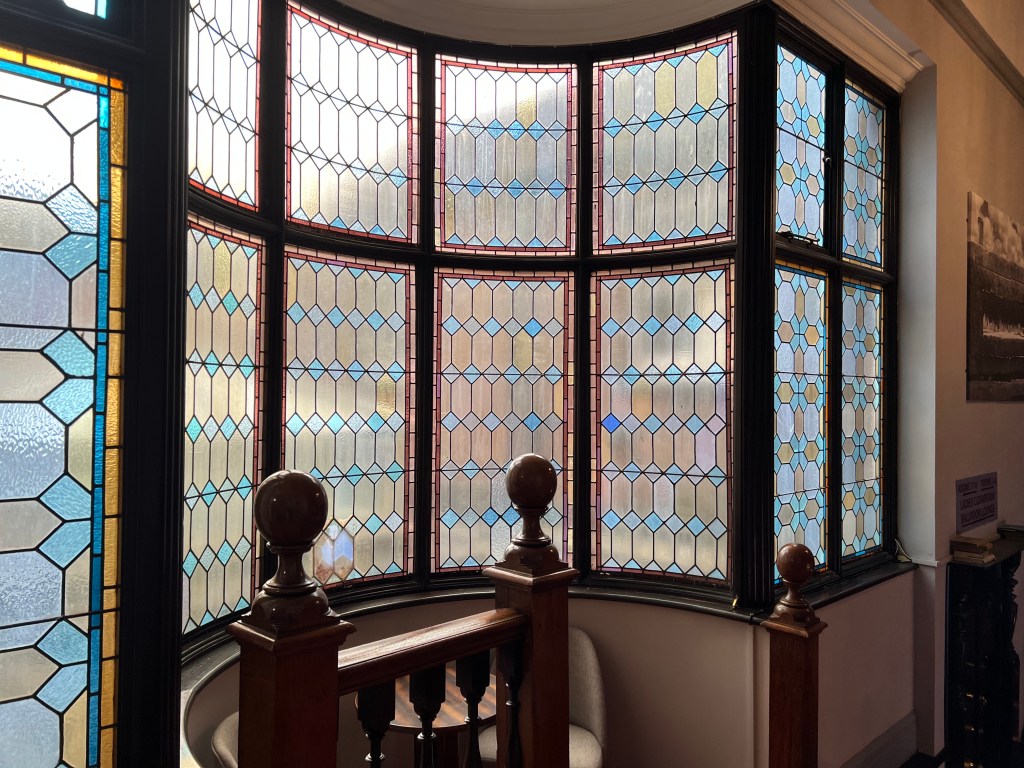
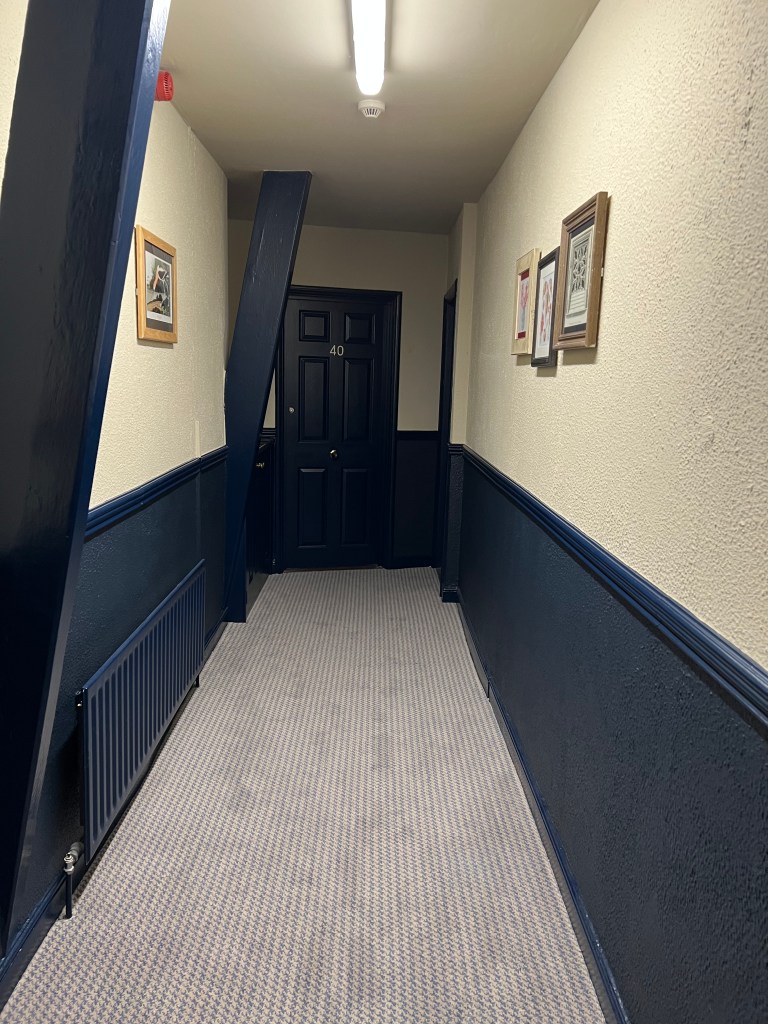
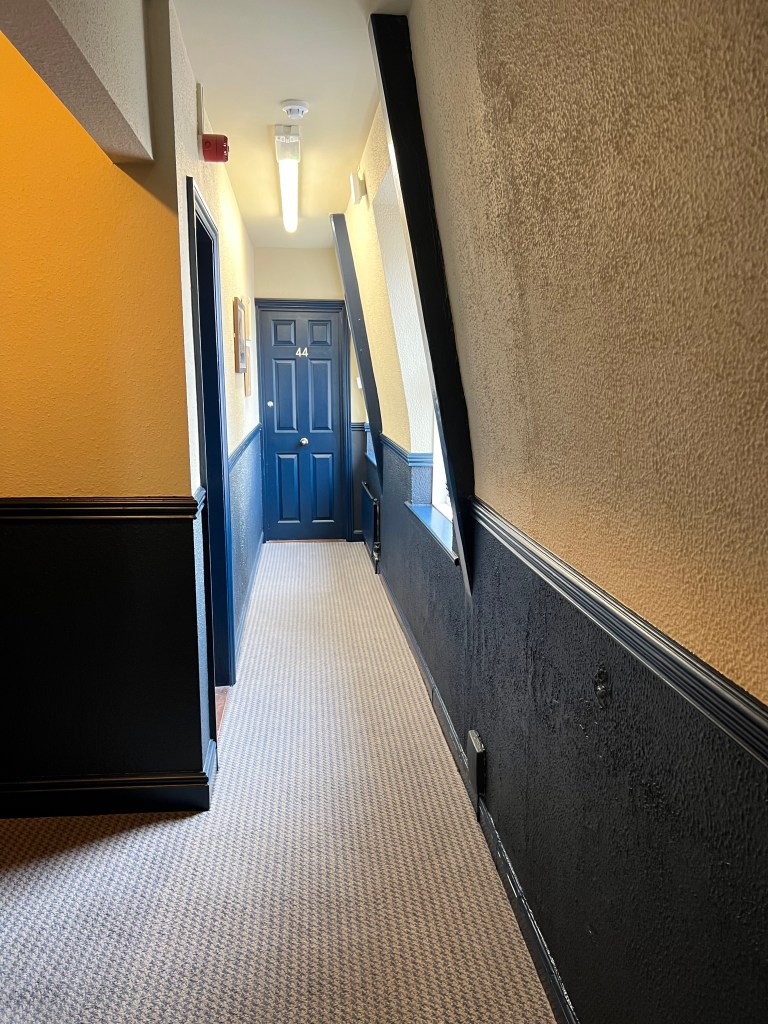
    I was in room 42, on the third floor. There is a lift, but I loved the grand staircase so much that I never used it. The second floor is being refurbished – there were tiles leaning against walls in the corridor and the chatter of workers as you passed on the stairs – but you couldn’t hear any noise from my room. Room 42 was small, granted, but it didn’t feel claustrophobic. I had booked a single room, travelling alone as I was, and that meant a small room with a single bed. It’s a while since I’ve slept in a single bed. It was clear that this room, too, had been recently refurbished. Possibly within weeks. The room had a fairly strong smell of paint, probably from the work being done on the floor below. The room had been finished to a very high standard and was sympathetic to the architecture of the building. Thumbs up from me.

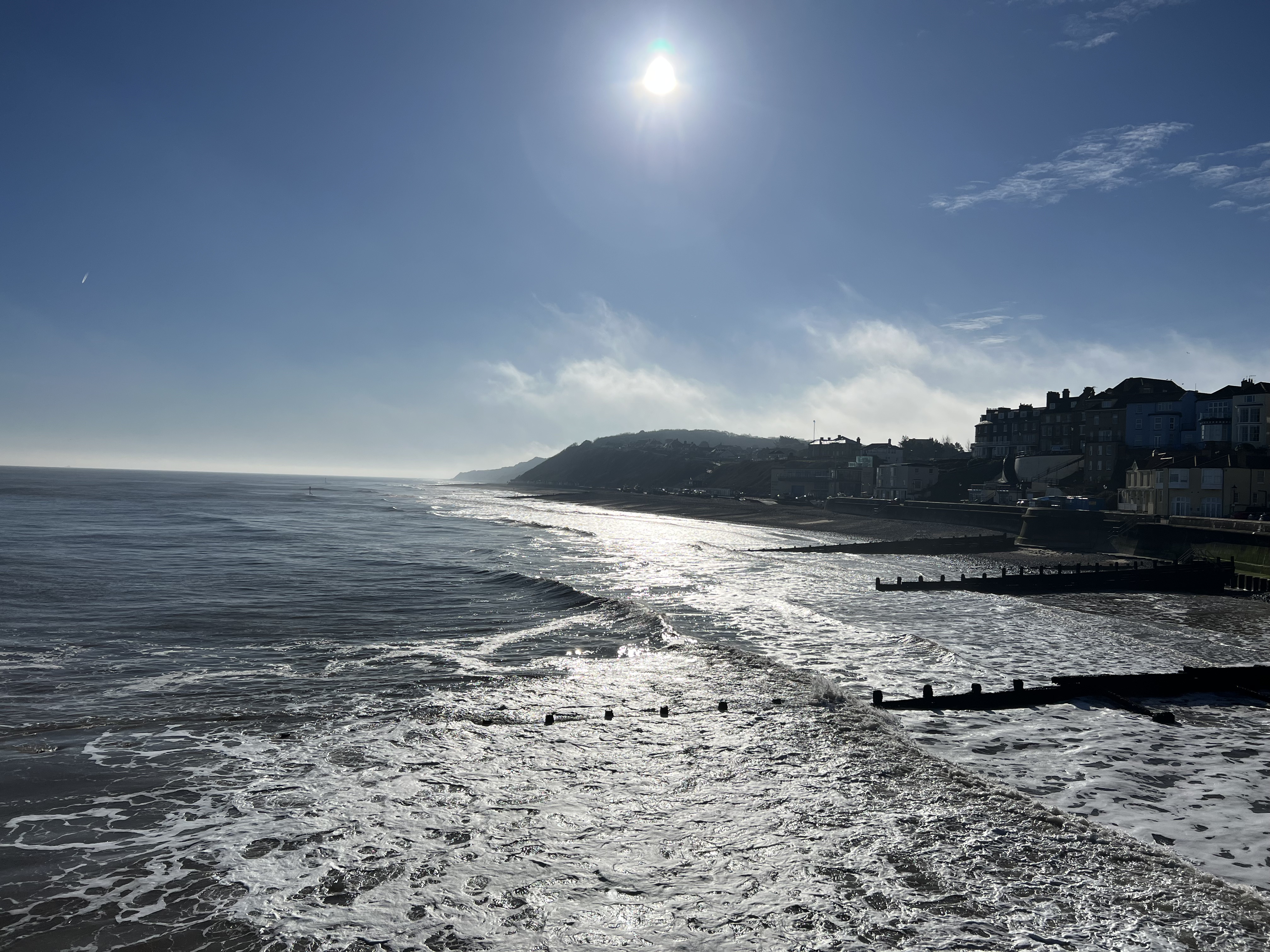
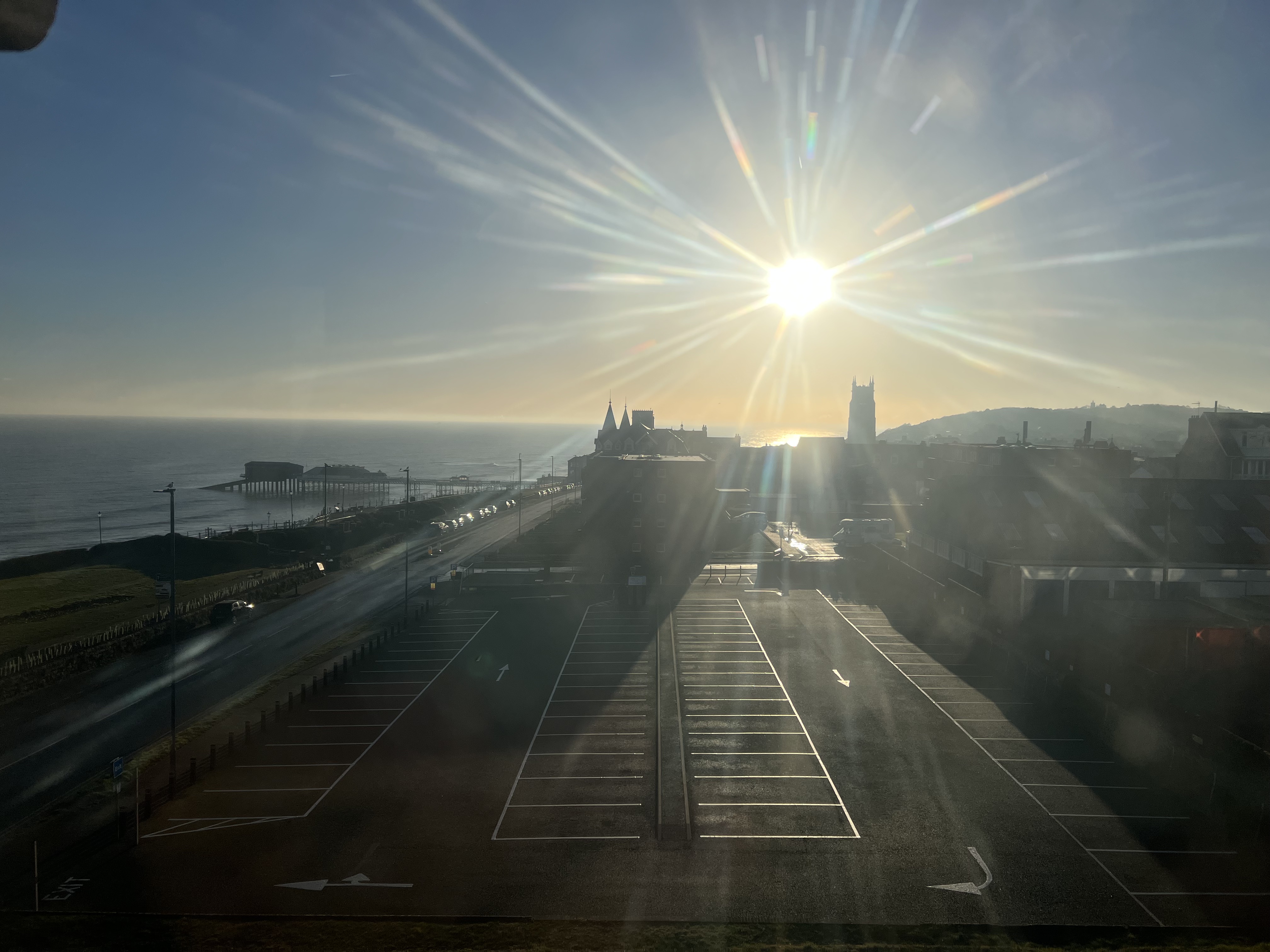
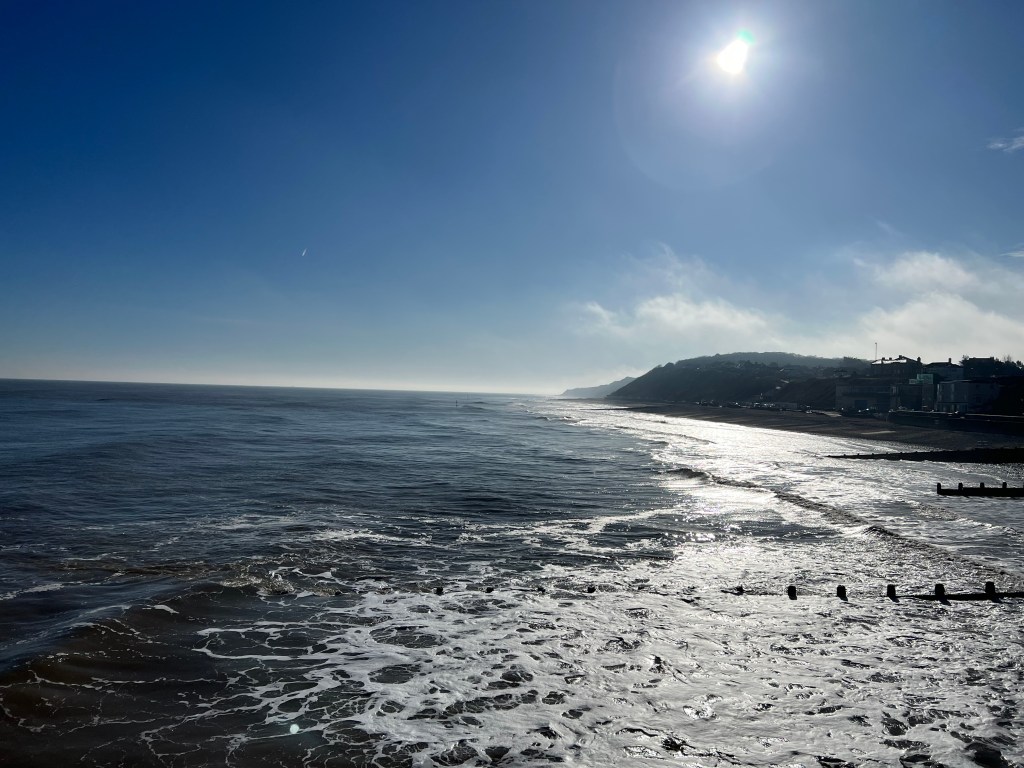
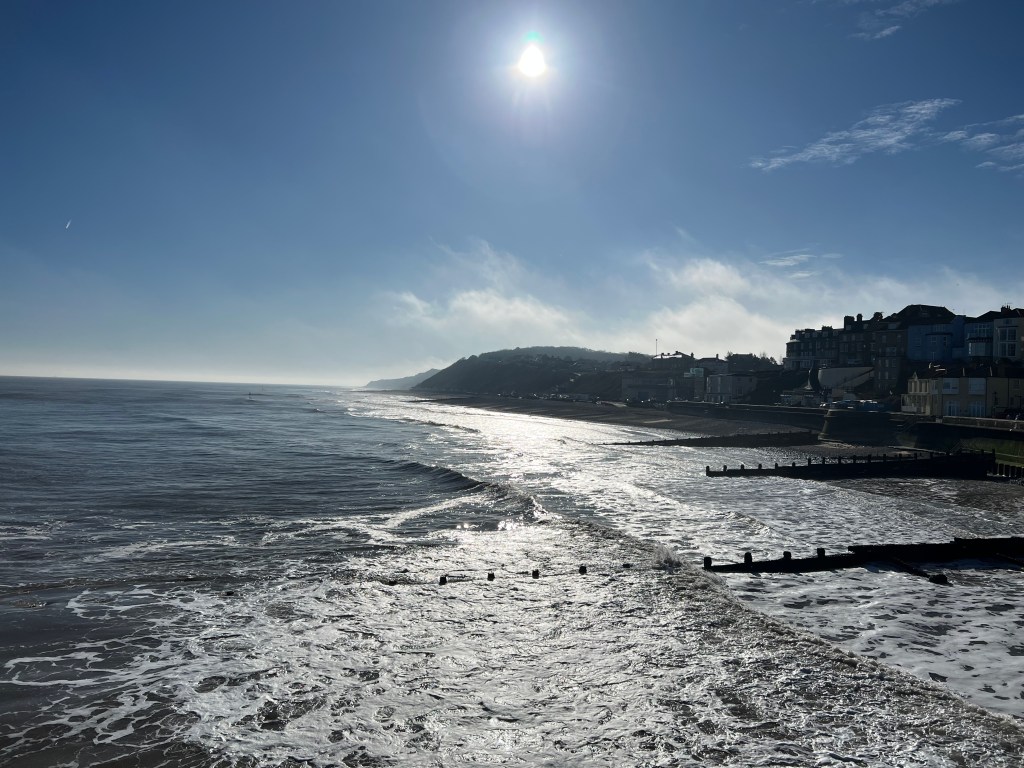
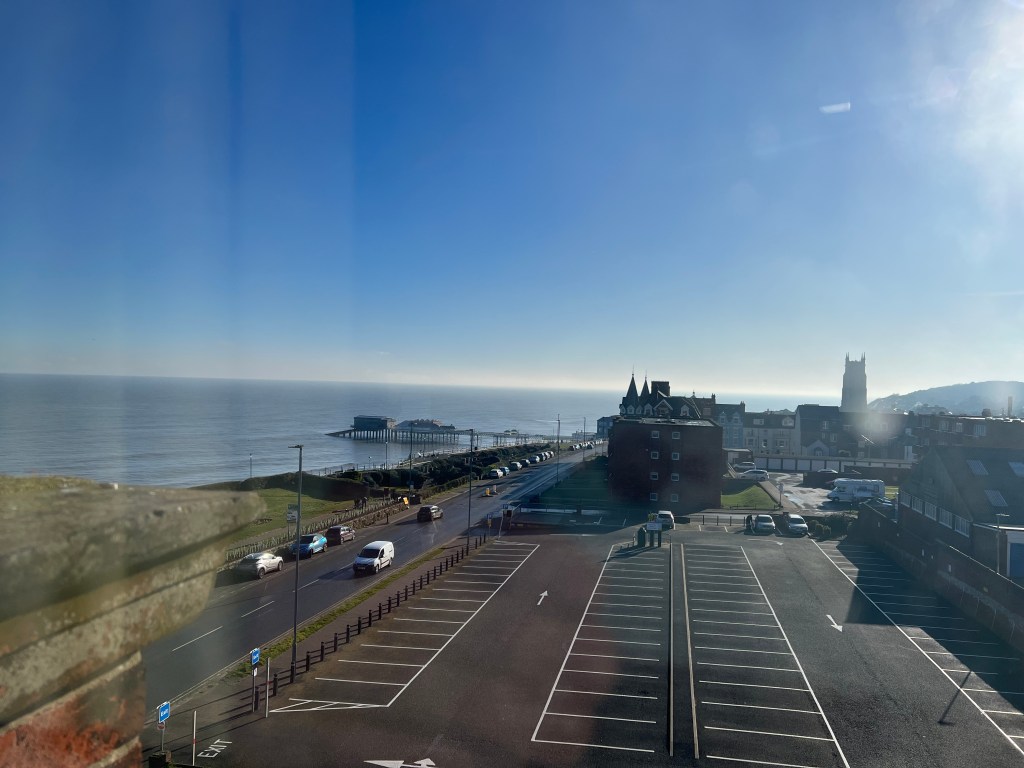
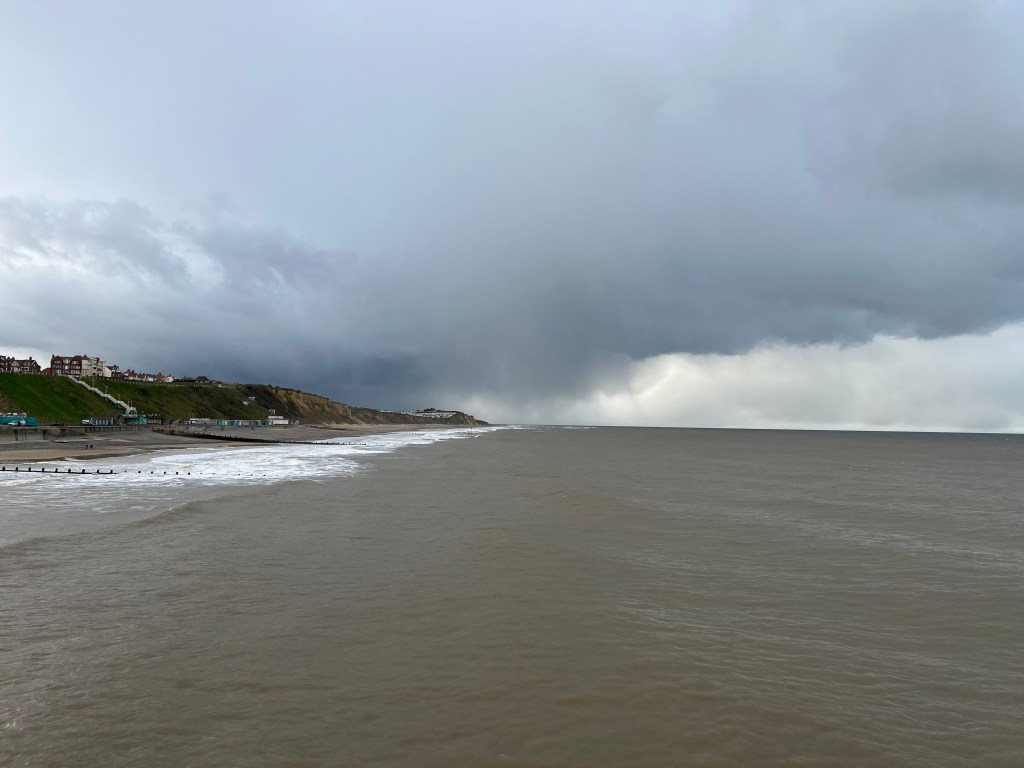
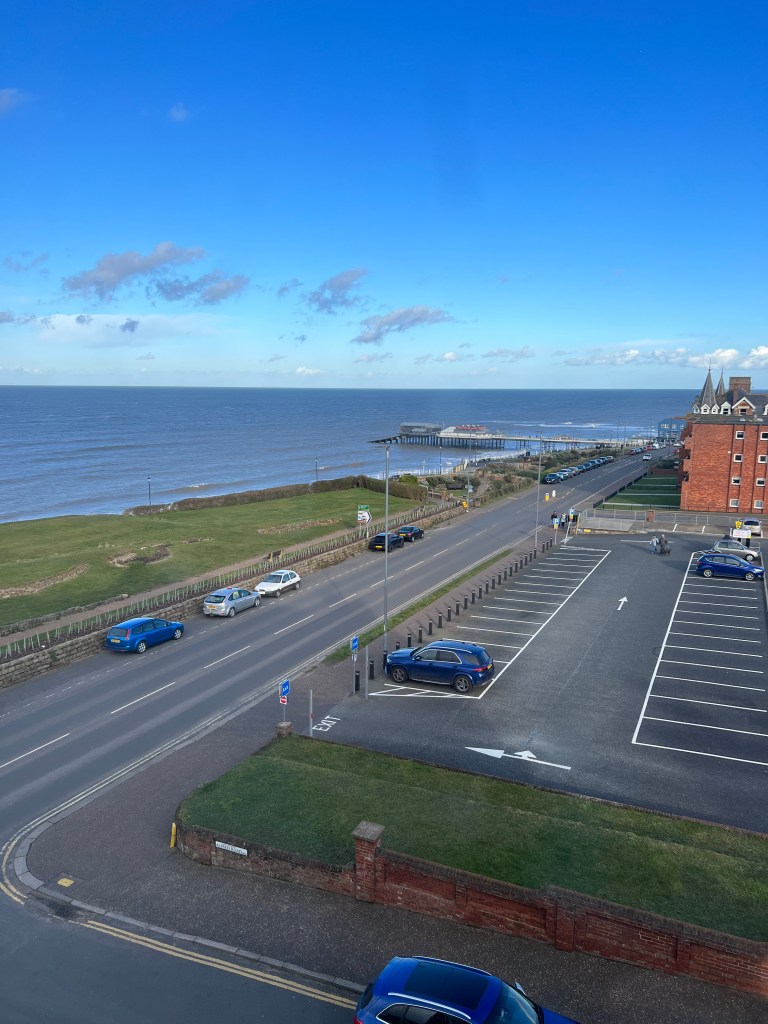
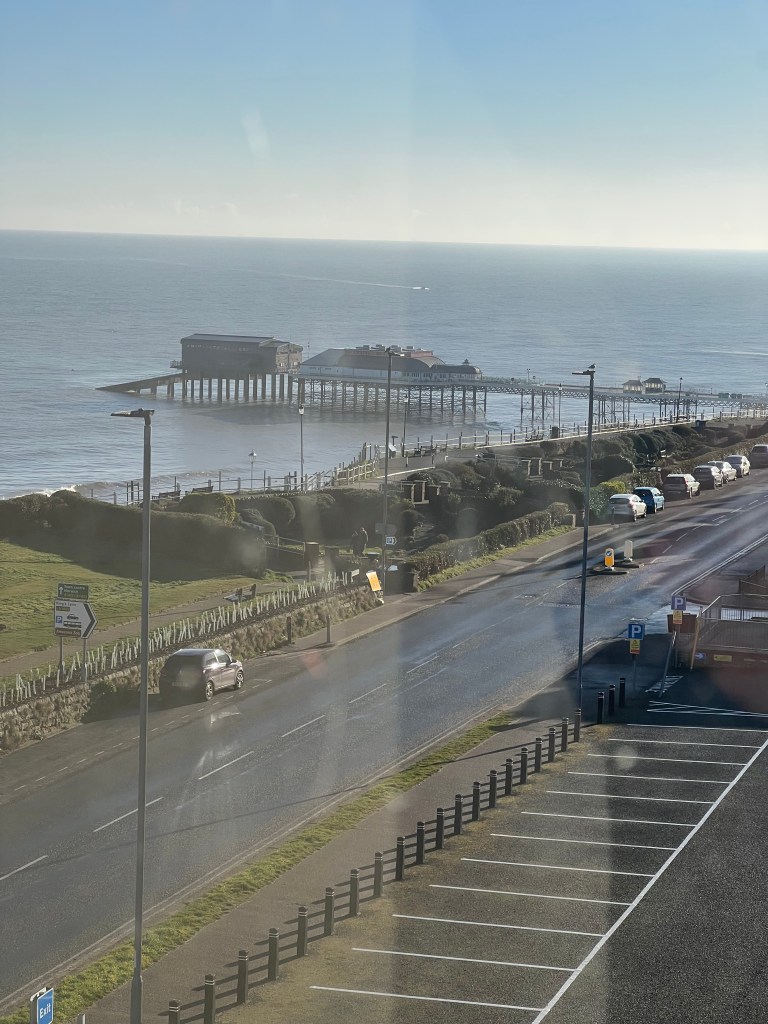
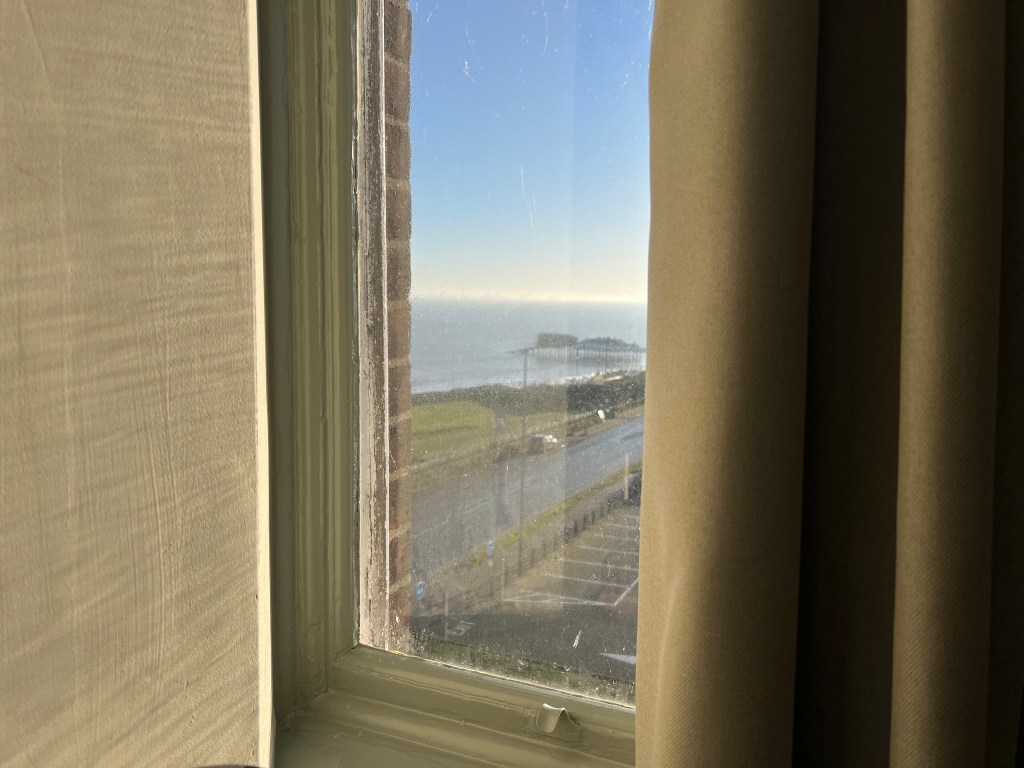
    The hotel claims to have sea views from every room, and while mine was on the side rather than the front of the building, I got a stunning view of the pier and the town centre.

    The morning view from my hotel room window

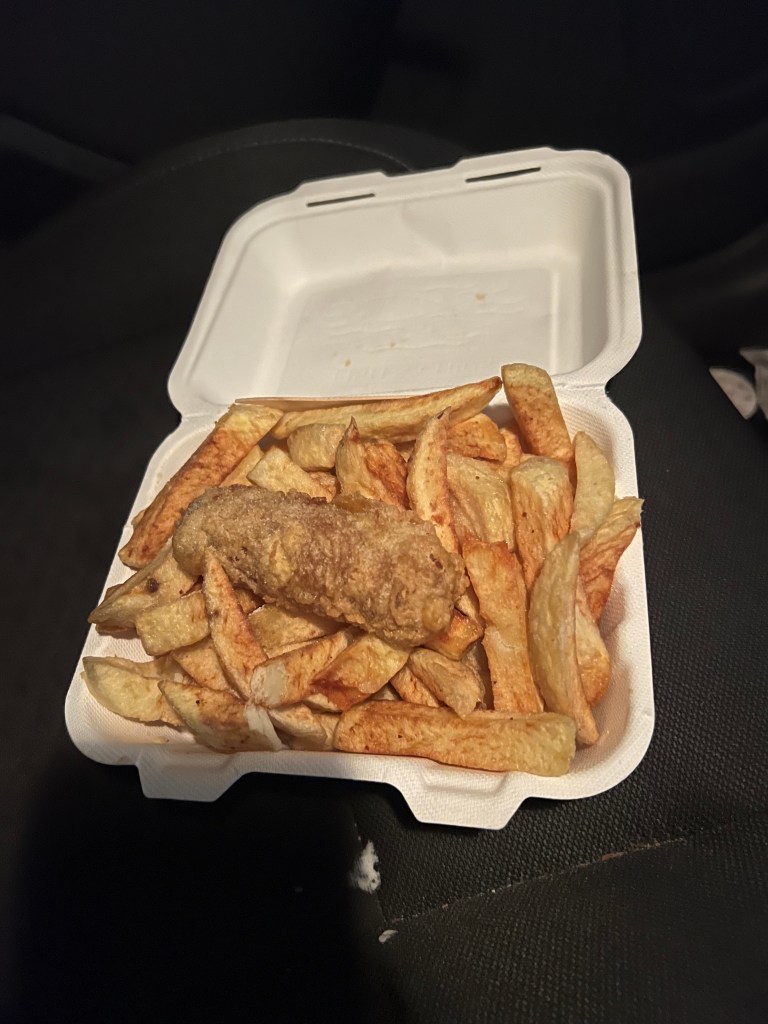
    I headed out for a walk, to explore, and was on the pier when I saw the weather closing in. Soon, a mixture of rain and hail was coming down, as well as the odd rumble of thunder. I went back to the hotel to wait for it to pass. When it did, I went to the famous Mary Janes Fish & Chip Shop, but ended up eating my sausage and chips sitting in my car in the hotel car park as I didn’t want the room to stink of them and all the seats I could find outside were soaking wet.

    I decided to have a bath, since the facilities seemed so inviting, and went to bed reading Felix White’s book It’s Always Summer Somewhere feeling restful and content, apart from the brief moment I forgot I wasn’t in a double bed and promptly fell off the side.

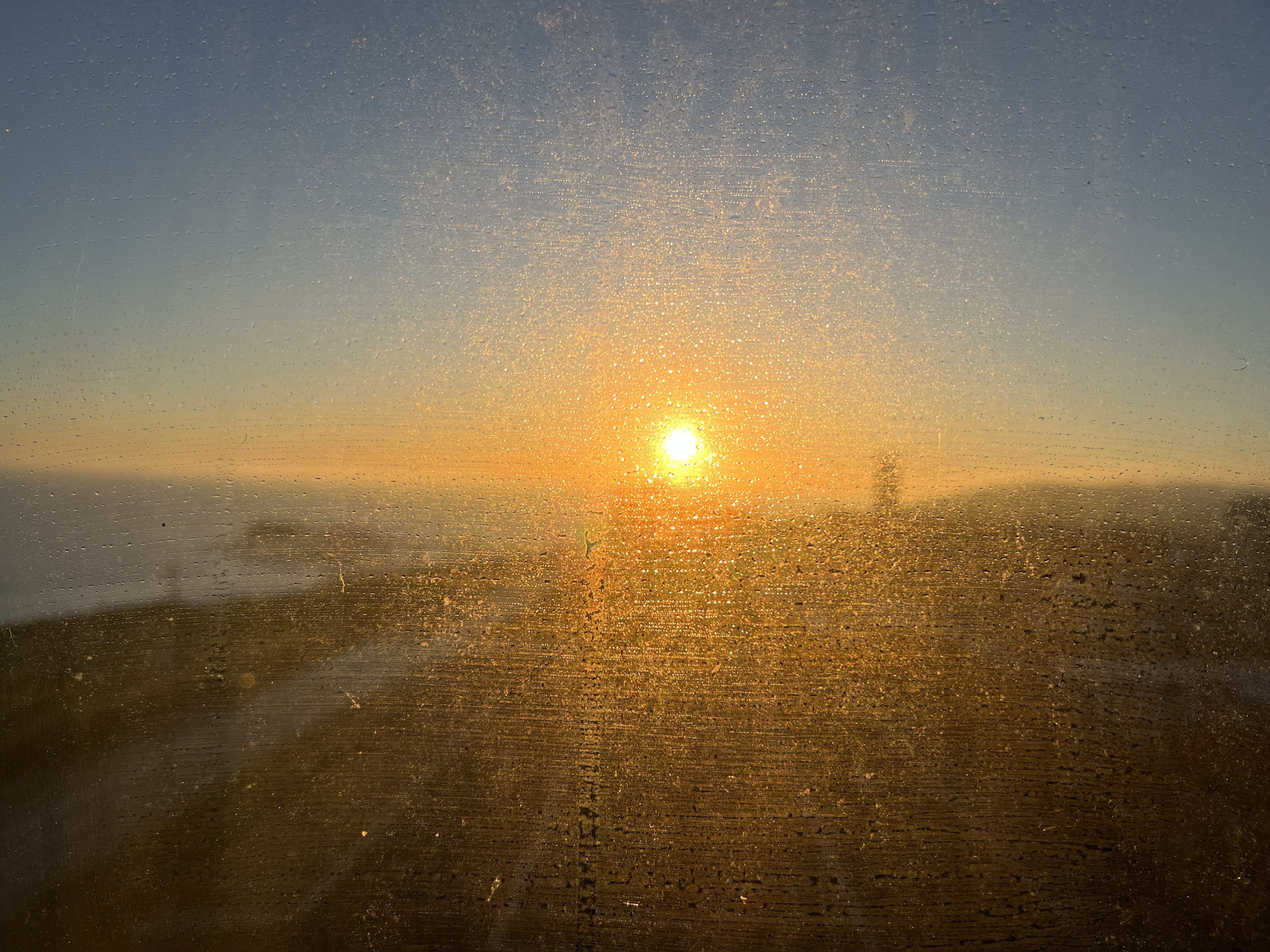
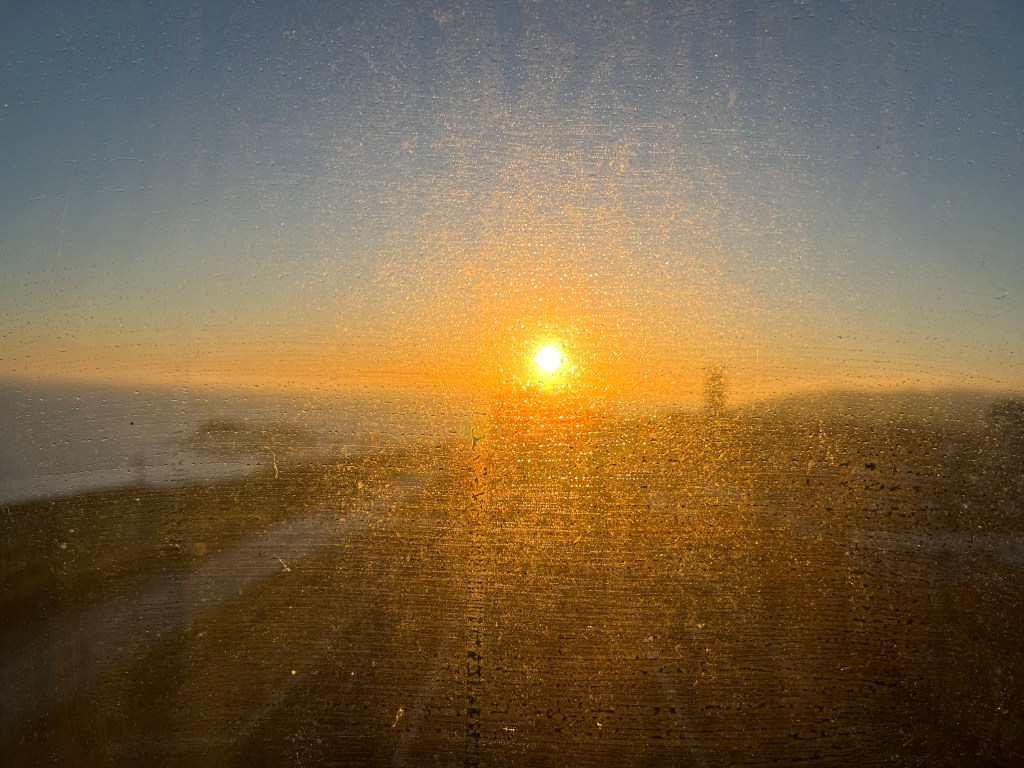
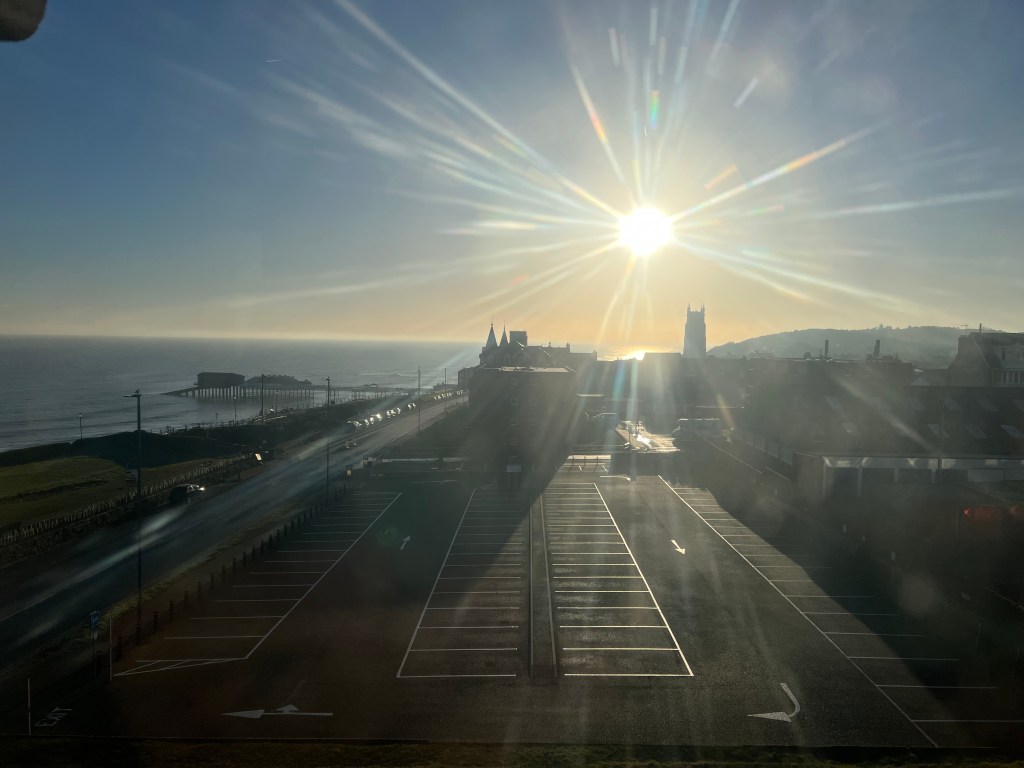
    I woke up somewhere between 5am and 6am. Mum had told me to look out for the sunrise if it happened to be awake, so I looked out of the window and was greeted with this stunning sight.

    The single glazed window had inevitably lost its battle with condensation, but a quick dry with a towel exposed that glorious view in all its glory.

    Breakfast was included in the £69 I paid for the hotel and I went down just after 8am. I found I was the only one in the restaurant, at least until an older couple came in when I was nearly finished. I was asked if I wanted tea or coffee (coffee please) and had a selection of cereals and juices to help myself to, as well as a menu of hot food to select from. In the end I just had a bacon bap, which was let down only by the fact the bun was a brioche one. Even my table in the restaurant had a view of the sea.

    Alone for breakfast

    Then I decided to get my things together and check out of the hotel, heading back into Cromer, taking in the morning sea air. I went into a couple of shops, leaving one of them with a new hoodie, and then I bought a small pot of pineapple, a bottle of orange juice and a paper and sat near the sea wall. My time in Cromer had been so short, but like I said, I learned.

    Here are a few things I learned:

    I am alone, but that’s ok.

    I am used to spending plenty of time alone. I do a lot of things with my mum, and that’s wonderful, but before I moved back in with her and her other half last year I lived as a lodger for eight years and spent lots of time by myself. I’ve never had a girlfriend, but that’s because I’m awkward and unappealing. I can probably count just the two friends that I would trust with my deepest secrets. It has to be partly my fault, I guess I can be overly intense and people tend to get bored of me after a while. But I often think I would love to be one of those people who has a phone that is constantly going off with messages. I’d love to be one of those people that wakes up to a good morning text. In Cromer, though, I absolutely felt the strength in being alone. I am often shy, hiding away even from buying things in a shop, but I overcame those fears on this trip and this has given me confidence that I can push on when I’m back in the real world.

    You don’t have to go far from home to have a holiday

    Cromer was my holiday, my trip away during my week off work. It might not have been the Caribbean or the Canary Islands, but it was far enough away for me to feel like I was somewhere different. And for £69 it didn’t break the bank either.

    The smallest things can put a spring in your step

    On my evening in Cromer, walking back to the hotel in the rain, I was waiting for a van to pass before I crossed the road. The window in the van was open, and loudly broadcasting from within was The View From The Afternoon by Arctic Monkeys. ‘Superb taste in music’ I thought to myself, and the rest of my journey was completed with a spring in my step.


    And that was my trip to Cromer. All that remains is for me to urge you to go and stay at the excellent Cliftonville Hotel and to provide you with a photo dump. Thanks for reading.

  • My latest column is in the paper today

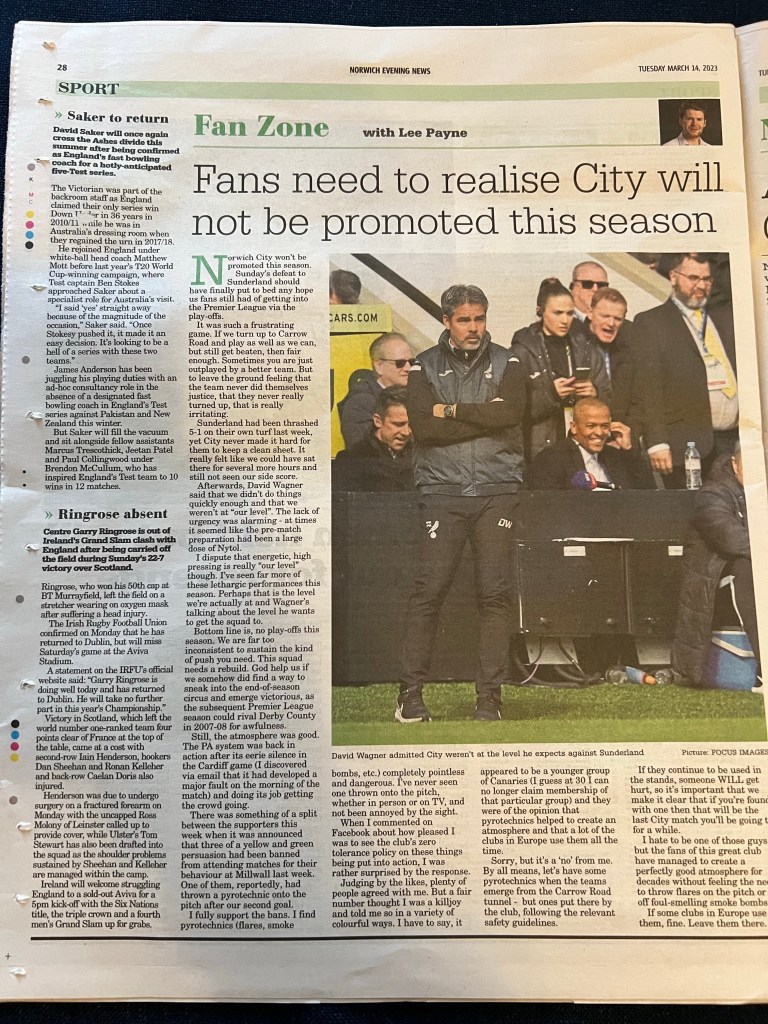
    My latest musings on Norwich City Football Club are in today’s Eastern Daily Press and Norwich Evening News.

    You can read it online here. I know I’ve posted this rather late to encourage you to buy a paper, but in further I’d urge you to consider it – local papers are really important and they won’t be around for much longer if everyone keeps getting all their news online for nothing.
    Here is what my column looks like in print. I’ve no idea who the bloke in the photo at the top is – it’s definitely not me but I can assure you they are my words! They must have made a mistake at the paper.

    In the column I talk about Norwich’s 1-0 defeat to Sunderland on Sunday, how irritated I was at the result and how I feel it’s the final nail in the coffin for our hopes of making the play-offs. I also make my feelings clear on the use of pyrotechnics by the crowd, an offence for which three City fans have now been banned from attending matches.

  • There’s history everywhere if you look hard enough – my little trip to Mundesley

    I’ve got some much needed time off work this week and, not wanting to waste it sitting around at home (though the snow has rather forced my hand on that one for the last couple of days), on Wednesday mum and I decided to go and see the sea.

    We ended up in Mundesley, a village I hadn’t been to that often and didn’t know that much about. I knew that a teacher I didn’t like at primary school lived in Mudesley, and I knew that Mundesley was the first place mum and dad took me for an outing after I was born. I don’t remember that, obviously, but I’ve been told about it. I’ve also been to Mundesley with my friend and her dog for a walk.

    When we arrived, the village was very quiet indeed, as you might expect in winter with the wind blowing and the temperature hovering just above freezing. Mum and I went to the cafe nearest the car park, where we sat in the window watching a procession of dog walkers heading down and then re-emerging from the ramp that leads to the beach. I had a coffee and a bacon and sausage roll. I’ve become something of a connoiseur of various pig products presented between two slices of bread, as my expanding waistline will attest to – Mundesley’s, for the record, was acceptable. Not the best I’ve ever had, but not too bad.
    After the cafe we went for a walk, taking in the Norfolk coast path and the various sights along the way. Mundesley is actually a very interesting village in an architechtual sense – there are a number of old buildings, quite grand in appearance, that I wish I could find out more about.

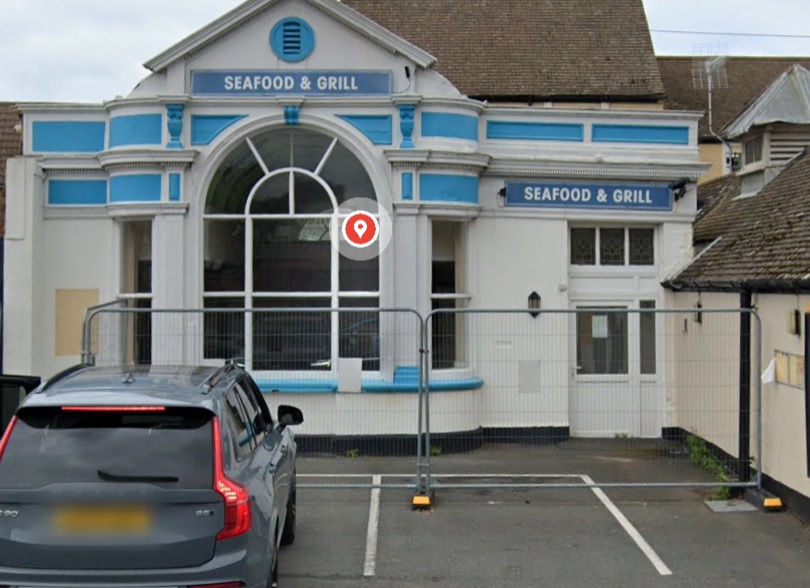
    Look at this building, for instance. I’ve had to get this image from Google Maps as I didn’t take many when I was there (my hands were too cold to hold my phone) but I can tell you that it looks exactly like this now. Empty.

    The architecture looks kind of art deco, I would say. It’s attractive, with its curves and big window. Yet it is underused, not being utilised to the extent that I’m sure the people who put it there invisaged.

    The research I’ve done suggests that this building, somewhat surprisingly, isn’t listed and that it was once called Bar Victoriana. Judging by its Instagram account, Bar Victoriana marketed itself as a trendy cocktail bar and occasionally had live music. The bar’s website is now dead, but on Facebook it appears to have closed in July 2019, with the promise of a ‘new seafood & grill restauarant’ on the way, which would explain the signs still on the outside. I can’t find anything about what happened afterwards, but I would suspect that the business may have been a victim of the pandemic.

    The building as it was in September 2008

    Mundesley has plenty of Victorian buildings, probably due to the arrival of the railway (long gone) in that period that turned the village into a holiday resort. Some of them are made out of local stone, given them an unusual appearance, while others are built from the red bricks you would expect of the Victorians.

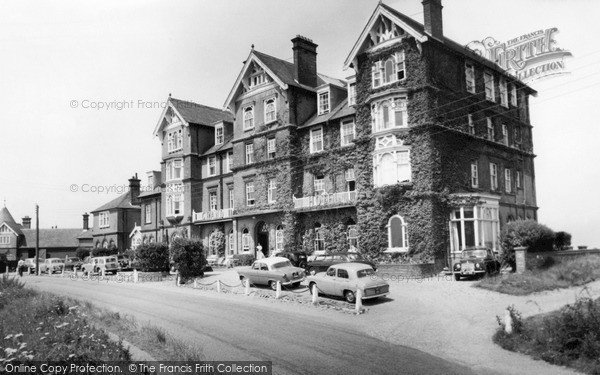
    There are two imposing former hotels in Mundesley that demonstrate its past glory as a Victorian seaside resort. The photo below shows The Grand Hotel, as it was originally known, in around 1960:

    From what I’ve been able to find out, the hotel was renamed the Hotel Continental at some point after the Second World War. G. Laird, who took the more recent photo below, remembers three summer holidays in Norfolk during the 1960s and said the Hotel Continental ‘was then a very elegant building and was clearly a popular hotel’.

    It would seem the hotel later became apartments.

    Old hotels fascinate me – especially abandoned ones. You see, history isn’t about being nerdy and reeling off dates all the time. My interest in history comes from mentally taking a trip into the past and thinking about what the buildings and the places I can see used to do, and of the scores of people that would have used them in a former life. Think about all of the Victorians who would have come to that hotel for their bucket-and-spade holiday. How excited they must have been to be out of the city for a few days. Imagine them, dining in the hotel with a view over the sea. What would they think of it now? A bit run down, a shadow of its former self. That’s what intrigues me about this kind of thing.
    The other old hotel in Mundesley is the Manor Hotel. It was built in 1900, so slightly newer than the Hotel Continental, and was – as the name suggests – originally a manor house, converted into a hotel as the tourism industry took off. According to this newspaper article, the hotel ceased trading in December 2019 and a month later was up for sale (for what seemed like quite a reasonable £450,000). Of course, the pandemic was on its way shortly after, bringing with it a complete halt to tourism and leisure activities, so I don’t know what happened after that. The building stands empty, still showing evidence of the business that continued there until 3 years or so ago. Below is a photo I found online of the hotel in the month it closed:

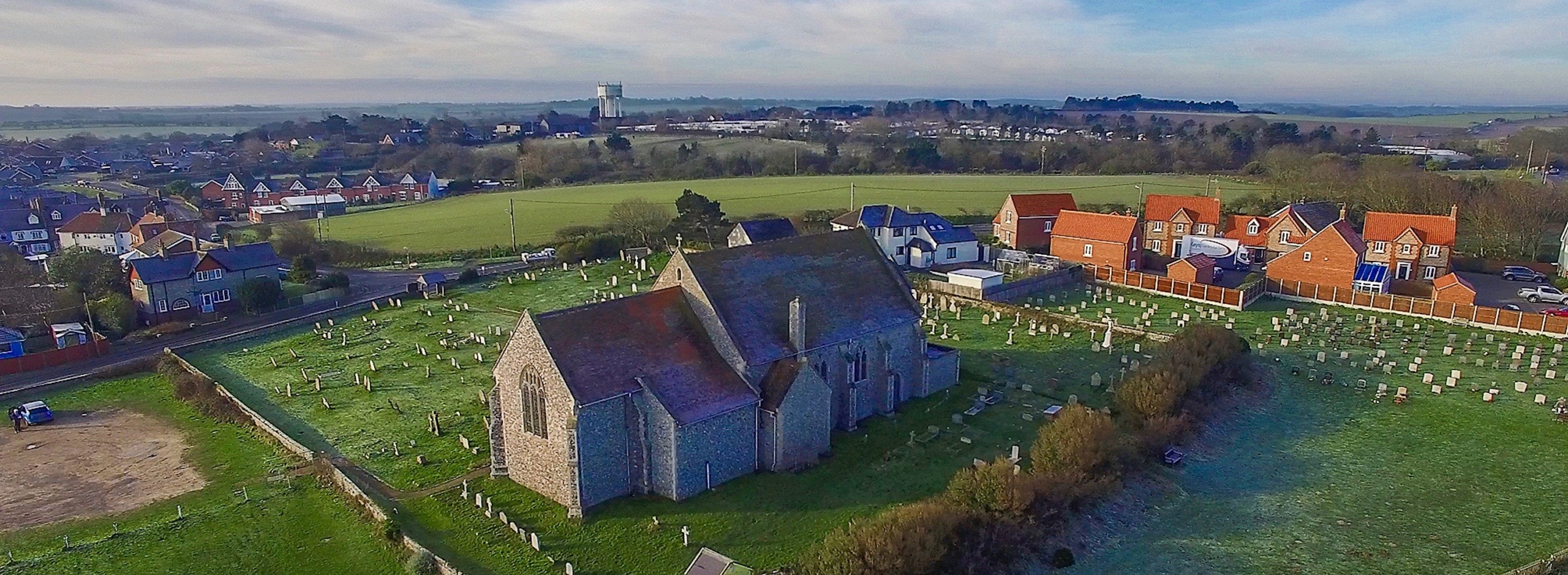
    Our walk also took in the impressive All Saints church, which stands alone and imposing on the cliff top. The church has Norman origins, but I learned that it stood virtually in ruins for about a hundred years until being sensitively restored (unusual for the time, I think) between 1899 and 1914 – this coincides with the railway and subsequent tourist trade coming to Mundesley, so they probably felt like they wanted to smarten the place up for all of its new visitors. The church is described in much finer detail than I can manage here.

    The church of All Saints, Mundesley

    On the wall of the church, we noticed a plaque dedicated to the residents of the London borough of Haringey who had died at Clarence House in Mundesley. We found The Clarence House later on in our walk, and it is a care home in what looks like it might have been another former hotel, but even looking online I can’t find anything about this perculiar dedication to people who came there from the capital. My theory is that some elderly residents of Haringey may have been moved out of bombed-out London to calmer, safer surroundings on the Norfolk coast, but I have no idea if I’m thinking along the right lines. If anyone reading this happens to know more, please do let me know.

    Speaking of the war, there is a large amount of evidence of Second World War defences in Mundesley. As well as a few pillboxes, there is a gun emplacement, built in 1940 or 1941. There is a newspaper article here about the community’s efforts to have the gun emplacement protected by Historic England. The gun emplacements are a stark reminder of how worried Britain was during the war about the enemy invading by sea and its extensive efforts to protect the coastline. The guns themselves were removed by 1946, but under the structure remains what would have been an accomodation area complete with bed frames. The future of the gun emplacement is a concern, with the underground section apparently now full of water and coastal erosion bringing the whole thing ever close to the edge of the cliff. I’m not that into war history, but I’d recommend visiting the gun emplacement at Mundesley while you can.

    The gun emplacement at Mundesley, pictured in 2016

    Part of our walk also took in Sea View Road, an untarmacked street separate from the main road. We found the number of seemingly empty but reasonably well-kept properties along this road odd, eventually concluding that this is probably an area of second homes – rich people, coming from outside Norfolk, who own properties on the coast that they only live in for some parts of the year. It’s a growing point of contention around here, and is already a massive problem in places like Cornwall.

    Our walk also took in this old brick kiln, right in the middle of what is now a caravan park and one of Mundesley’s listed buildings, and some evidence of coastal erosion:

    With a little help from a bus, we were back where we started and some (very good) chips for lunch brought a lovely little trip to the seaside to an end. I left knowing more about this small village of the North Norfolk coast, and reminded that everywhere has a story to tell if you look hard enough. I urge you to go out there and explore!

    The route of our walk
  • It’s drizzling – it must be time for cricket

    I am typing these words into my laptop, at my desk in my bedroom, facing the window. It’s exactly 9.30am and the Norfolk village of Brundall is covered in a milky white blanket of cloud. A drizzle is falling, the sort of rain that no one would describe as ‘chucking it down’ but the sort that leaves you soaked after a short while.

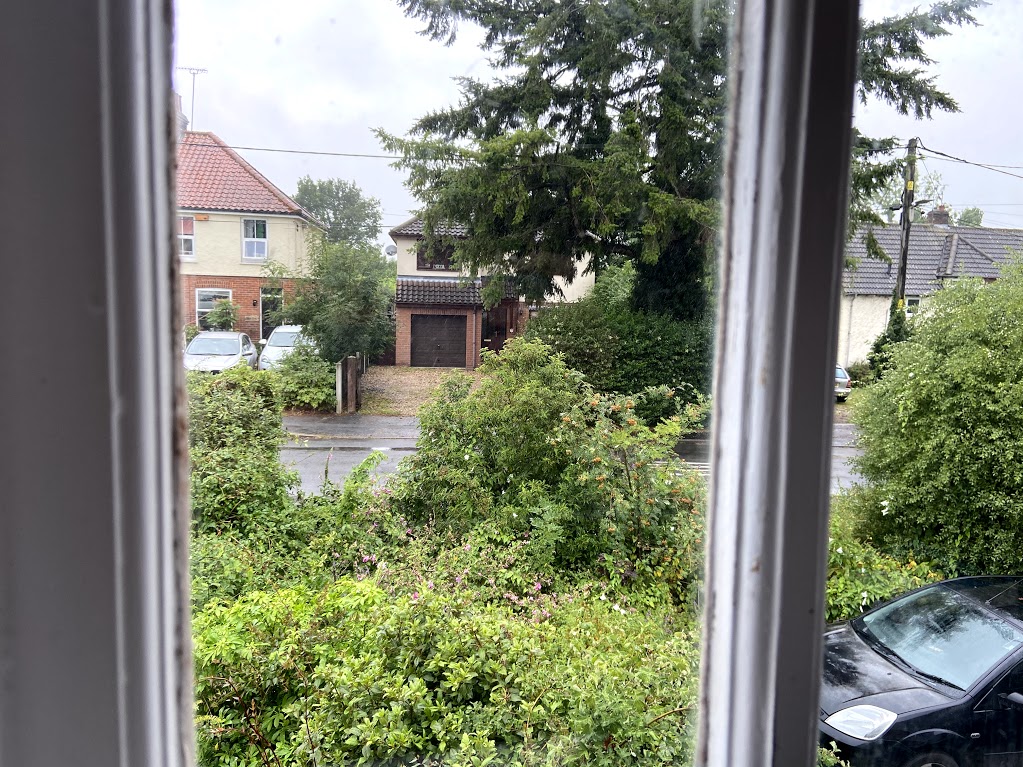
    The summery scene from my bedroom window

    It must be high summer. The weather has been warm and dry for much of April, May and June – I believe May was the sunniest since records began in this country. But, of course, since today is supposed to be the first day of international cricket in England this summer the weather is poor.

    I’ve just had to look it up, but England’s men last played a Test match in January. On the 27th of that month they completed a victory against South Africa in Johannesburg, winning an entertaining series 3-1 and looking ahead to two matches in Sri Lanka in March.

    England’s men playing in Johannesburg in January – the last Test match they’d play until today

    The coronavirus was around at that point. It had mostly been the third or fourth item on the news – this disease that was causing problems in China. It might have been the same week that the UK recorded its first official death from it. But no one could have predicted that it would have such a total impact on every single aspect of our lives.

    163 days since that last Test, England should be playing the West Indies at the Rose Bowl – near Southampton – today. Months of planning have had to go into staging the series. It had to be worked out how to ensure everyone’s safety. The West Indies squad had to be convinced to come over. Protocols put in place. And so England’s first Test of the summer will not include that familiar buzz unique to cricket crowds. That way a day’s play starts with excited conversations going on in the background to the action, evolving into a beer-soaked chorus of chants and cheers as the day progresses. Instead the stands will be empty, everyone forced to watch on TV or listen on the radio.

    The Rose Bowl near Southampton will be behind-closed-doors for the Test match

    It will be strange, but at least it’s cricket. Not in my lifetime has the sport I loved been absent for as long as this. I’ve continued to read cricket magazines, watch old matches, seen a couple of documentaries about the game – but I haven’t half missed it. Much more, it turns out, than I missed football. I’ve often said that no matter what is going on in my life, everything feels alright with the world on the first day of an England Test match. And that’s exactly what I need right now.

    The weather is rubbish, yes, but the forecast I keep checking on my phone for the Rose Bowl does not suggest a total washout. With just over an hour to go until the scheduled first ball, I have that familiar sense of anticipation. Cricket’s back. All is well.

  • We walked 14 miles… because we wanted to

    We walked 14 miles… because we wanted to

    A friend is someone who understands your past, believes in your future, and accepts you just the way you are.

    Unknown

    There have been two major additions to my life in the last five years.

    One, taking up walking. Following trails, exploring new places and getting different perspectives of scenes familiar from the window of a car. Walking has subconsciously kept me reasonably fit and healthy, both mentally and physically. I used to do a lot of walking alone, usually on old railway lines. I am also often joined by my mum, who I have a bit of fun with by interviewing her at the end of one of our adventures. Nowadays, I tend to be joined on my walks by the second major addition to my life: friends.

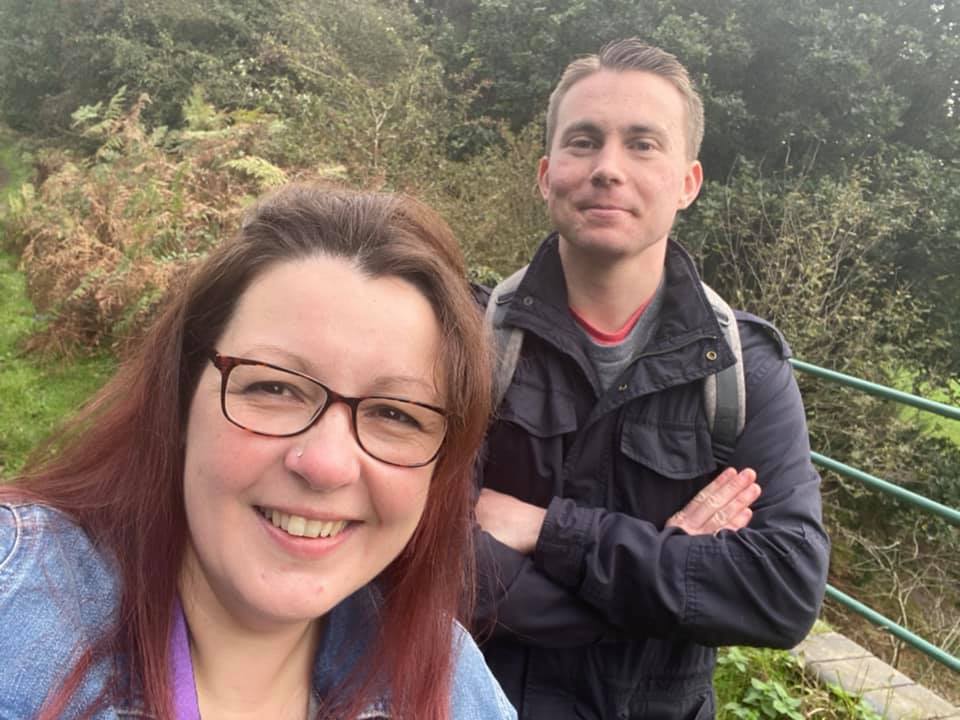
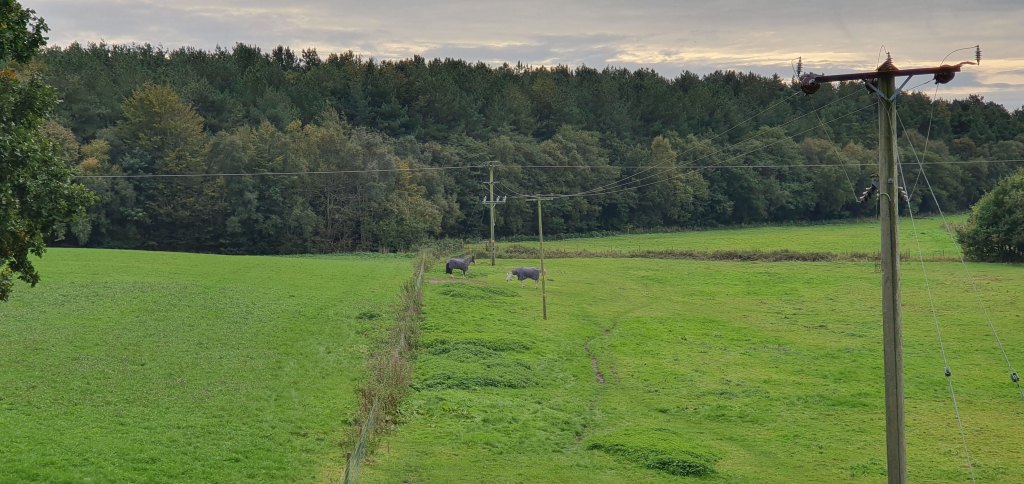
    Walking in the Norfolk countryside offers some stunning scenery

    I will readily admit that I have never found forming friendships easy. I am crippled by self doubt – I am not good enough, not worthy of anyone’s attention. I had a few school friends, as must of us do, and at university I had one friend that helped make being in a new town that bit easier. I am glad to say that friendship remains, albeit long distance, today.

    But in the last few years I have found myself with what I believe are the best group of friends anyone could wish for. Four people who I have laughed with, shared with and tackled life’s hurdles with. They have made me a better person. It’s not exaggerating to say that my life has been utterly changed by them.

    One of these friends, Katie, is my regular walking buddy. We’ve been heading out with her dog Oscar for more than two years now, exploring the Norfolk countryside. Walking with someone else is now such a desirable thing for me that I find walking alone dull. Katie and I have mostly used the disused railway lines towards the north of Norfolk to chew the fat, have a laugh and talk over something that’s bothering us.

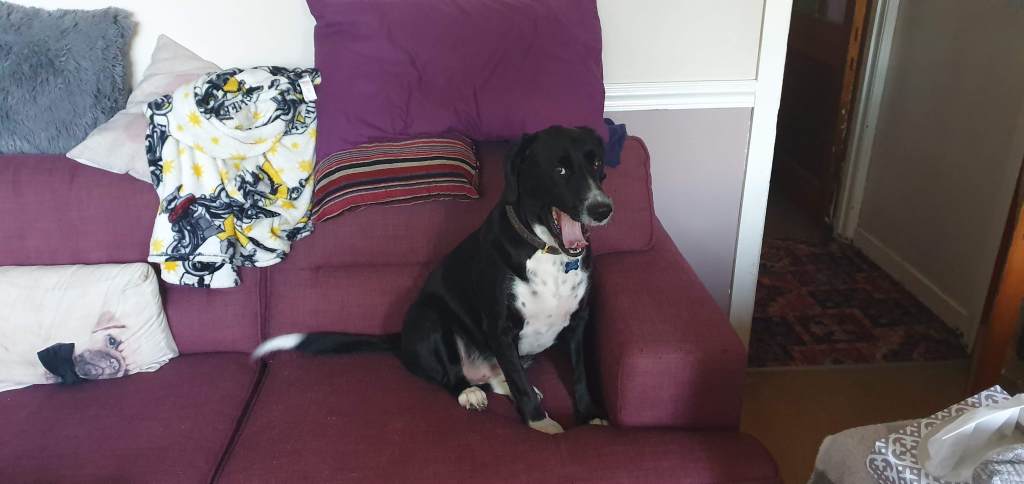
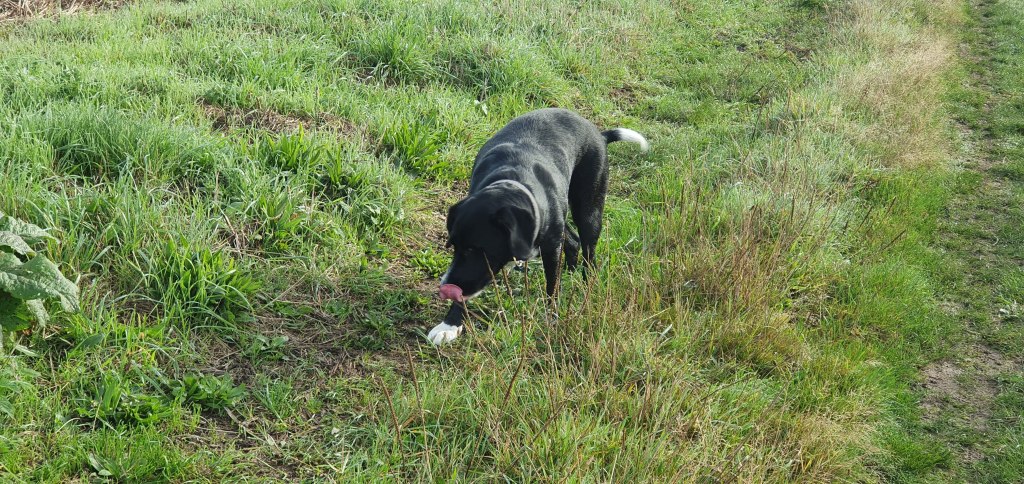
    Oscar was yawning before we had even set off

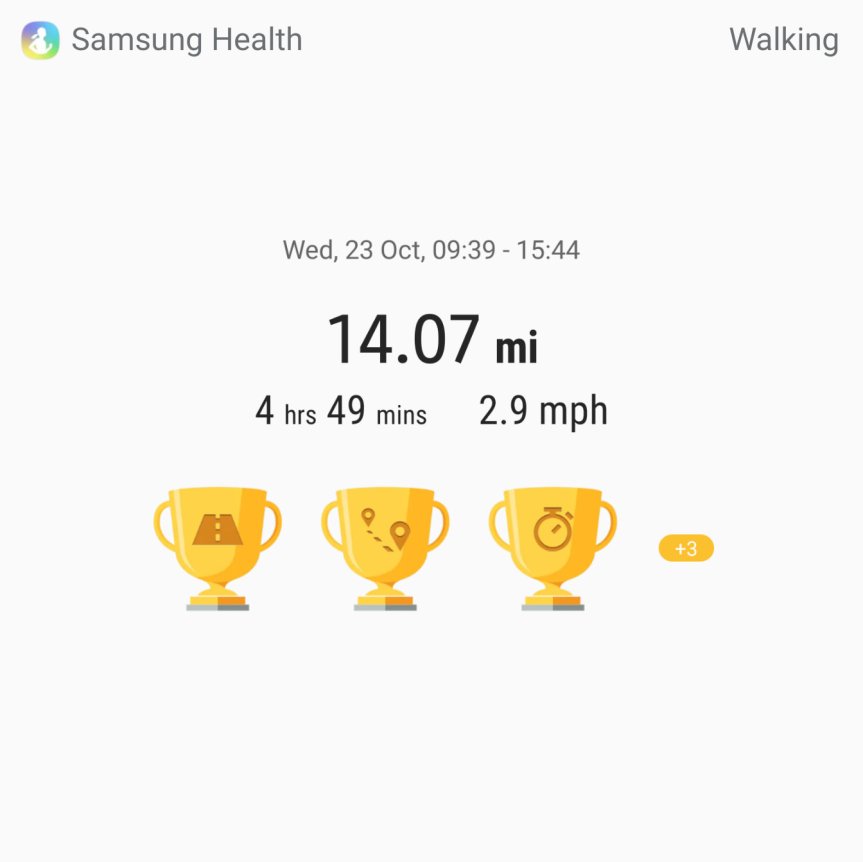
    Our walks are usually between four and six miles, but on a few occasions we have gone, quite literally, the extra mile. In early 2018 we walked from Aylsham to North Walsham and back, a distance of 14 miles, and later on in that year we did a 10 miler.

    Yesterday, we did the Aylsham to North Walsham trek again, this time learning from the errors we had made the first time around. We made sure we had enough fluids with us to avoid becoming as dehydrated, Katie had organised for her mum and her daughter to be waiting at the halfway point so we could have a ‘pit stop’ of sandwiches, and Katie also went through three pairs of socks and two pairs of boots in an effort to avoid the blister hell her wet feet had caused her the first time.

    Oscar enjoys the walks as much as we do

    The weather was just about perfect for the occasion – dry, not too hot and not too cold. We had been building up to this with several walks in the weeks before so we were in decent shape to hammer through the miles.

    Four hours and forty nine minutes after we had set off, we had done it.

    When we had told people what we were planning, the most common question was ‘why?’.

    Well – why not?

  • Going back ‘home’

    I am prone to spells where I feel out of control and as if I’m ‘going mad’.

    I’ll try not to bore you – this is about the benefits I believe there are to be had in going back to where you felt happiest and safest – but I need to give you some background information first.

    The vast majority of my childhood was spent in the Mile Cross area of Norwich. Those who know it will probably not speak highly of it. It’s not a nice place. But for me, it was home. From when I was a toddler until I had to move away in 2010, aged 17.

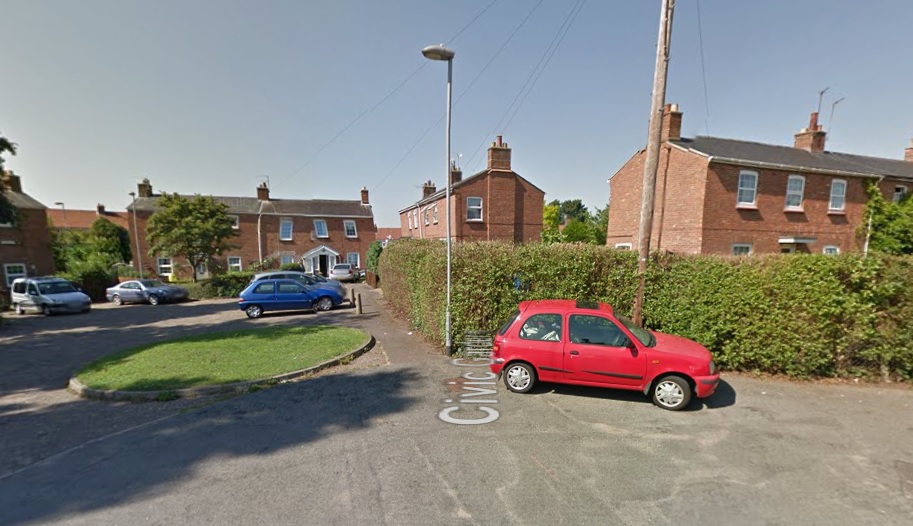
    Specifically, it was this house. The one you can see the side of here. That was my bedroom window for nearly 15 years.

    20civicgardens
    This is from Google Maps, as I didn’t want to feel awkward taking a photo of what is now someone else’s house.

    You may have seen my old cul-de-sac doing the rounds on the internet actually – as when viewed from above it does rather look like the Millennium Falcon.

    It’s now more than six years since I left, but I admit I just can’t get over it. I still wish I lived there. I still have dreams in which I am back on familiar ground. When I’m having one of my bad spells I think about it even more.

    Today I had a bit of free time so I got in my car and went back to where I still call home.

    Being back there, walking around the area, it was an odd feeling. It was as if my head was properly screwed on – I don’t remember even thinking about where I was going, my feet just took me on a circuit of the estate and right back to where I started.

    You are entitled to think ‘for god’s sake, get over it and move on’, but believe me if it was that easy I would have done it a long time ago.

    Not a great deal has changed. I only glanced at my old house as there was a car in the driveway and I’m not sure how I’d feel if I looked out of the window to see someone staring up at my home, but it was pretty much identical to how it looked when I was there. Although I don’t like their choice of curtains. Our old neighbours are also still there.

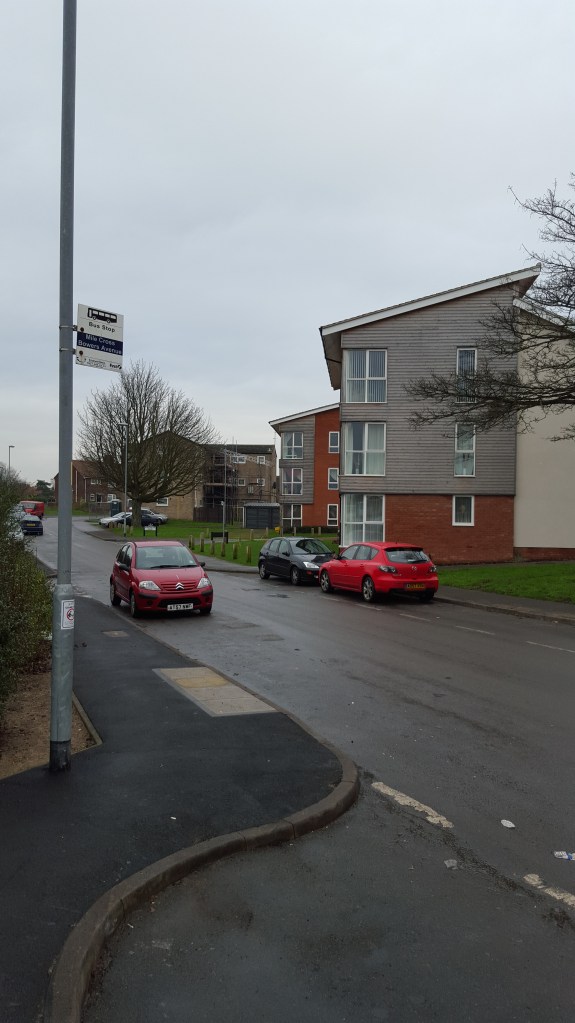
    I went down a passageway out of the cul-de-sac and walking round to Bowers Avenue saw the first change. A newly built block of flats.

    2016-01-21 12.38.21
    These flats weren’t there when I lived in this area.

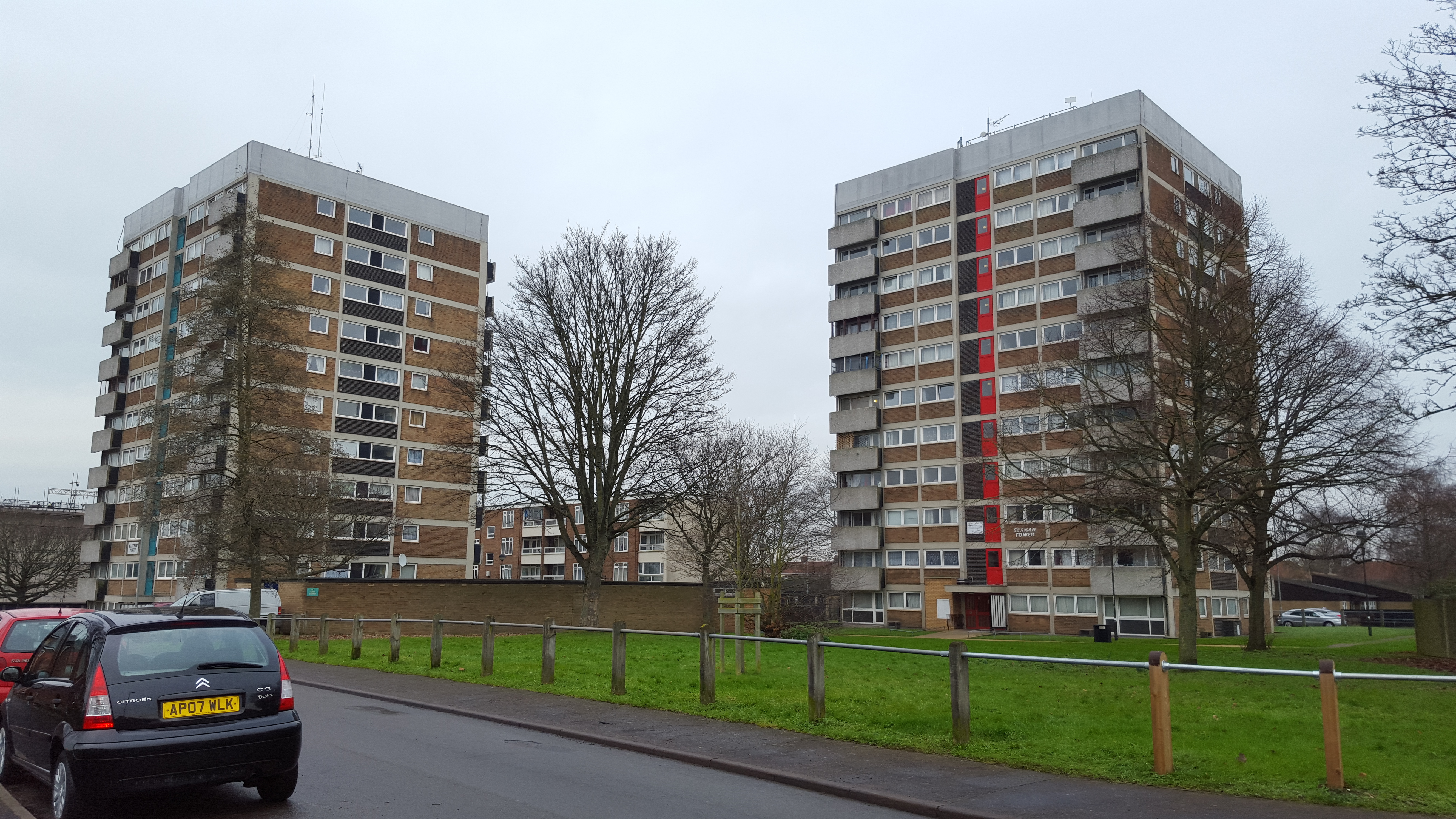
    I carried on and came to the biggest buildings on the estate.2016-01-21 12.44.18

    These blocks of flats are unmistakably 1960s, and they are big enough to be seen from Mousehold Heath.

    I ended up going down the hill and taking a walk around Sloughbottom Park, the scene of countless kickabouts with my dad and where I used to train with and play for the Norman Wanderers Under 11s and Under 13s before I realised – some time after everyone else – that I was hopeless at football.

    The pitch was in a rather better state than it used to be when I played on it about a decade ago.

    If you’ve made it this far, thank you. You’ve put up with me being rather self-indulgent. But let me explain – I did this to attempt to reconnect with who I used to be. The happy, studious kid I was. For reasons I won’t share here, things went south for me when I stopped living here. So coming back enabled me to get those feelings of safety and security back, if only for an hour or so. Writing this up has helped me make it last that little bit longer.

    Everyone has a place like this. A place where they have memories, a place where they were happy. If you’re feeling down or a bit lost, why not go back to that place? I promise you, it will do you the world of good.