The figures make for grim reading. England’s men’s cricket team, who were world champions in the 50 over format in 2019 and the 20 over version in 2022, have gone out of the Champions Trophy having lost all three of their games.
Brendon McCullum took over as coach of the white ball side in January hoping to bring with him some of the success he has enjoyed since becoming Test coach in 2022. At the time England were in dreadful form and his positivity and uncomplicated tactics transformed both results and the way in which they were achieved. The team beat India with a brilliant run chase at Edgbaston, whitewashed Pakistan in Pakistan and stopped the Aussies winning the Ashes on English soil.
It was hoped that McCullum’s arrival would give a boost to Jos Buttler’s squad, whose form had been indifferent to say the least. The 50 over World Cup was tamely surrendered in India in 2023 and last year they limped through to the semi-finals of the T20 tournament before being comfortably beaten by eventual champions India.
The Champions Trophy, while another ICC global event, is more of a money spinner for the game’s governing body than a tournament that is highly regarded by players and fans. This is the first time it has been staged since 2017, and exists to fill the gap where otherwise there would be no big international tournament.
This particular Champions Trophy has been something of a farce. Three of the matches have been washed out, which is too many in a tournament as short as this, and India’s refusal to travel to play in the land of their bitter rivals Pakistan has seen them enjoy what have been effectively home matches in Dubai. A ridiculous situation – India should have been told that they either play in Pakistan or don’t participate at all. Sri Lanka and the West Indies would have been more than willing to replace them.
So, it’s not as if England’s terrible performance in Pakistan will be worried about for long. But the fact is England are once again the laughing stock of world cricket after spending the last decade building an excellent reputation.
Buttler has resigned and the search for a new captain, most probably Harry Brook, has begun. England don’t play again in white ball cricket until May – it will be interesting to see what the team looks like by then.
Most of us have had a camera phone for quite a while now, with hundreds if not thousands of photos taken over the years. I’ve scrolled through mine and picked out ten that have a story behind them.
1st November 2010 – Dad
I have told the story about my dad more than once, but in short, he died in 2014 at the age of 69 having been diagnosed with Alzheimer’s disease six years previously. It’s nice to have this photo on my phone. Dad is in his sheltered housing flat here, on the sofa where we drank bucketloads of tea and watched countless football matches. His cheeky grin is showing off the false tooth he wore. The story goes that it was knocked out by a cricket ball during a match on the playing fields of what is now the Hewett School when he was a young lad.
1st June 2020 – seeing family for the first time since lockdown
I think for many of us it was a bit of a shock to go into total lockdown in March 2020. Never before had we faced so many restrictions on our lives, but then it had been a hundred years since the last pandemic of Covid’s scale. It wasn’t until June that the restrictions had been eased enough for me to go and see my mum and her other half Dave (aka Stephen to me). It was strictly outdoors only though – thankfully the weather was lovely. This was also Dave’s birthday and the day my mum presented him with the papers showing that she’d legally changed her surname to his.
20th July 2021 – sunset at Old Trafford, Manchester
This was taken at Old Trafford cricket ground as the sun set on a red hot July day in Manchester. The match between England and Pakistan turned out to be the first sporting event to be played in front of a capacity crowd since the pandemic began. England won.
28th November 2021 – my last day at Sainsbury’s Queens Road
My first, and so far only, job was at Sainsbury’s and for eleven years Queens Road was all I knew. Then an opportunity came up to move to the Pound Lane store and, despite the terrifying prospect of having to meet a load of new people, I took it. I was blown away by the send-off my friends and colleagues gave me. This was taken on the Sunday, my last day at Queens, before I started at Pound Lane two days later.
21st January 2022 – Oscar
My friend Katie’s dog and without a doubt the best boy in the world. On this particular walk on the old railway line near Aylsham I managed to capture the moment he looked at the camera and I’m rather fond of it.
28th February 2022 – the end of self-isolating with Covid
Having avoided Covid throughout the lockdowns it finally caught up with me early last year. At the time I was living in a house where my bedroom had an en suite bathroom so I remained in that room for the entirity of my self-isolation, with food being left outside the door. Being stuck within those four walls for over a week was really tough. I took this photo just as I was about to leave the room for the first time. I can remember the feeling of excitement and relief.
23rd April 2022 – before a Norwich match at Carrow Road
With mum and Dave before Norwich’s match against Newcastle last year. Our pre-match ritual tends to involve buying pasties from Morrisons and sitting on that wall before going into the ground. Norwich were thrashed 3-0.
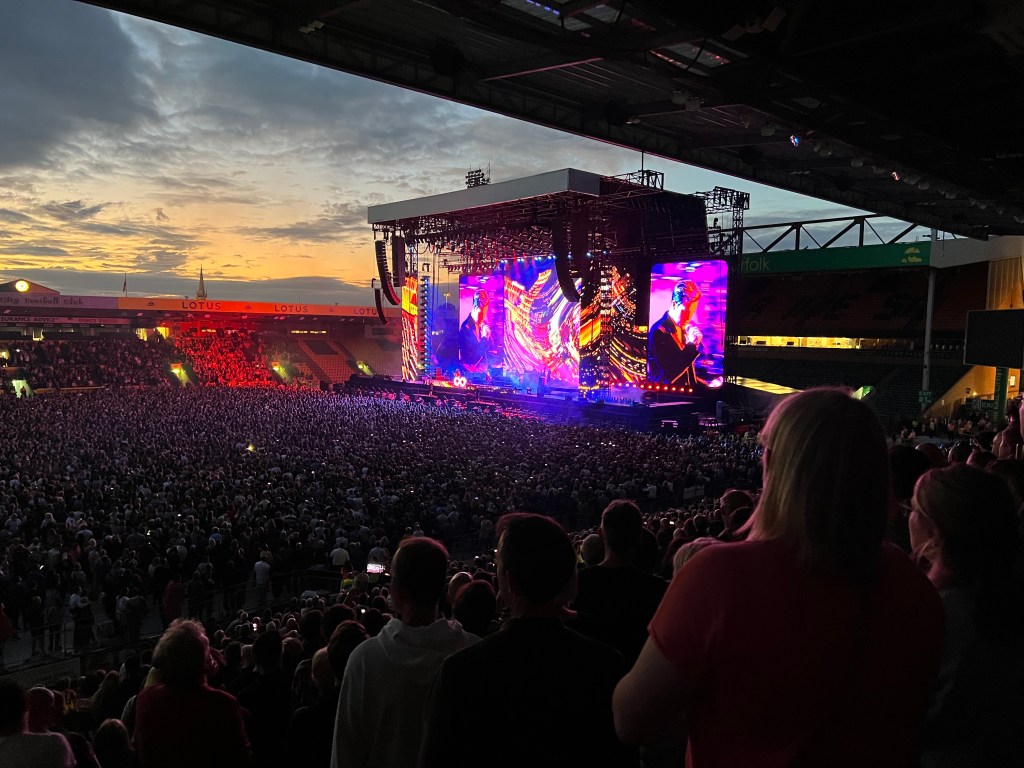
9th June 2022 – The Killers gig at Carrow Road
The tickets to see The Killers at Carrow Road were actually given to me as a Christmas present in 2019, with the gig due to take place in June 2020. For obvious reasons it was postponed twice before we finally got to see them in June last year. It is rare to have a band as big as The Killers performing in Norwich and they put on a fantastic show, with one of my favourite bands Blossoms as the support act. In June this year a dream will come true when my all time heroes Arctic Monkeys will play at Carrow Road. I can’t wait!
25th August 2022 – my 30th birthday
There was something about turning 30 that freaked me out. On the day, plans to go on the heritage railway between Dereham and Wymondham were scuppered by thunderstorms. Then all my friends turned up on the doorstep and we had a barbecue. I didn’t think people cared about me enough to do such a thing! It was a lovely evening and, as it turns out, being 30 is a lot like being 29.
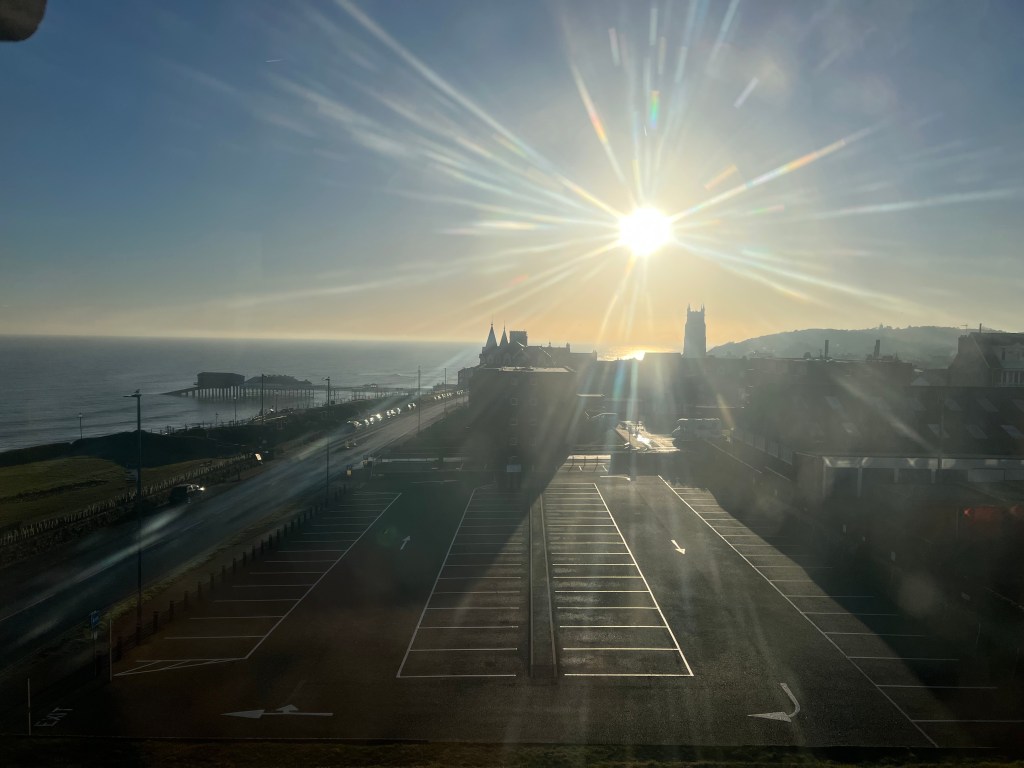
15th March 2023 – sunrise from my hotel room window in Cromer
A recent one, but I must have enjoyed my one night stay in Cromer because I’m feeling nostalgic about something that happened only two weeks ago. I had long wanted to stay at the Cliftonville Hotel, as I thought the building was interesting and I was keen to see what the promise of sea views from every room looked like. I scratched that itch during a week’s holiday from work and had a great time relaxing and getting my head together. This was taken from my hotel room window quite early in the morning, with a stunning sunrise over the town and its famous pier.
There we have it then, a small selection of photos on my phone that bring a smile to my face. Thanks for reading!
England captain Jos Buttler completes the demolition of India in the semi-finals
The T20 World Cup – that is, the global tournament for the short and sweet 20-overs-per-side format of the game – started in Australia on 16th October. The first week saw Ireland, Namibia, the Netherlands, Scotland, Sri Lanka, the United Arab Emirates, the West Indies and Zimbabwe compete in two groups of four for four places in the next round. There were shocks – Nambia beat Sri Lanka (2014 winners) in the very first game and Scotland beat the West Indies. The West Indies were actually eliminated in this first round – the 2012 and 2016 champions were out before the tournament had really got going.
Ireland, the Netherlands, Sri Lanka and Zimbabwe progressed to the Super 12 stage, where they were joined by Afghanistan, Australia, Bangladesh, England, India, New Zealand, Pakistan and South Africa in two more groups of six. The top two in each group would go through to the semi-finals. Australia, the hosts and last year’s winners, were thrashed by New Zealand in their first game. Pakistan lost a thriller to arch-rivals India, then were beaten by Zimbabwe to leave them on the brink of going out.
Australia won the World Cup last year but failed to get out of the group stage here
The weather was a problem early on. The tournament was being played very early in the Australian spring, so rain caused issues in several games – Afghanistan’s two chances to play at the enormous, world famous Melbourne Cricket Ground were both washed out. South Africa would have beaten Zimbabwe had the rain not come down, a dropped point that would prove very costly indeed. The tasty clash between Australia and England did not see a ball bowled. England were stuttering in a run chase against Ireland before the weather forced an early ending, with the Irish earning a famous win on the Duckworth/Lewis/Stern method.
New Zealand were the early form horses, but England beat them and then completed a nervy win over Sri Lanka to knock Australia out of their own competition and progress to the semi-finals. On the final day of the Super 12s, South Africa suffered a shock defeat to the Netherlands to open the door for the winner of the Bangladesh v Pakistan match to go through at their expense. That beneficiary was Pakistan, into the semi-finals when days before it looked like they were heading home.
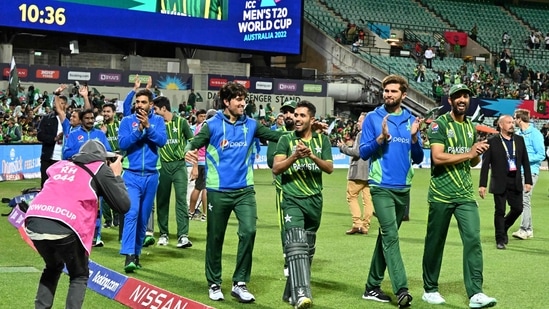
Pakistan are in the T20 World Cup final for the third time – they won it in 2009
In the first semi-final, Pakistan fielded superbly and their captain Babar Azam and wicketkeeper Mohammad Rizwan enjoyed their best opening partnership of the tournament to see off New Zealand. On Thursday, a feverish India-supporting crowd in Adelaide watched on in shock as England chased down 169 without losing a wicket and with four overs to spare. Jos Buttler’s team hit top gear at just the right time, thrashing the much-fancied Indians. It means the tournament is denied the glamorous, money-spinning grudge match of a final that India vs Pakistan would have been, but England and Pakistan deserve to be there. The two sides played out a thrilling seven-match T20 series a few weeks before the World Cup, with England winning 4-3, so hopes are high for an entertaining final and a worthy winner.
Up to now, the entire tournament has been hidden behind the paywall of Sky Sports, but they have graciously done a deal with Channel 4 so that the final will be live for all to see on free-to-air television. If you’re not a cricket fan, I urge you to tune in – T20 is fast, exciting and England might just win a World Cup. And that’s not something that’s going to happen in Qatar.
T20 World Cup 2022 – Final England v Pakistan Melbourne Cricket Ground, Australia Sunday 13th November 2022, 8am GMT Channel 4
I don’t mind big crowds. They afford a certain anonymity, and I like that. I would prefer to be in a crowd than in a room with one other person. I’m used to them, too – I’ve had a season ticket at Norwich City for 13 years, I’ve seen the England cricket team a few times, I’ve been to a play-off final at Wembley.
On 4th March 2020 I went to see Norwich play Spurs at their magnificent new Tottenham Hotspur Stadium. There were 58,000 people there to see City win on penalties and progress to the FA Cup quarter finals. Covid-19 was most definitely around at that point – it had been over a month since the first confirmed case in the UK and businesses were starting to ask their employees how they would feel about working from home. But it would be another nineteen days before the country went into full lockdown.
There was no indication that it would be a full 503 days until I would be watching sport in the flesh again. On Tuesday 20th July, a day after almost all legal restrictions related to coronavirus had been lifted in England, I was at a packed Old Trafford cricket ground to see England play Pakistan in a T20 match.
I was unsure of how I’d feel about being back in a capacity crowd, but I was surprised how normal it felt. Getting into the ground, having walked from the hotel, was quick and easy. The only sign that there was a pandemic at all was the ground staff wearing masks. I wore mine when I was moving around the ground, having only had one vaccine dose so far it seemed a reasonable precaution. With mask wearing now a personal choice rather than a legal requirement, however, I was among a minority who donned a face covering. We were almost always outside and it was a scorching hot afternoon but it jarred a little, it must be said.
My mum, her partner and I had seats right on the back row of the top tier of the stand next to the pavilion so we didn’t have people breathing on the back of our necks for four hours, thankfully. The PA announcer gave semi-regular reminders to wash your hands, try to keep a safe distance from other people and respect their choices regarding face coverings but, again, without those you wouldn’t have even known what had been going on for the last eighteen months.
Old Trafford was full
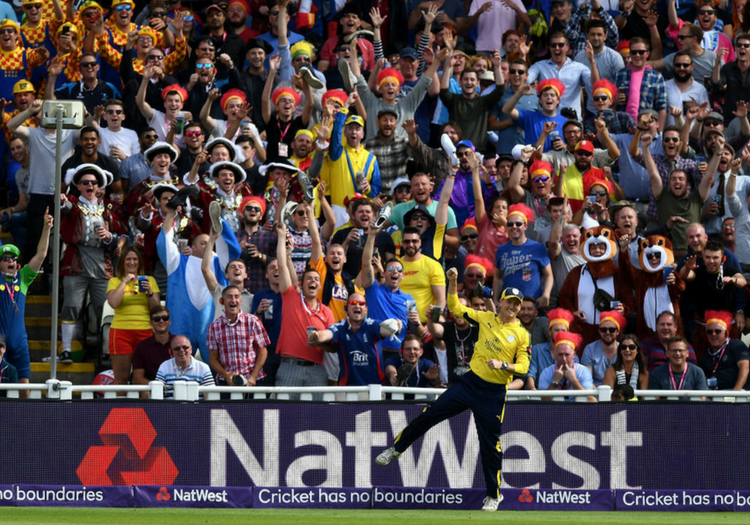
There is a large population of British Asians in the north west and Old Trafford had a lot of Pakistan fans in attendance, proudly showing off their green shirts, waving the Pakistani flag and blowing horns at deafening volume. There can’t have been much difference in numbers between England and Pakistan supporters, and the Pakistan fans were certainly louder than their English counterparts. It made for a fantastic atmosphere and it got the intriguing game of cricket it deserved.
This game was the last in a series of three T20 matches between the two countries. The first, at Trent Bridge in Nottingham, was a very high scoring affair with England falling 31 runs short of chasing Pakistan’s mammoth 232-6. Liam Livingstone smashed 103 off just 43 balls, the fastest century for England in T20 Internationals, but it wasn’t quite enough. Headingley in Leeds was the venue for the second match, with England 200 all out with one ball remaining in their innings and defending it comfortably thanks to their spinners to win by 45 runs. That meant the Old Trafford match was a decider and a chance to see where both sides were at ahead of the World Cup that starts in October.
In case you didn’t know…
When you think of Old Trafford, you probably think of the home of Manchester United, but the football ground and cricket ground are different places. They are a short distance from each other, but the cricket ground was actually there first.
My mum was hoping to see sixes flying all over the place, but the pitch was slow and difficult to bat on. Pakistan won the toss and batted first, posting a total of 154-6. Wicketkeeper and opening batsman Mohammad Rizwan top scored with an unbeaten 76 but that took a relatively sedate 57 balls and it quickly became apparent that there was nothing in the pitch for the seamers. Most of the bowling was done by the spinners, with England’s Adil Rashid taking 4-35 from his four overs.
This sort of slow, dry, spinning pitch is just the sort of thing that England might have to play on in the World Cup, which is being held in the United Arab Emirates and Oman, so it is possible that such conditions were deliberately concocted to give them some experience of how to deal with them.
England’s opening batsman Jason Roy found it easier than most to find the boundary, scoring 64 from 36 balls with 12 fours and 1 six, an innings which proved decisive in the match and enough to earn Roy the player of the match award. Star man Jos Buttler couldn’t really get going – much to my mother’s chagrin – and whenever anyone tried to go big they were usually caught in the deep.
A wonderful sunset as a hot day came to an end
A regular fall of wickets left England behind the required run rate and needing 33 from 19 balls and 12 from 8 when the fifth wicket went down. Liam Livingstone, player of the series and Lancashire favourite, strode out and promptly whacked his first ball for six to put England back in the driving seat. He was caught next ball (also trying to hit it into next week) and the captain Eoin Morgan was still to go but the home team scrambled a two to seal victory with two balls to spare. Not a high scoring match, but a last over thriller satisfied the crowd.
Getting out of the ground was no problem as we stayed to watch the trophy presentation while most of the deflated Pakistan supporters were leaving. And that was that – my first sporting event attended in person since the pandemic began. It shouldn’t – and I really hope it isn’t – another 503 days before the next one.
England collect the trophy after winning the series 2-1
The T20 Blast has the excitement and the crowds, so there’s no need for The Hundred
In a concerning development this week, The Guardian reported that the England and Wales Cricket Board could be asked to move or even cancel the scheduled fifth Test match against India this summer. Due to take place between the 10th and 14th September at Old Trafford, it is believed that the Indian board may want the game shifted to make space in the calendar to complete this year’s Indian Premier League. The T20 tournament was suspended earlier this month due to an outbreak of Covid-19 amongst players and staff.
Given that The Guardian claims the remaining 31 IPL matches are worth £200m in broadcast revenue for the Board of Control for Cricket in India (BCCI), it’s not hard to see why they would be keen to squeeze in the remainder of the tournament in a packed calendar. To me, however, it feels like a pivotal moment in the sport’s history – if an international fixture was moved or cancelled to accommodate a domestic franchise tournament, it would send out a message of cricket’s priorities and there may be no going back. It cannot be allowed to happen.
This comes as cricket in England is also at a crucial stage. The Hundred, a whole new format cooked up by marketing men and despised by almost everyone with a passing interest in the game, is set to start in July. I’ve been thinking about ways to improve cricket and here are some of my suggestions.
England should play 7 Tests every summer
Test matches. The purest form of the game. The best form of the game, in my opinion. A prolonged examination of a player’s skills, a test of their concentration. There is nothing like the ebb and flow of a Test, the way the story unfolds over the course of five days. You can dip in and out of it, coming back to a match that has changed dramatically in the few hours you’ve been at work.
England is one of the few countries that can still fill a ground for Test match cricket, a sad indictment of the world’s shortening attention spans. But, with this privileged position, we should make the most of it by playing seven Tests every summer. One series of three, one series of four. The only exception to this would be an Ashes year, in which the battle against the old enemy Australia would have to be over five and the other opponent would have to come over for two matches.
Bring back the ODI tri-series
The last ODI tri-series in England in 2005 featured a memorable Bangladesh victory over world champions Australia in Cardiff
Up until 2005 the English summer would include an ODI tri-series, where three teams – usually England and that year’s two touring sides – would compete for a place in a final at Lord’s. The demise of the tri-series was down to money, of course. The matches that didn’t involve England would understandably generate less interest, making it harder to sell tickets for them and broadcasters to question why they were paying so much for the rights. But as such a multi-cultural place, I think there is still the opportunity for a highly successful tri-series to return. Imagine England playing a two Test series with Pakistan and a four Test series with India, with the meat in the middle of that sandwich being a tri-series including three India v Pakistan clashes at grounds such as Edgbaston, Headingley and Trent Bridge – cities with large British Asian populations.
The T20 Blast is everything the ECB want The Hundred to be
As a cricket tragic I find The Hundred a bit of an insult. This sport that I love so much is apparently too complex and too boring to attract new fans without it being pulled into a shape I don’t recognise first. And that’s according to the governing body! I refuse to believe that the concept of 20 overs of six balls would be too much for the general population to understand. And the idea of changing the term ‘wickets’ to ‘outs’? Do me a favour.
What about the county cricketers of this country, professionals who ply their trade for clubs that have existed for over a century? For them to be told that they are no longer relevant and that the focal point of the summer will now be crass, made-up teams with names as risible as ‘Oval Invincibles’ is just offensive. The fact is, the ECB already have the answer to attracting new fans to cricket right in front of them – it’s called the T20 Blast.
According to a brilliant Elizabeth Ammon column in Wisden Cricket Monthly magazine, in 2019 all eighteen county teams reported that ‘between 20% and 50% of their ticket sales [for the T20 Blast] were families, and a quarter were people who had not previously bought tickets’. I went to a Blast match that year which had a crowd bigger than most international fixtures around the world. Give it a window so the best players in the world have the chance to come and play in it, get some of it on primetime terrestrial television, and the game of cricket will get the popularity boost the ECB craves. And they won’t have alienated most of the existing fans in the process.
37 days after it began, the Cricket World Cup has reached the end of the group stage and just the two semi-finals and the final are left to be played.
Before it started, I wrote a guide to the tournament and explained why I was so excited about it. This feels like an ideal time to look back at the five weeks of action we’ve seen and ask: has it lived up to the hype?
Rain
The World Cup got going with hosts and favourites England comfortably beating South Africa at The Oval. On day two, everyone was excited about what appeared to be the return of fearsome West Indian fast bowling as Pakistan were bounced out for 105.
On the first Sunday of the tournament, Bangladesh scored 330 against South Africa and successfully defended it to give us the first eyebrow-raising result. So long seen as minnows in the game, Bangladesh are now a competitive outfit in international cricket and look to be getting better and better.
Having beaten Pakistan 4-0 in an ODI series just prior to the World Cup, England would have been expecting to make it two wins from two when the two sides met again at Trent Bridge. However, Pakistan won by 14 runs – despite centuries from Joe Root and Jos Buttler – to give the favourites a reality check.
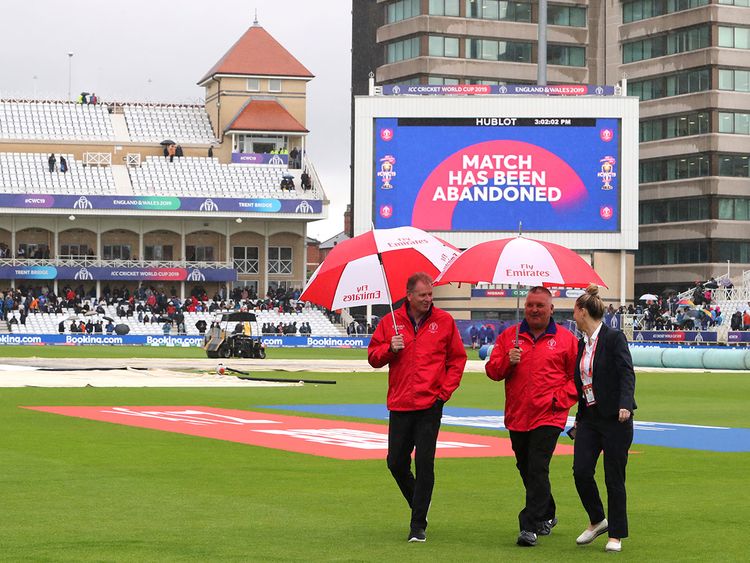
It was in Cardiff, the venue for Afghanistan versus Sri Lanka, where rain first reared its ugly head in the tournament. Having been blessed with the hottest and driest summer for forty years last year, things were very different in 2019 and an unusually wet couple of weeks saw four matches unable to render a result – three of them without a single ball being bowled. During this time, I spent a lot of time arguing with people on the internet who seemed to think that rain was somehow unique to the UK and that we shouldn’t be allowed to host future international tournaments. One of the matches lost to the weather was the fascinating prospect of India against New Zealand.
Rain caused havoc in the early stages of the World Cup
The first thriller
India began their campaign almost a week into it, apparently because they wanted their players to have extra time to rest after their efforts in the Indian Premier League (IPL). Their first match was a comfortable victory over South Africa – a third defeat for the Proteas, which left them teetering on the edge of elimination.
Up to this point, the World Cup had seen many strong individual performances but mostly one-sided games. Under the lights at The Oval, Bangladesh and New Zealand put an end to that. Chasing 245 to win, the Black Caps got over the line with just two wickets to spare. The following day, Australia recovered from 38-4 to set the West Indies 289 to win. Mitchell Starc’s 5-46 saw the holders win by 15 runs.
New Zealand won a close game against Bangladesh at The Oval
England racked up 386-6 against Bangladesh in Cardiff, winning by 106 runs to get back on track after their defeat by Pakistan. India beat Australia by 36 runs after the Australians took a muddled approach to chasing 353, but Aaron Finch’s side bounced back with a victory against Pakistan in Taunton.
England thrashed the West Indies in Southampton, bowling their opponents out for just 212 and chasing it down with more than 16 overs to spare. However, injuries suffered by Jason Roy and captain Eoin Morgan cast a shadow on the result.
India and Pakistan met at Old Trafford. A rivalry that goes way beyond sport, earlier this year there had been a threat that India would boycott the match as political tensions between the two countries escalated. 700,000 applications for tickets had reportedly been made for the game at a ground that holds around 25,000. India won handsomely.
Bangladesh chased 322 with ease to beat the West Indies, Shakib Al Hasan with an unbeaten century – the all rounder had a fine World Cup, amassing more than 500 runs.
England, and Eoin Morgan in particular, had a field day against Afghanistan in Manchester. The skipper hit a record 17 sixes on his way to 148, the hosts posting a total of 397-6 and setting up a 150 run victory. The next day, Edgbaston hosted its first match of the tournament and we were treated to an exciting finish as New Zealand chased 242 in the final over to beat South Africa. New Zealand had been 137-5, but an unbeaten 106 from their captain Kane Williamson and 60 from Colin De Grandhomme saw them home.
England captain Eoin Morgan smashed 17 sixes in his 148 against Afghanistan
Australia saw off Bangladesh in Trent Bridge’s final game, but Bangladesh got within 48 of the Aussie total of 381 to once again show that they are no pushovers.
Blown wide open
The weather had finally dried up and the cricket on show was entertaining, but it did seem like the likely semi-final line up of Australia, England, India and New Zealand was almost inevitable. Cue an English batting collapse.
England had been utterly transformed since the 2015 World Cup, playing aggressive cricket like no other. But against Sri Lanka at Headingley, they came unstuck. Restricting their opponents to a meagre 232-9, everyone was expecting England to sail to victory. They completely fell apart. Veteran Lasith Malinga took 4 wickets, the hosts were bowled out for 212, and suddenly the semi-final places were blown wide open.
Saturday 22nd June provided us with two thrillers. India were held to 224-8 by Afghanistan, but managed to save their blushes by bowling the Afghans out for 213. Afghanistan had fallen 12 short of pulling off the biggest shock in Cricket World Cup history. At Old Trafford, New Zealand set the West Indies 292 to win thanks to another Williamson hundred. It looked comfortable for the Black Caps at 164-7, but an extraordinary rearguard effort from Carlos Brathwaite got the West Indies within touching distance of victory. Needing 6 to win, Brathwaite tried to get it done in one hit but was caught on the boundary by Trent Boult. Brathwaite, who had made 101, sank to his knees and New Zealand had won by 5 runs.
Carlos Brathwaite came agonisingly close to pulling off a stunning victory for the West Indies against New Zealand
Lord’s joined the party on the Sunday and Pakistan took advantage of England’s defeat to Sri Lanka by overcoming South Africa. At the same venue a couple of days later, England were all out for 221 chasing 286 against the old enemy Australia and the prospect of England being knocked out of their own World Cup before the semis became very real. Pakistan dealt New Zealand their first defeat of the tournament the next day to rub salt into English wounds.
Semi-finals take shape
A week on from coming so close to beating India, Afghanistan came agonisingly short once again – this time against Pakistan. Needing 228 to win, Pakistan got there with just 2 balls and 3 wickets to spare. The result put Pakistan into 4th place, above England. Australia skittled New Zealand for 157 to complete an 86 run victory, making it clear that they are the team to beat.
England knew they had to beat India to stay in the race, and credit to them, they did just that. Batting first for a change, they powered their way to 337-7, the returning Jason Roy making 66. Jonny Bairstow made 111 and Ben Stokes finished the innings off with 79. In front of an Edgbaston crowd which was more than 80% India fans, a partnership between Rohit Sharma and Virat Kohli looked ominous but when Kohli was out for 66 the Indians never managed to get the chase back on track and ran out of overs with 32 runs still required. England had a confidence-boosting win, and had set up a huge game against New Zealand in Durham.
Pressure is not usually something that England teams deal with well. In any sport, English sides have a reputation for failing when it matters. So it was to their cricket team’s credit that, faced with having to beat India and New Zealand in succession to resurrect their World Cup campaign and make the semi-finals, they did just that. Winning the toss and batting first again, Jason Roy and Jonny Bairstow showed no nerves as they got off to a fast start. By the time Roy was out for 60, England had 123 on the board inside 19 overs and a platform had been set. They didn’t really capitalise on it, ending up with 305-8, but Bairstow did reach back-to-back hundreds.
New Zealand never really looked like chasing 306. Things were clearly going England’s way when Ross Taylor played the ball straight back from where it had come from, brushing the tip of Mark Wood’s finger on the way to hitting the stumps at the non-striker’s end, where New Zealand’s captain and most dangerous batsman was well short of his ground and therefore run out for 27. The Black Caps were all out for 186. England were through.
A century from Jonny Bairstow helped England qualify for the semi-finals
Another close one for Afghanistan, but another defeat as they finished their World Cup with a 23 run defeat by the West Indies in Leeds. All out for 288 chasing 312, the Afghans will only get better and better but leave the tournament with nine defeats from nine matches.
Pakistan were left bemoaning the use of Net Run Rate to decide league positions after their victory over Bangladesh at Lord’s wasn’t enough for them to take a semi-finals spot. They have a point, it seems odd that in a format in which everyone plays each other head-to-head results are not given greater importance than run rate. But there was nothing they could do about it, so New Zealand claimed the last place in the semis.
The final day of pool stage matches on Saturday 6th July was all about who would finish top of the table. India played in the early match and emphatically saw off Sri Lanka, both of their openers scoring centuries – Rohit Sharma with his fifth of the tournament – as they made light work of chasing 265.
The day/night match was between Australia and South Africa. The South African captain Faf du Plessis made a hundred as they posted a challenging 325-6 from their 50 overs. Despite a century from David Warner and 85 from wicketkeeper Alex Carey, the Aussies were all out on the penultimate ball of the innings ten runs short of their target. The Proteas had finished a disappointing World Cup on a high.
South Africa beat Australia in the last pool stage match
The semi-finals
After 45 matches, we now know the semi-final fixtures:
Tuesday 9th July: India v New Zealand, Old Trafford Thursday 11th July: Australia v England, Edgbaston
Of course, the winners of these two matches will play each other in the final at Lord’s next Sunday, 14th July. There is no third place play-off.
My awards
With the pool stage complete, here are my ‘bests’ of the tournament.
Best match
New Zealand v West Indies at Old Trafford was a great example of the best of ODI cricket. Superb individual performances, a good contest between bat and ball and one side almost pulling victory from the jaws of defeat. Watch the highlights below.
Best catch
This World Cup has been littered with fantastic catches. Martin Guptill plucked one out of the air for New Zealand against Australia. Sheldon Cottrell of the West Indies juggled the ball on the boundary to dismiss Steve Smith. But, for me, the award has to go to Ben Stokes, who took a catch which genuinely took my breath away way back in the first match of the tournament. I play village cricket, and catches like this are an example of how the professionals are superhuman compared to us. Watch the catch below.
Best innings
For the most part, the world’s best players came to the party. From the ‘big four’ – regarded as the best international batsmen in the world – of Virat Kohli, Joe Root, Kane Williamson and Steve Smith, all performed well. But it was the innings of New Zealand captain Williamson against South Africa at Edgbaston, guiding his team home from 137-5 chasing 242 with an unbeaten 106, that personified the notion of a captain’s innings. Watch highlights of the match below.
Most disappointing team
South Africa should have put on a much better show than they did. They looked to have one of the stronger squads, but never really got going. The great fast bowler Dale Steyn was sadly ruled out without bowling a ball, then factors such as muddled team selection and Hashim Amla’s old fashioned batting contributed to their downfall. They laboured to a win against Afghanistan to put their first victory on the board, and it was only when it was too late that they showed what might have been with a thrashing of Sri Lanka and a victory over Australia.
Worst part of the tournament
I thought about giving this award to the concept of someone playing a guitar made out of a cricket bat over the PA system at regular intervals during matches. It sounded horrendous. But the worst part of the World Cup for me has been the weather. Two particularly bad weeks in early June saw four matches called off and really put a halt to the party atmosphere. Thankfully, it has improved significantly since then.
Before the tournament began, I thought Australia, England and India would sail into the semi-finals leaving one place up for grabs. England made rather more hard work of it than I had anticipated, but they are there, and it was New Zealand who join them for what promises to be an exciting final week. It’s almost time to say goodbye to the 2019 Cricket World Cup – will its enduring image be the Aussies being crowned world champions for the sixth time?
The West Indies beat Sri Lanka by 36 runs in Colombo to take the 2012 World Twenty20 title.
The West Indies are a side who for so long can be seen to be in great decline but always show the potential to pull off a shock. As it turned out, their triumph at the World Twenty20 in Sri Lanka wasn’t so much of a shock as a well deserved victory for the best team in the tournament.
Before the competition began, this blog picked Australia to be the champions, defeating the hosts Sri Lanka to win the tournament in Colombo. I was close – Australia lost to the West Indies in the semis, who went on to pip Sri Lanka to the title.
It was a tournament that did struggle to get going with the very odd format of having three teams in each group. This meant that poor old Zimbabwe were out, having lost to both Sri Lanka and South Africa in the space of three days, before a lot of the teams had played their first game. This was simply a way to almost guarantee the top Test nations would progress and not be eliminated by an associate team pulling off an upset. Sadly, this meant there was a few dead games at the end of the group stages.
The Super Eights were where the tournament got going – except for England. England didn’t really mount much of a defence to their title won in the Caribbean in 2010. Dogged by the ongoing saga surrounding Kevin Pietersen, they thrashed Afghanistan in their opener before being pummeled by India and beaten by the West Indies in a game that had Eoin Morgan – who scored 71 off 36 balls – been sent in earlier they would have won. Victory over New Zealand kept their hopes alive but their inability to play spin in subcontinental conditions meant they were knocked out after losing to Sri Lanka.
The crowds tended to wait for the latter stages of the tournament before making an appearance – a lot of the early games were played in front of almost no one inside the grounds and that was with the cheapest ticket being just 14p. Yes, 14 pence. Their interest grew when the big guns took each other on and when the Asian sides were in action. There was a wonderful atmosphere at the Sri Lanka v Pakistan semi-final.
The rain didn’t help either. The fact that this event was played in the rainy season in Sri Lanka left a few pundits wondering whether the ICC were here for the cricket or for the cash. At this time of year in that part of the world the rain tends to stay away until the evening – so what did the ICC do? Schedule the matches for the evenings of course. This meant the TV revenue could be maximised, but meant that more than one match was ruined by the weather – most notably Ireland were eliminated without getting a fair crack at the West Indies when the rain brought a premature end to the game and to their tournament.
The West Indies have had internal struggles recently but no one can deny they have a frightening set-up for Twenty20 cricket. Chris Gayle, who is far more than just a slogger, showed his class by averaging 44 over the 7 matches he played, including a wonderful 75 not out carrying his bat in the semis against Australia. Marlon Samuels carried on his great form for 2012 – not least with 78 off 70 balls when his team were struggling in the final. They do tend to rely on the batsmen to build a massive total though – their bowling wasn’t the best and only spinner Narine was in the top 5 bowlers in the tournament.
The World Twenty20 was a quick tournament for the game’s shortest format. It’s a bit of fun that isn’t taken too seriously, but means a lot to the players involved. For the West Indies supporters, who have had nothing to cheer since the ICC Champions Trophy victory of 2004, this will have come as welcome relief. We’ll do it all again in Bangladesh in two years’ time.


















 LEE PAYNE