Tag: tour

  • A draw – but for England, it will almost feel like a win

    This article was originally submitted to another website on Saturday 12th March but not published.

    Cricket being the glorious game it is, after five long days in Antigua the first Test between the West Indies and England ended in a draw and both sides move on to Barbados with the series level at 0-0.

    England really could do with winning in the Caribbean. They spent December and January being humiliated by Australia, a 4-0 Ashes thumping that was so bad the coach and the ECB’s managing director of cricket both lost their jobs. With the team’s pathetic top order batting causing outrage, they made the baffling decision to leave their two best bowlers at home. Joe Root remains as captain, but it would seem only because there are no other candidates for the role.

    The ‘red ball reset’ began by batting first, with Alex Lees on debut opening with Zak Crawley. By lunch, England were 57 for 4. Same old story. However, Jonny Bairstow, Ben Stokes and Ben Foakes then dug in and Bairstow completed a fine century, his eighth in Tests. From that dreadful start the tourists managed to post 311.

    Gareth Copley/Getty Images Sport

    Pressure would have been on Chris Woakes (with a poor record away from home) and Craig Overton taking the new ball in the absence of Jimmy Anderson and Stuart Broad. They had to perform to quieten the talk about the two greats.

    They didn’t. England were poor with the ball as the West Indies openers got off to a flying start. They were almost lucky to make the breakthrough, Overton having John Campbell caught down the leg side. From 83-0, the home side were reduced to 127-4. Nkrumah Bonner made an excellent 123 off 355 balls in an innings where the next highest score was 55. The Windies made England toil, keeping them in the field for nearly 158 overs. The tourists also lost the extra pace of Mark Wood, yet again injured – this time an elbow – and unable to bowl for the rest of the match.

    It’s fair to say that the Antigua pitch wasn’t a shining example of a good surface for Test cricket. It was flat, slow and lifeless. England lost Lees for six in the second innings, a disappointing debut for the Durham batsman, but Crawley and Root made serene progress and both made centuries. Everyone knows the class of Root, but Crawley’s innings will give him huge confidence and likely cement his place in the team for the rest of the year at least. On the fifth morning they were looking to score quickly to set up an unlikely chance of forcing a win so they lost regular wickets but Dan Lawrence scored an enterprising 37 off 36 balls to set the West Indies a target of 286.

    Reduced to 67-4, England sniffed victory but Bonner and Jason Holder dropped anchor and fairly calmly batted out what was always like to be a draw. Stokes was only supposed to be used ‘sparingly’ as a bowler, as he continues to recover from a side strain, but bowled 28 overs in the first innings and 13 in the second. Questions will be asked as to whether that was wise. Eyebrows will also be raised at England’s insistence on playing on until there were just five balls remaining in the match, when it was possible for the two captains to shake hands and agree on a draw much sooner – this sparked an angry response from Carlos Brathwaite on the TV coverage, who claimed that England had shown their hosts ‘disrespect’.

    Gareth Copley/Getty Images Sport

    The fact that England came anywhere near winning this match after being 57-4 on the first day will give them a boost. So, too, will the performance of Jack Leach, who was the main wicket taking threat and exerted the control that had abandoned him in Australia. Foakes has made a welcome (and long overdue) return to the Test team and his immaculate glovework is a joy to behold.

    Wood is unlikely to be fit for the second Test, with it starting just four days after the end of the first, so it looks like a choice between uncapped bowlers Saqib Mahmood and Matthew Fisher for Barbados – but those decisions can be made later. For now, England can reflect on a positive start to their tour of the Caribbean.
  • What England can take from the Sri Lanka Tests

    englandcricketboard-15
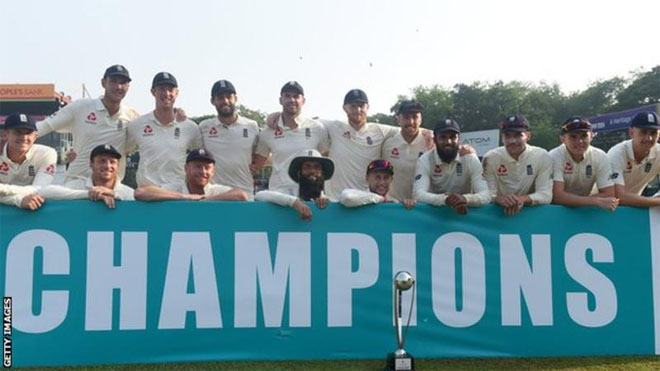
    England beat Sri Lanka 3-0 in the Test series

    England have become only the third team ever to go to Sri Lanka and whitewash them in a Test series. They may not have their great players any more, such as Mahela Jayawardene or Kumar Sangakkara, but Sri Lanka remain a very difficult opponent in their own conditions. They beat South Africa 2-0 in a Test series back in July, thrashing the Proteas in both matches, so it is without a doubt a fine effort from Joe Root’s team. Here I have picked out five key things for England to take away from the tour.

    Openers

    Rory Burns was the popular choice to succeed Alastair Cook at the top of the order, but he leaves Sri Lanka with only one half century to his name. Burns is probably best suited to facing pace bowling, which there was precious little of in this series. He needs to be given the chance to show what he can do in the Caribbean, and I can see him opening the batting in next summer’s Ashes.

    Keaton Jennings might have considered himself fortunate to be on the tour but there was a logic to his selection. He is actually a very competent player of spin, and he showed that in his century in the second innings in Galle. Jennings is much maligned and clearly has a weakness against seam bowling, so it’s hard to tell whether he’ll be lining up against Australia next year. What is not in doubt, though, is his fielding ability – some of the catches he took at short leg over the three Tests were nothing short of ridiculous.

    Number 3

    104458682_bairstow_getty5
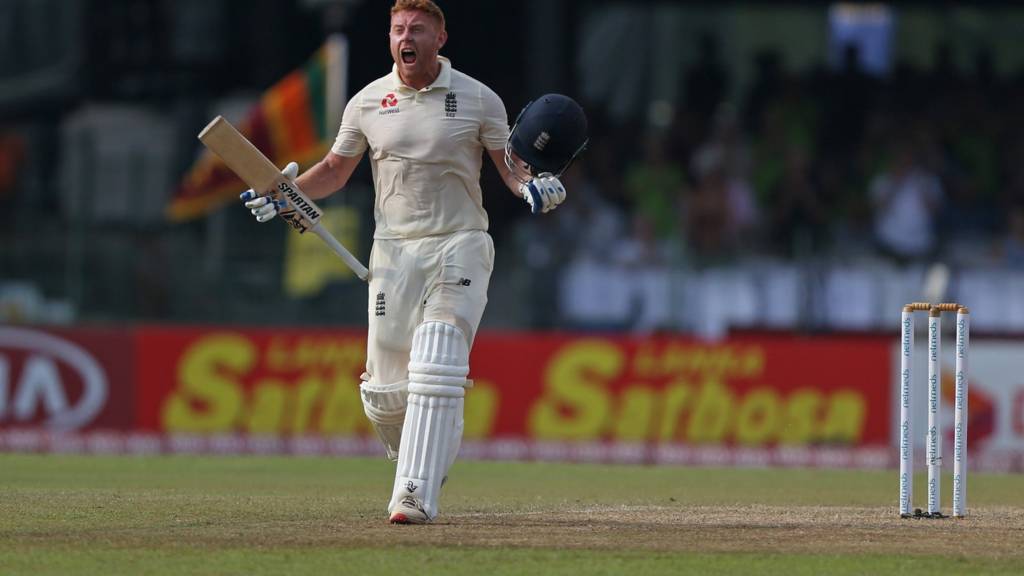
    Jonny Bairstow made a statement with his century in Colombo

    England have not had a settled number 3 in the batting order since the retirement of Jonathan Trott, and it remains a problem position for them. I suppose this links in with how fragile the openers have been, as the next man in has had to do a lot of the early work. They used three different batsmen in the role in the three Tests – Moeen Ali, Ben Stokes and Jonny Bairstow. Moeen just doesn’t seem to be up to it, Stokes was only given the one chance, but Bairstow made the most of his opportunity with a hundred in Colombo.

    He might not even have been picked for the match if Sam Curran had been fit, but the Yorkshireman was clearly determined to make a point after slipping out of the side following his ankle injury. The injury, picked up during a game of football, prompted a lot of moaning about cricketers warming up in such a way. The fact is, Bairstow could have turned his ankle over anywhere – walking down the stairs in the team hotel, for example. Football is a good way of loosening up the muscles and getting the blood flowing, and the players love it. Personally, I think a lot of the complaints had a snobbish air to them. A lot of people don’t want the gentleman cricketers playing such a common game. There has also been the frankly ridiculous argument that ‘you never see footballers warming up with a game of cricket’. Well, if cricket was a proven way to prepare the body for exercise, you may well have done.

    Whether Bairstow is England’s number 3 going forward is not clear. He may just have been so set on scoring big runs in the third Test that he would have made them wherever he batted in the order. I do think he will be in the position in the West Indies, and this may have to be his new role in the team now it looks like he won’t be getting the wicketkeeping gloves back.

    Wicketkeeper

    Ben Foakes was the best thing about the tour for England. He had been on the fringes of the team for a while, without ever breaking into it. Having not even been in the squad when it was initially announced, few would have expected him to end up the leading run scorer in the series. But he started off superbly in Galle with a debut century, showing the top order how to bat, and has made wicketkeeping a thing of beauty with his flawless glovework. Sorry Jonny, but England have found their wicketkeeper. Foakes has been widely regarded as the best gloveman in the country for a while now, and in the year he was a county champion with Surrey things are certainly going well for him.

    Adil Rashid

    england-vs-sri-lanka-0
    Adil Rashid took career best figures in Colombo but is a luxury bowler

    England played three spinners in every Test in the series, and it is hard to imagine them doing that anywhere other than the subcontinent. Moeen Ali, Jack Leach and Adil Rashid all had major roles to play, bowling the vast majority of the overs and taking nearly all the wickets. Moeen found a happy knack of getting regular wickets, and was vital in the second innings in Galle to seal the win for England when it looked like Sri Lanka had a chance. Leach is a very tidy bowler, and took his maiden five wicket haul in the second Test. He also seems to love every second of playing for England, pretty much to the point of not being able to stop smiling, which is great to see. Rashid bowled the fewest overs of the three spinners, and goes for a lot more runs than the other two, but he showed his worth with a five-for in Colombo which enabled England to take control of the match.

    Rashid looks the most likely to miss out when conditions necessitate more seamers in the side. He is something of a luxury spinner, who will bowl the occasional unplayable delivery but will leak runs in the meantime. Moeen will probably be in the side more often than not, as he will nearly always take wickets and England like players who can do a bit of everything. Leach looks like he could well be the long term spinner in the side, the kind of go-to bowler that Graeme Swann was. His ability to keep it tight and hold up an end will be very useful.

    Anderson and Broad

    While the Sri Lanka tour has been very successful, it has taught us nothing about how England will deal with life after Jimmy Anderson and Stuart Broad. Anderson played in the first two Tests and took just the one wicket – not unexpected in a country with conditions that so favour spin bowling. Broad came in for the last match and bowled only 14 wicketless overs. Many saw the Colombo Test as the opportunity to give Ollie Stone a go, with the series already won and the pressure off. There was an argument for this, but it’s hard to see what knowledge of Stone we would have gained from playing him in such difficult conditions. Decisions will have to be made sooner rather than later as Anderson and Broad head towards retirement but I am really not sure Sri Lanka was ever going to be the place to find solutions.

  • The England team should be for the nation, not just Wembley

    Last night, England played a friendly against Norway. The official attendance for the match at the 90,000 capacity Wembley Stadium was 40,181 – the smallest crowd to have seen the men’s national team at the ground since it was rebuilt. There are a number of explanations for the poor turnout – expensive tickets, families unwilling or unable to venture to the match after the first day back at school, parents tightening their belts after a summer of spending – but the overriding feeling was that people had simply lost interest in the team. The desperately disappointing World Cup campaign means the players will have to convince the public that it’s worth coming to see them. Only performances on the pitch are going to address that particular issue. A dour 1-0 win, through a Wayne Rooney penalty, isn’t going to do it. The small attendance last night, however, opened another debate entirely – is it time the England team played away from Wembley?

    The rebuilt Wembley is a fantastic arena, but the England team should tour the country.
    The rebuilt Wembley is a fantastic arena, but the England team should tour the country.

    The reason why every single England home match is played at Wembley is simply cost. The rebuilt stadium came in way over budget and was incredibly expensive at £798 million. Despite the stadium being in use since 2007, Wembley is still being paid off. The semi-finals of the FA Cup are also played at the national stadium for the same reason. Yesterday, the head of ‘Club England’ Adrian Bevington said it might be “eight or nine years” before England matches can be played away from Wembley. Ignoring the typical money matters, the idea of moving England matches would be beneficial to fans and to the team itself.

    Playing games around the country would bring forward the idea that the national team belongs to the nation again. Fans in, say, the north east would be able to go and support the England team if a friendly was at St James’ Park much easier than the weeks of planning it must take to head down to London. There is also a chance that the youngsters would be inspired by seeing the national team play on their doorsteps. The England women’s team already do this, as do the various age group teams. The England cricket team do not confine themselves to Lord’s – every summer fans can see them play as far north as Durham to as far south as Southampton. I wonder if even were Wembley to be paid that The FA would even consider sending the senior team on tour.


    Wembley Stadium and Ashburton Grove – a tale of two stadiums

    Around the same time Wembley was being rebuilt, Arsenal were making progress on their ground Ashburton Grove (better know due to sponsorship as The Emirates). While Wembley came in over budget at £798 million and about four years late, Ashburton Grove was built on time and on budget.


    While Wembley was being rebuilt between 2000 and 2007, the England team did indeed play around the country. Most of these matches were played at Old Trafford, but Anfield, St James’ Park, Villa Park, and even Portman Road played host at some point. I believe that – once Wembley is finally paid off – the idea should be considered again. Even if this is just for friendlies, with qualifying matches continuing to be played at Wembley.

    In an article for his paper The Telegraph on the eve of the Norway friendly, journalist Paul Hayward went as far as to claim that The FA should sell Wembley Stadium and invest the proceeds in grass-roots football, coaching and player development. I am not sure I would go that far. I have been to the rebuilt Wembley – first for a stadium tour and then for the friendly against Ghana in 2011 – and there is no denying it is a magnificent arena. Hayward does, however, make some interesting points. Europe’s other top football nations such as Spain, Italy and world champions Germany, do not have a national stadium and tour their countries for all matches. He says the selling of Wembley would not mean it would be demolished or become a white elephant – the concerts, American Football matches, boxing and a whole range of other events that already take place their could continue.

    While the selling of the national stadium is unlikely, there is without doubt an angst about Wembley since it has been rebuilt that was not there with the original. It is not universally loved, it is not the pinnacle of every football fan’s season to see their team there, and it is not the undisputed ‘home of football’ it has always claimed to be. I believe sending the national team around the country would be for the good of the game in this country, but ultimately it is for The FA to decide. Anyway, it’s San Marino next month.