A reminder: cricket is the best sport in the world. I feel it worth reminding everyone because I’m about to spend a few minutes chewing my nails about its current state and future direction.
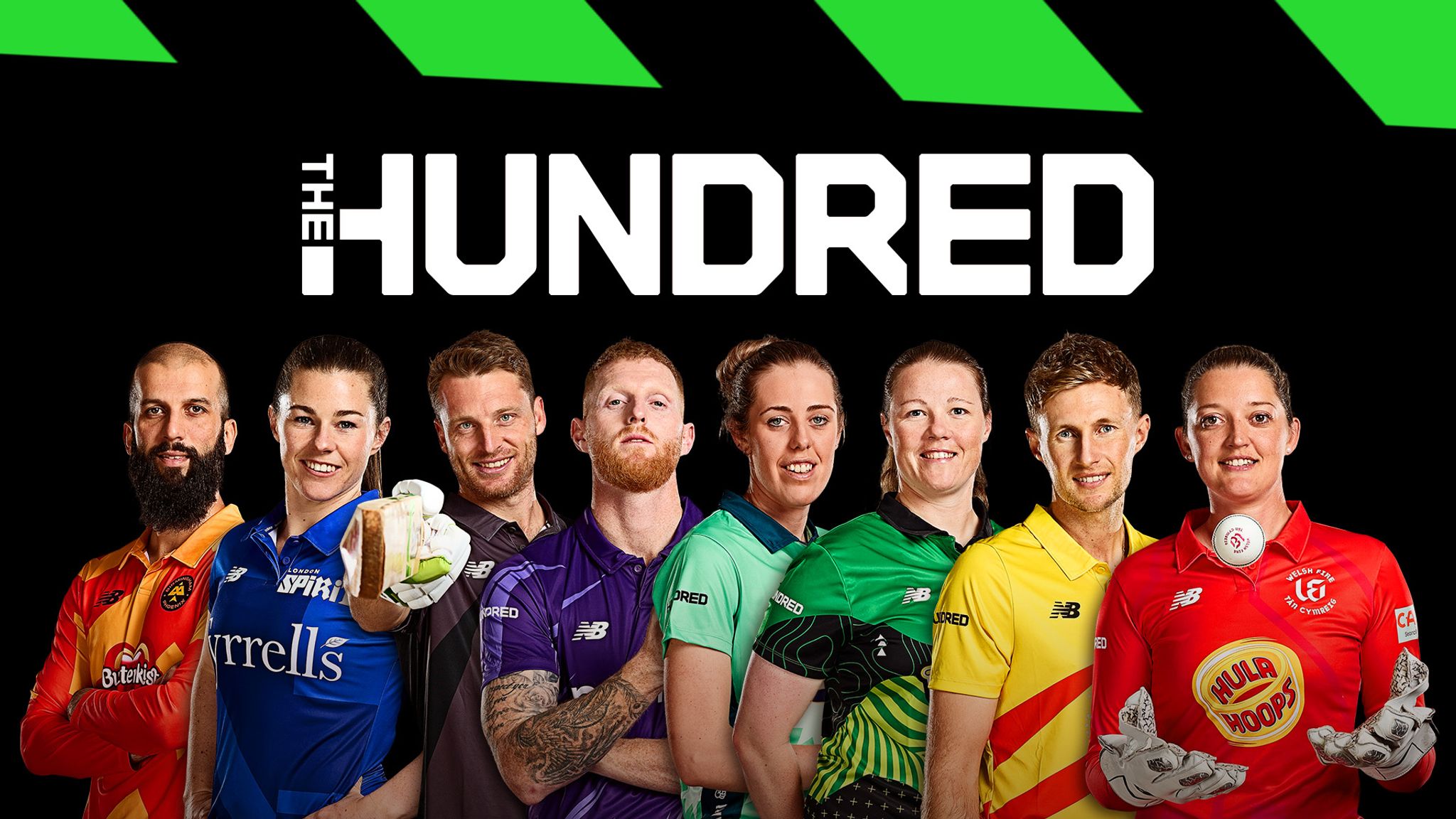
If you’re not a dedicated follower of the game, you would be forgiven for thinking that all is well and that cricket is entering the national consciousness more than it has done for some time. You may have noticed that BBC Two have shown a couple of matches from the first week of the Hundred tournament, and that cricket has also been a part of the Birmingham 2022 Commonwealth Games.
The Hundred is controversial because, while its outward intention is noble in attempting to get new fans interested in cricket, it has gone about this by implying that the traditional game can’t be sold to the public. The fundamentals – such as an over consisting of six balls – have been thrown out of the window, creating a whole new format that no one else in the world plays and bears little resemblence to the others. If the Hundred is meant to be gaining new fans for cricket, what is the point of changing the rules to the extent that those new fans will find it difficult to get into Test matches or One Day Internationals?
Aside from the format, the Hundred disposes of the traditional county teams and is competed for by sides that reek of a marketing agency brainstorming session. If you think the Manchester Originals and the Welsh Fire sound tacky, you should see their logos. Obviously, in England we only have a few months of the year to play cricket so adding the Hundred to the calendar has raised serious questions about overly packed schedules and player burnout. The England and Wales Cricket Board (ECB) have made it clear that the Hundred is their marquee tournament – it gets the biggest marketing budget – and therefore it gets the prime place in the summer, during the school holidays. The T20 Blast, which since its inception in 2003 had been English cricket’s great domestic money spinner, was done and dusted by the time the kids broke up.
Hampshire won the 2022 T20 Blast, but you’d be forgiven for having missed it
Personally, I’m not a fan. I may have been a cricket devotee for twenty years but I’m not one of those pig-headed enough to think the game doesn’t have to appeal to new audiences. Ever since England internationals were sold to Sky in 2006, the game has waned in its relevance to the public. Children aren’t becoming obsessed by the sport by stumbling across it on Channel 4, like I did. Players like Joe Root and Ben Stokes should be rock stars, yet they could walk down most streets unnoticed. The Hundred does at least put cricket back on terrestrial television, yet in my opinion at an unnecessarily high cost. Pumping the same money into the T20 Blast, pushing it into the public eye on BBC TV at the height of summer would surely have had the same effect.
I do still watch the Hundred. It is still cricket, and I doubt the impact of an individual boycotting something like that. But when I see the BBC Two coverage starting with a sort of rap/hip hop tune in its opening titles, I get the impression that this tournament isn’t for me. Every effort is made to appeal to young people, to ‘urbanise’ the game, and in a way it feels like a bit of an insult to cricket itself because the game is already great. I feel nothing for the teams, being made up and not steeped in any kind of history of tradition, and it takes me a while to remember who won its first edition last year (it was Southern Brave).
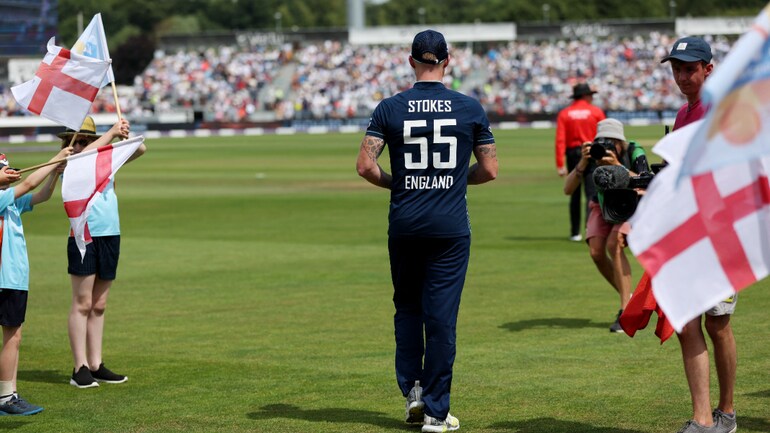
So for all the Hundred is doing in appealing to new fans, it leaves us with a summer schedule bursting at the seams. Ben Stokes, arguably England’s most exciting player, withdrew from the tournament last summer as well as all other forms of cricket to prioritise his mental health. This year, he announced before it had even started that he wasn’t going to play in it before retiring from ODIs, citing having to play too often as one of the reasons for his decision. Having only just turned 31 and three years on from almost single-handedly winning the World Cup for England, these should be the prime years of his career so it should be a significant warning to the authorities that he felt his only option was to walk away.
Ben Stokes played his last ODI in July, before retiring from the format at the age of 31
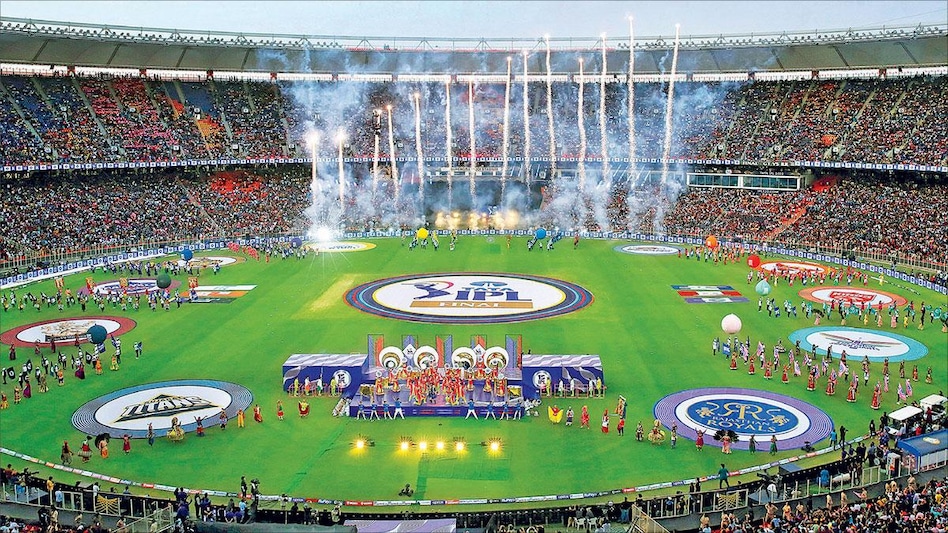
The Hundred is just one of many domestic tournaments around the world that cricketers can sign up for. Unlike football, the international game has traditionally been seen as the most important and most lucrative. This has changed dramatically since the Indian Premier League (IPL) was launched in 2008. According to an article by Tim Wigmore in the August issue of Wisden Cricket Monthly, the IPL’s latest broadcasting rights deal will see each live match generate £12 million – out of all the sports leagues in the world, only the NFL (American Football) is more lucrative. Keen to grab their own slice of the pie, other tournaments have popped up all over the world. There is the Big Bash in Australia, the Pakistan Super League, and a new one that is due to launch in the United Arab Emirates early next year.
The Indian Premier League has been an astonishing success
Professional cricketers can earn life changing sums of money from playing in these tournaments all over the world. Only players from India, Australia and England could hope to earn as much from playing for their countries. This has left players with extraordinary decisions to make, and increasingly they are prioritising representing an IPL franchise over playing for their nations. It’s a worrying situation, and the Hundred is only adding to the headache.
For some reason, I failed to write about the second week of Euro 2020. Having made this great declaration of rounding up each week of the tournament, skipping one when it only lasts for four is poor form. Apologies. Let’s get back on track.
England beat Germany in a knockout match for the first time since 1966
Here’s what happened in the second week
Since my last post, Scotland had their little moment with a heroic 0-0 draw with England (sarcasm is the lowest form of wit) before losing to Croatia and exiting the tournament. Their first major tournament in 23 years was over in eight days, and they’d scored just one goal.
Hungary held world champions France to a draw before Germany brought their campaign to life with a 4-2 dismantling of Euro 2016 winners Portugal. On Sunday 20th June the final round of group games began with Switzerland sending Turkey – who some of the pundits had picked as their ‘dark horses’ – home winless, while Italy kept up their 100% record with a narrow victory over Wales. The Welsh didn’t mind, though, as they went through to the last 16 along with the Azzurri.
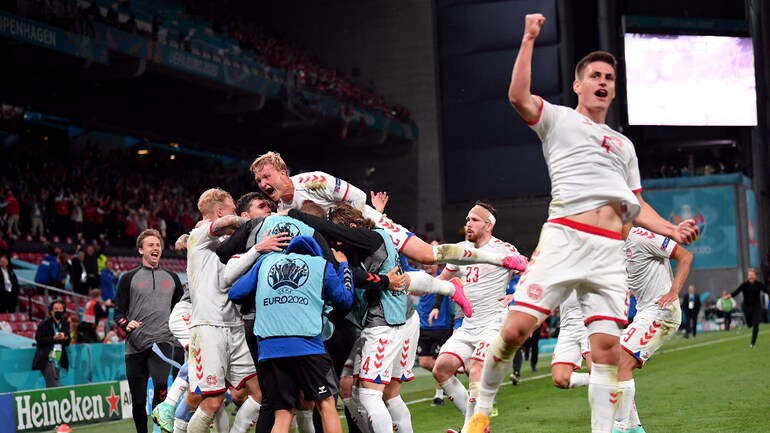
In Group B, a stirring performance from Denmark saw them thrash Russia 4-1 in Copenhagen, marking a delightful fightback from the trauma of Christian Eriksen’s cardiac arrest and sending them through. At one point it looked like Teemu Pukki and Finland might sneak through but their defeat to Belgium coupled with the Danish result brough their first major tournament to an end at the group stage. On the same day in Group C, unfancied Austria found a way into the second round by beating Ukraine, while plucky North Macedonia bowed out to the flying Netherlands.
Denmark were superb in beating Russia 4-1 to make it into the second round
England secured their passage through the group without conceding a goal by beating the Czech Republic at Wembley. Having finished top, they knew they would face the runners up of the feared Group F. The final round of games in that group were thrilling, topsy-turvy affairs – at various stages all four teams occupied second place. Eventually, a pair of 2-2 draws meant that it would be the old enemy Germany who would face England. In the other group, disappointing Poland were knocked out after a 3-2 defeat to Sweden, while Euro 2008 champions Spain reminded everyone what they were capable of with a 5-0 thumping of Slovakia.
With a 24 team tournament moving into a knockout round of 16 sides, only 8 actually took their leave after the group stage. As well as the top two from each group, the four best third placed sides also got through – Finland and Slovakia were the unfortunate ones to miss out.
The Welsh are sent packing
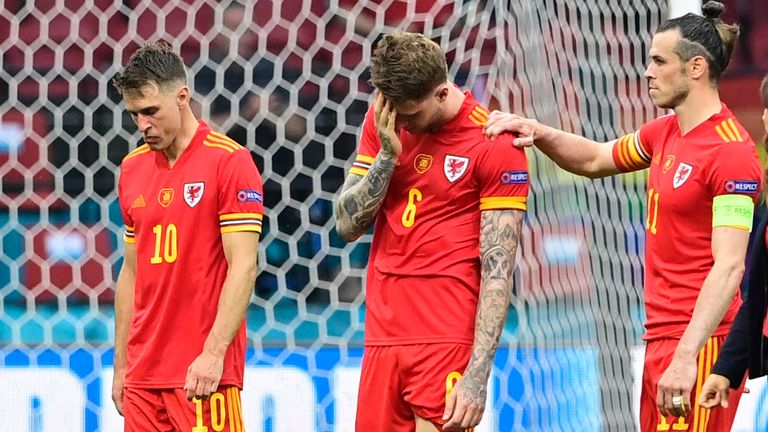
Euro 2016 was the first time since the 1958 World Cup that Wales had appeared at a major tournament, and they memorably made it all the way to the semi-finals before being beaten by the eventual winners Portugal. Having got through the group stage the Welsh had hopes of emulating that achievement. Denmark, however, had other ideas and on a chastening evening in Amsterdam ran out 4-0 winners. The scoreline was a tad harsh (it was only 2-0 until the 88th minute, and Wales received a very dubious red card in stoppage time) but it was a sad end for a proud nation. Their captain and talisman Gareth Bale was rather rudely asked on the pitch immediately afterwards if he would be retiring from international football – the 31-year-old decided the question wasn’t worthy of an answer and simply walked away.
It took Italy extra time to finally overcome Austria. Former Stoke and West Ham striker Marko Arnautovic thought he had given the underdogs the lead, only for his headed goal to be disallowed by the VAR for offside. Eventually Italy’s quality found a way through and they scored twice in the extra time period, though they did concede their first goal of the tournament with six minutes to go. Austria couldn’t find an equaliser but left Euro 2020 with their heads held high.
It was a bad day for Gareth Bale and Wales as they were knocked out by Denmark
The Dutch despair and the champions bow out
The Netherlands were the favourites going into their last 16 tie with the Czech Republic. Having failed to qualify for both Euro 2016 and the 2018 World Cup, the Oranje had been a welcome addition to the tournament. However, in a cagey game, it was the red card shown to centre half Matthijs de Ligt in the second half that gave the Czechs the impetus. The referee, with the help of VAR, decided that de Ligt’s handball had denied a clear goalscoring opportunity. The Juventus player was sent off, the Czechs scored twice and the Dutch were out.
Also on their way out were defending champions Portugal, who were beaten by Belgium in a game far more entertaining than the 1-0 scoreline suggests. Half time was approaching when Thorgan Hazard – brother of Eden – curled in from outside the box. Despite their best efforts in the second half, the Portugese couldn’t find a way back, and you have to wonder if Cristiano Ronaldo – who will be 39 by the time of the next one in 2024 – has played his last match at a Euros.
Manic Monday
If there is a more exciting day of this tournament than Monday 28th June it would have to be really special. The first game saw 2018 World Cup finalists Croatia take on Spain, and it looked like the Spaniards had sealed their place in the quarter finals with a 77th minute goal from Manchester City’s Ferran Torres putting them 3-1 up. The Croatians weren’t about to give up, however, and a 92nd minute equaliser from Mario Pasalic took it into extra time. You might have thought the momentum would be with Croatia after that but, alas, Spain scored twice in the first period of extra time to finally win 5-3.
The second match of the day, between France and Switzerland in Bucharest, had a lot to live up to – and it did. Haris Seferovic gave the Swiss a shock lead fifteen minutes in, and they were still leading into the second half when they were awarded a penalty. Defender Ricardo Rodriguez took it, but the chance to give his side an astonishing 2-0 lead went begging as Hugo Lloris of Spurs saved his spot kick. Within four minutes of that failure to convert the penalty, France were in the lead. Karim Benzema – not a nice man – scored twice as the world champions started to show why they were most people’s favourites for the tournament. With fifteen minutes remaining, a fantastic strike from Manchester United midfielder Paul Pogba seemed to put the tie beyond doubt.
Switzerland pulled one back through Seferovic’s second headed goal of the game, and then in the 90th minute substitute Mario Gavranovic finished superbly to spark wild scenes of celebration. It was 3-3, and just like Croatia v Spain, the game was going into extra time. Unlike Croatia v Spain, neither side could find a goal in the additional 30 minutes and so the first penalty shootout of Euro 2020 was upon us. Switzerland scored all five of theirs. France scored their first four, but their superstar Kylian Mbappe had his saved by goalkeeper Yann Sommer to seal a remarkable victory for the Swiss. In the space of two days the defending European champions, the World Cup winners and the World Cup runners up had all been knocked out.
Yann Sommer saves Kylian Mbappe’s penalty to send France home
England finally beat Germany in a knockout match
The German football team is not what it once was. Having won the 2014 World Cup, they were eliminated at the semi-final stage of Euro 2016 by France and suffered an embarrassing group stage exit at the 2018 World Cup, losing to Mexico and South Korea. In the run up to this tournament they had been beaten at home by North Macedonia and thrashed 6-0 by Spain. But they are still Germany, and England hardly ever seem to beat Germany when it matters. The last time they had managed to do it in a knockout match was the 1966 World Cup final. England’s exits at Italia ’90, Euro ’96 and the 2010 World Cup had all come at the hands of the Germans. Despite possessing the best squad of players in years it just didn’t feel like it could possibly happen for England.
Well then. At a raucous Wembley containing 45,000 fans, the home side showed their opponents plenty of respect in the first half, being very cautious at the back and hardly venturing forward. On the stroke of half time, a tackle on Raheem Sterling saw the ball loop towards Harry Kane to the left of the German net. The England captain was presented with a golden opportunity to score his first goal of the tournament, but his attempt to take the ball past keeper Manuel Neuer gave defender Mats Hummels the time to put in a crucial tackle. With 75 minutes on the clock, thoughts were already drifting to the prospect of a penalty shootout. But the introduction of Jack Grealish as a substitute had made England more of a threat going forward, and the Aston Villa man laid the ball off for Luke Shaw to drill it across the box, where Sterling was waiting to tap in. Wembley has rarely been louder. England were in front and with less than a quarter of an hour to go.
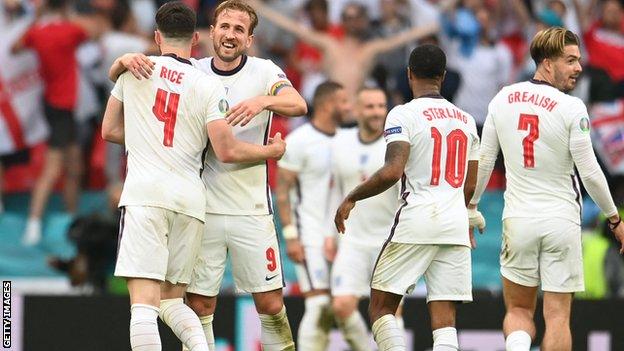
Sterling very nearly went from hero to zero as a careless pass backwards allowed Chelsea’s Kai Havertz to put Thomas Muller through on goal. Muller has often been a thorn in the English side but on this occasion he rolled his shot just wide of Jordan Pickford’s right hand post. ‘That never happens!’ bellowed BBC commentator Guy Mowbray. Written in the stars? Maybe. Shortly afterwards, Grealish found himself in a crossing position and played the perfect ball onto the forehead of Kane, who expertly guided it into the ground. The ball bounced up, out of the reach of Neuer and into the net. After a few seconds where no one could believe what they were seeing, the celebrations reached another level as it dawned on us that, this time, it was happening. Germany had no time to make a comeback. England had beaten them in a knockout game for the first time in 55 years.
The fans inside Wembley marvel at England’s victory over Germany
England would play the winners of the game that kicked off later that evening between Sweden and Ukraine. Manchester City left back Oleksandr Zinchenko put Ukraine ahead with a thumping finish but Emil Forsberg equalised for Sweden before half time. There were no goals in the second half so extra time was needed – the fourth of the eight knockout matches to go to the additional half an hour. Sweden’s Marcus Danielson was sent off in the first period for a nasty tackle on striker Artem Besedin, a tackle which has since ruled the Ukrainian out for six months. Extra time was an awfully scrappy, stop-start affair which by the end of it saw Ukraine looking like the walking wounded. Just as penalties looked nailed on, Artem Dovbyk headed in an excellent Zinchenko cross to win it for Ukraine and break Swedish hearts.
The Italians look like the real deal
After a two day break, the quarter finals got underway with Switzerland taking on Spain in St Petersburg. Spain took an early lead when Jordi Alba’s half volley from a corner was deflected in by the unfortunate Swiss midfielder Denis Zakaria. The Spaniards created plenty of chances but couldn’t add to their advantage against a dogged Switzerland side. Liverpool’s Xherdan Shaqiri equalised in the 68th minute, and despite Remo Freuler being shown a straight red card for a bad tackle thirteen minutes from time, the Swiss held out to take the game all the way to penalties. Sergio Busquets hit the post with the first Spanish penalty, giving Switzerland hopes of repeating their epic victory over France four days earlier, but they missed three of their spot kicks to give Mikel Oyarzarbal the opportunity to put Spain into the semi-finals.
Later on, a pulsating first half saw Italy go in at the break 2-1 up against Belgium, ranked number one in the world. Nicolo Barella and Lorenzo Insigne scored excellent goals to give their side a two goal advantage, but a penalty in first half stoppage time from Romelu Lukaku kept the Belgians in it. To some surprise there were no goals in the second half but there was some superb football on display from both sides. Italy have been tight at the back, with elder statesmen Giorgio Chiellini (36) and Leonardo Bonucci (34) in the centre, and thrilling to watch going forward. Federico Chiesa seems to shoot every time he gets the merest glimpse of the goal, and this performance really set Italy out as the favourites to go on and win the tournament. As for Belgium, their much vaunted ‘golden generation’ are left trophyless once more, and with an ageing squad and manager Roberto Martinez leaving their chance to win something may have passed them by.
So there we have it – you are now up to date with Euro 2020. As I write this it’s Saturday afternoon and the other two quarter finals, Czech Republic v Denmark and England v Ukraine, are a few hours away. The next time I write one of these will (hopefully) be just before the final. It’s been a brilliant tournament. What has it got left in store for us?
We are now one week into Euro 2020 – and, yes, it is still called Euro 2020 despite being delayed a year by the pandemic. Probably because UEFA had spent millions on the branding for it. Anyway, with the intention of writing a weekly round up of what’s been going on at the summer festival of football, here we go.
Andrea Bocelli gets everyone in the mood on opening night
The tournament began on Friday night in Rome, where Italy played Turkey. The match was preceded by the opening ceremony, usually a dull and cringeworthy affair, but the tenor Andrea Bocelli superbly belted out ‘Nessun dorma’ while fireworks lit up the stadium around him and suddenly everyone was in the mood. Italy won 3-0, and backed it up with the same scoreline against Switzerland to mark their return to the major tournament stage having failed to qualify for the 2018 World Cup.
Andrea Bocelli got Euro 2020 off to a bang in Rome
Christian Eriksen puts everything into perspective
On Saturday, Denmark played Finland in Copenhagen. I was mainly watching that match to see how Norwich’s Finnish striker Teemu Pukki was getting on, but surely before half time I saw things I will never forget. Danish midfielder Christian Eriksen, their most famous player and one of Tottenham’s best players before he left for Inter Milan last year, collapsed with no one near him. You can always tell when something bad has happened to a player on a football pitch, as the others on the field will react with shock and wave their arms towards the dugouts, pleading for the medical staff to hurry up.
Thanks to some rather insensitive camera work by the host broadcaster (that the BBC later had to apologise for, despite it not being their fault), I saw more of Eriksen’s plight than I wanted to. At one point I could see his face, eyes open but expressionless, and then the medics doing CPR on him. I was reminded of the time Fabrice Muamba collapsed on the pitch at White Hart Lane, a game I was watching with my Saturday night tea in 2012. I had to turn the TV off as I found it too upsetting. I then couldn’t think straight until I’d heard that Eriksen was awake and stable in hospital.
I’m not sure how, but the players managed to come back onto the field and complete the game. Finland won 1-0. Eriksen remains in hospital and it’s hard to imagine him playing professional football again.
Denmark’s shocked players form a human shield around their stricken teammate Christian Eriksen
Good start for the home nations… unless you’re Scottish
Wales were the first of the home nations to play in the tournament, drawing 1-1 with Switzerland in Baku on Saturday afternoon. Had Euro 2020 taken place when it was originally scheduled, the Welsh would have been managed by Manchester United legend Ryan Giggs – but he has been charged with assaulting two women and Robert Page is filling in, temporarily for now. It will take a lot for Wales to match the fairytale run to the semi-finals of five years ago but they already have one foot in the knockout stages after beating Turkey 2-0 in their second game.
England got their campaign underway with a 1-0 win over Croatia at Wembley, who had beaten them in the World Cup semi-finals three years ago. There’s a fair amount of optimism around Gareth Southgate’s side but questions remain about their ability to handle the big games.
Raheem Sterling scored the only goal of the game as England beat Croatia
Scotland haven’t played at a major tournament since the 1998 World Cup and the excitement was palpable going into their opener against Czech Republic in Glasgow, but a 2-0 defeat – the second goal coming from the halfway line – brought them back down to earth. Their next game is on Friday night against England.
The Dutch entertain and Mbappe sends a warning
The most entertaining game of the first week was without a doubt the Netherlands beating Ukraine 3-2 in Amsterdam. The Dutch were 2-0 up and seemingly cruising, but a stunning strike by West Ham’s Andriy Yarmolenko sparked a Ukraine comback only for right back Denzel Dumfries to win it for the Netherlands late on. Similar to Italy, the Oranje have been absent from major tournaments for a while (in their case seven years) and are keen to make the most of being back on the big stage.
Group H is this tournament’s ‘group of death’, containing both the current world champions France and European champions Portugal alongside Germany and Hungary. France met Germany in the first heavyweight clash on Tuesday night. France won 1-0 thanks to a Mats Hummels own goal, but Kylian Mbappe had a goal disallowed for offside and was also denied an assist by VAR. The 22-year-old looks set to take on the title of ‘world’s best player’ once Lionel Messi and Cristiano Ronaldo retire and his performance was a warning to the opposition of what’s to come.
This year, the World Cup will be more than welcome. Norwich City’s rebuilding job after Premier League relegation can be put to the back of minds for just a month and attentions can turn to the fun, excitement and drama in Brazil.
This is probably not the first article of this type you have read. You probably know by now that every football fan has a particular World Cup that they consider to be their ‘first’ – not literally, but the first tournament to capture their imagination and the first to live on in their memories. For me, this accolade belongs to 2002.
As the World Cup began in 2002 I was a few months short of my 10th birthday. With the tournament being held jointly between Japan and South Korea, the time differences meant that matches started early in the mornings here. Before breakfast time. My school must have been very generous because for England matches we were allowed to stay at home and watch before coming into school afterwards, and if your parents were not able to keep you at home for an extra hour or two then the match was played in the school hall on a delay. I can clearly remember heading into school after England had drawn 0-0 with Nigeria and giving a smug-looking smile to my fellow pupils who were having to sit through it not knowing the goalless outcome.
In literal terms, of course, my first World Cup would have been USA ’94, but as I was not yet two years old I can say with some confidence that I remember nothing about it whatsoever. I was also a late developer in becoming a football fan. I grew up in a family of football fans but much preferred watching cartoons until I was about 8. I can remember laying on the living room floor watching England’s famous 5-1 win over Germany in September 2001 and being utterly inconsolable after Norwich lost the play-off final against Birmingham the following May.
The 2002 World Cup did not go too badly for England in the grand scheme of things. David Beckham scored a penalty to beat Argentina which made up for his red card against them in 1998 (see video above) and we made it to the quarter finals before a fluke of a free kick from Ronaldinho went over David Seaman’s head and we went out 2-1 to Brazil. I can also remember The Sun, which my dad had delivered every Saturday, putting their cartoon character Hagar the Horrible on the front page as a preview to England playing Denmark. The Brazilians went on to win their 5th World Cup with a comfortable win over Germany in the final.
To think that ‘my first World Cup’ is now 12 years ago was an eye-opener. 2002 was not a vintage World Cup, but it was my World Cup. As much as I am club before country when it comes to football, the World Cup is such a brilliant tournament that for four weeks every four years I indulge myself in it and revel all the colour and celebration that it has. Inside, it makes me feel warm to think that, to some young boy or girl out there, Brazil 2014 will be their first World Cup.
Perhaps you will read all about it before the kick off in 2026.



 LEE PAYNE