
I’ve got some much needed time off work this week and, not wanting to waste it sitting around at home (though the snow has rather forced my hand on that one for the last couple of days), on Wednesday mum and I decided to go and see the sea.
We ended up in Mundesley, a village I hadn’t been to that often and didn’t know that much about. I knew that a teacher I didn’t like at primary school lived in Mudesley, and I knew that Mundesley was the first place mum and dad took me for an outing after I was born. I don’t remember that, obviously, but I’ve been told about it. I’ve also been to Mundesley with my friend and her dog for a walk.
When we arrived, the village was very quiet indeed, as you might expect in winter with the wind blowing and the temperature hovering just above freezing. Mum and I went to the cafe nearest the car park, where we sat in the window watching a procession of dog walkers heading down and then re-emerging from the ramp that leads to the beach. I had a coffee and a bacon and sausage roll. I’ve become something of a connoiseur of various pig products presented between two slices of bread, as my expanding waistline will attest to – Mundesley’s, for the record, was acceptable. Not the best I’ve ever had, but not too bad.
After the cafe we went for a walk, taking in the Norfolk coast path and the various sights along the way. Mundesley is actually a very interesting village in an architechtual sense – there are a number of old buildings, quite grand in appearance, that I wish I could find out more about.
Look at this building, for instance. I’ve had to get this image from Google Maps as I didn’t take many when I was there (my hands were too cold to hold my phone) but I can tell you that it looks exactly like this now. Empty.
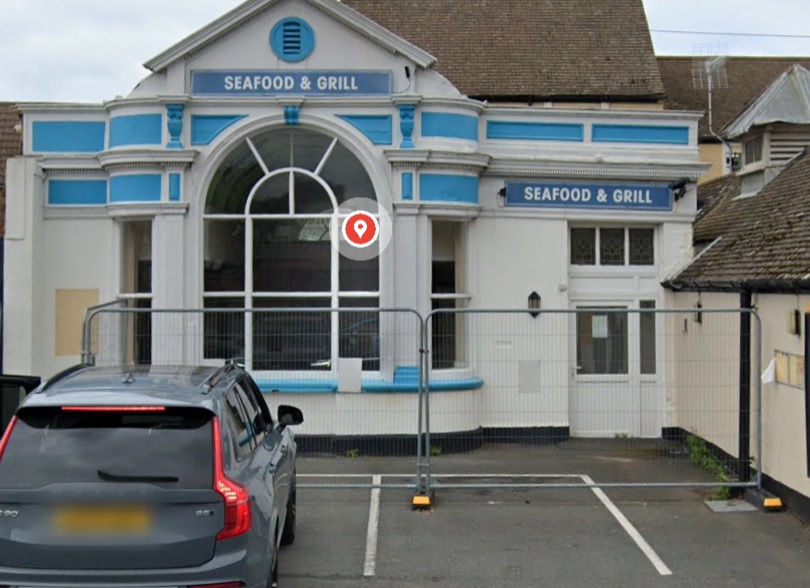
The architecture looks kind of art deco, I would say. It’s attractive, with its curves and big window. Yet it is underused, not being utilised to the extent that I’m sure the people who put it there invisaged.
The research I’ve done suggests that this building, somewhat surprisingly, isn’t listed and that it was once called Bar Victoriana. Judging by its Instagram account, Bar Victoriana marketed itself as a trendy cocktail bar and occasionally had live music. The bar’s website is now dead, but on Facebook it appears to have closed in July 2019, with the promise of a ‘new seafood & grill restauarant’ on the way, which would explain the signs still on the outside. I can’t find anything about what happened afterwards, but I would suspect that the business may have been a victim of the pandemic.

Mundesley has plenty of Victorian buildings, probably due to the arrival of the railway (long gone) in that period that turned the village into a holiday resort. Some of them are made out of local stone, given them an unusual appearance, while others are built from the red bricks you would expect of the Victorians.
There are two imposing former hotels in Mundesley that demonstrate its past glory as a Victorian seaside resort. The photo below shows The Grand Hotel, as it was originally known, in around 1960:
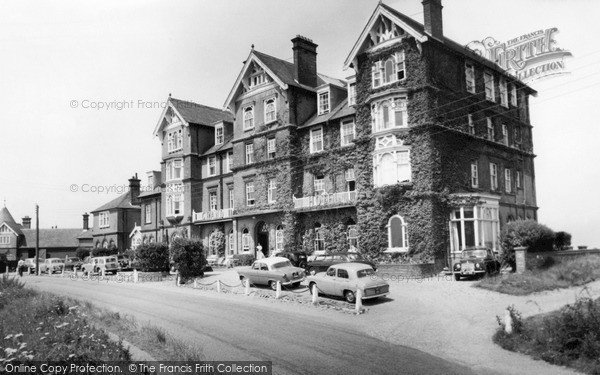
From what I’ve been able to find out, the hotel was renamed the Hotel Continental at some point after the Second World War. G. Laird, who took the more recent photo below, remembers three summer holidays in Norfolk during the 1960s and said the Hotel Continental ‘was then a very elegant building and was clearly a popular hotel’.

It would seem the hotel later became apartments.
Old hotels fascinate me – especially abandoned ones. You see, history isn’t about being nerdy and reeling off dates all the time. My interest in history comes from mentally taking a trip into the past and thinking about what the buildings and the places I can see used to do, and of the scores of people that would have used them in a former life. Think about all of the Victorians who would have come to that hotel for their bucket-and-spade holiday. How excited they must have been to be out of the city for a few days. Imagine them, dining in the hotel with a view over the sea. What would they think of it now? A bit run down, a shadow of its former self. That’s what intrigues me about this kind of thing.
The other old hotel in Mundesley is the Manor Hotel. It was built in 1900, so slightly newer than the Hotel Continental, and was – as the name suggests – originally a manor house, converted into a hotel as the tourism industry took off. According to this newspaper article, the hotel ceased trading in December 2019 and a month later was up for sale (for what seemed like quite a reasonable £450,000). Of course, the pandemic was on its way shortly after, bringing with it a complete halt to tourism and leisure activities, so I don’t know what happened after that. The building stands empty, still showing evidence of the business that continued there until 3 years or so ago. Below is a photo I found online of the hotel in the month it closed:

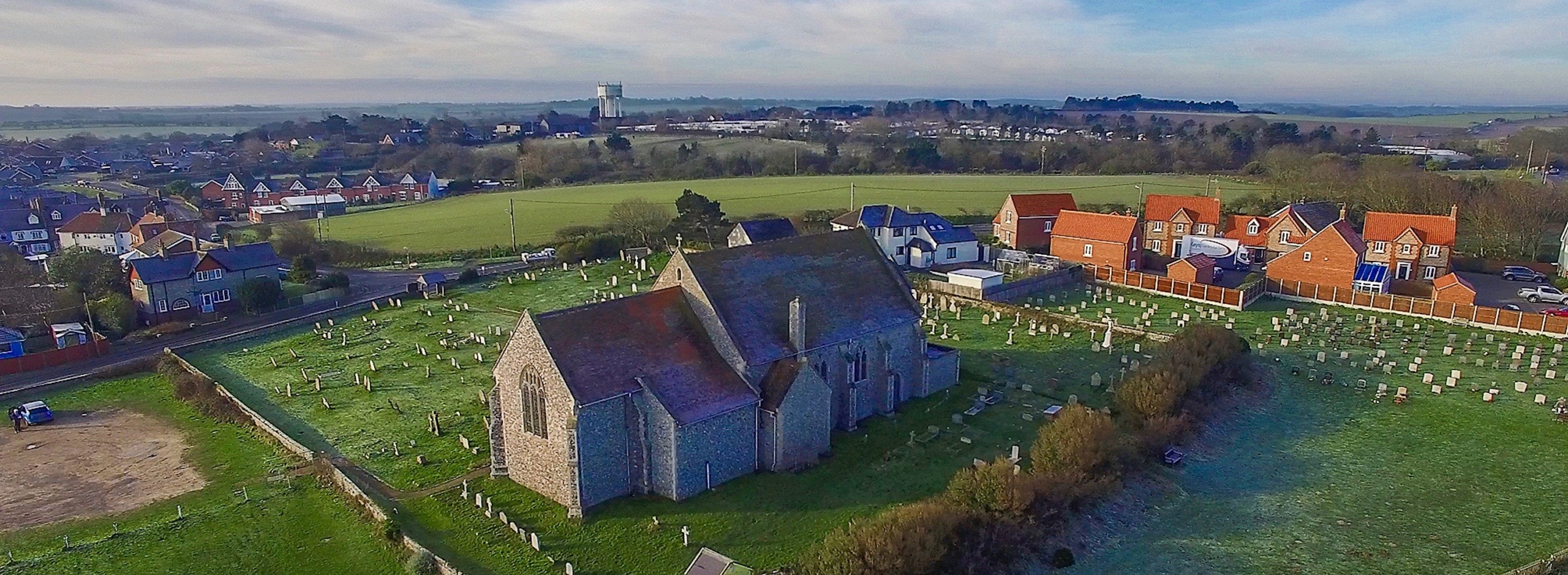
Our walk also took in the impressive All Saints church, which stands alone and imposing on the cliff top. The church has Norman origins, but I learned that it stood virtually in ruins for about a hundred years until being sensitively restored (unusual for the time, I think) between 1899 and 1914 – this coincides with the railway and subsequent tourist trade coming to Mundesley, so they probably felt like they wanted to smarten the place up for all of its new visitors. The church is described in much finer detail than I can manage here.
On the wall of the church, we noticed a plaque dedicated to the residents of the London borough of Haringey who had died at Clarence House in Mundesley. We found The Clarence House later on in our walk, and it is a care home in what looks like it might have been another former hotel, but even looking online I can’t find anything about this perculiar dedication to people who came there from the capital. My theory is that some elderly residents of Haringey may have been moved out of bombed-out London to calmer, safer surroundings on the Norfolk coast, but I have no idea if I’m thinking along the right lines. If anyone reading this happens to know more, please do let me know.
Speaking of the war, there is a large amount of evidence of Second World War defences in Mundesley. As well as a few pillboxes, there is a gun emplacement, built in 1940 or 1941. There is a newspaper article here about the community’s efforts to have the gun emplacement protected by Historic England. The gun emplacements are a stark reminder of how worried Britain was during the war about the enemy invading by sea and its extensive efforts to protect the coastline. The guns themselves were removed by 1946, but under the structure remains what would have been an accomodation area complete with bed frames. The future of the gun emplacement is a concern, with the underground section apparently now full of water and coastal erosion bringing the whole thing ever close to the edge of the cliff. I’m not that into war history, but I’d recommend visiting the gun emplacement at Mundesley while you can.

Part of our walk also took in Sea View Road, an untarmacked street separate from the main road. We found the number of seemingly empty but reasonably well-kept properties along this road odd, eventually concluding that this is probably an area of second homes – rich people, coming from outside Norfolk, who own properties on the coast that they only live in for some parts of the year. It’s a growing point of contention around here, and is already a massive problem in places like Cornwall.
Our walk also took in this old brick kiln, right in the middle of what is now a caravan park and one of Mundesley’s listed buildings, and some evidence of coastal erosion:


With a little help from a bus, we were back where we started and some (very good) chips for lunch brought a lovely little trip to the seaside to an end. I left knowing more about this small village of the North Norfolk coast, and reminded that everywhere has a story to tell if you look hard enough. I urge you to go out there and explore!



 LEE PAYNE